







Investigating an Old Underground Drain Pipe with a Sewer Inspection Camera
Editor's Note: This article is adapted from a personal renovation and inspection video documenting a real restoration project. The experiences, observations, and conclusions shared below reflect the creator's firsthand use of the Sanyipace S8951DM sewer camera during the renovation.
Sometimes the most interesting discoveries happen when you're not looking for them.
What started as a routine basement renovation quickly turned into an unexpected investigation of an old underground drainage system hidden beneath our property. Along the way, the Sanyipace inspection camera helped us explore abandoned pipes, trace underground drainage routes, and uncover blockages that would have been impossible to see from the surface.
Here's how the project unfolded.
Basement Cleanup Comes First
All the ceiling is out.
After days of pulling everything down, I'm finally at the point where all that's left is loading the debris, giving the basement a good wash, and moving on to the next stage of the renovation.
I have to admit—it was a nasty job. I didn't like it at all.
Taking down the old ceiling left us with decades of dust, dirt, and all kinds of things that had been hiding above our heads. Although it was hard work, the basement already feels much cleaner than before, and now we can finally start focusing on the parts of the renovation we've really been looking forward to.
But while cleaning everything up, something else caught my attention.
An Old Pipe That Raised More Questions Than Answers
At the back of our house, there's an old grotto—or cave—that I believe was once used as part of an old sewage system.
The dirt would have been mixed with straw or other material before falling into this chamber. It's been abandoned for a very long time now, but one thing remained.
There was a pipe.
And I really wanted to know where it went.
Sometimes that's all it takes to start another unexpected project. What was supposed to be a simple basement renovation suddenly turned into a pipe investigation.

Setting Up the Inspection Camera
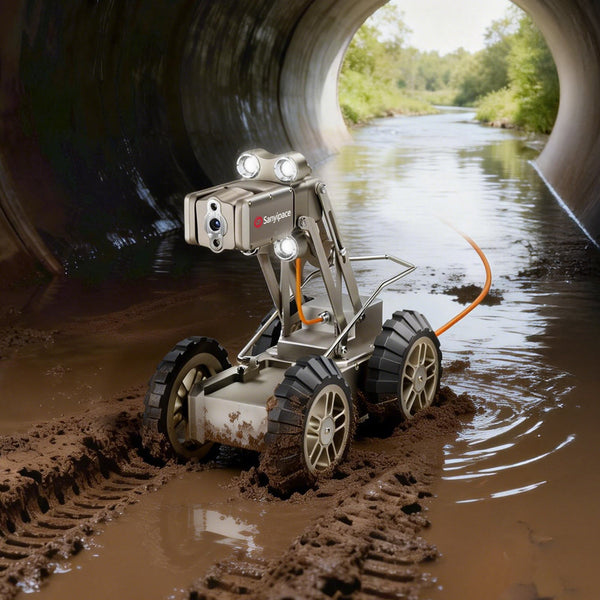
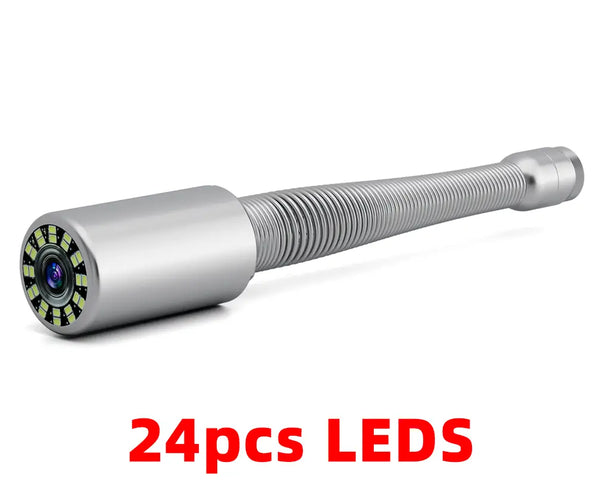
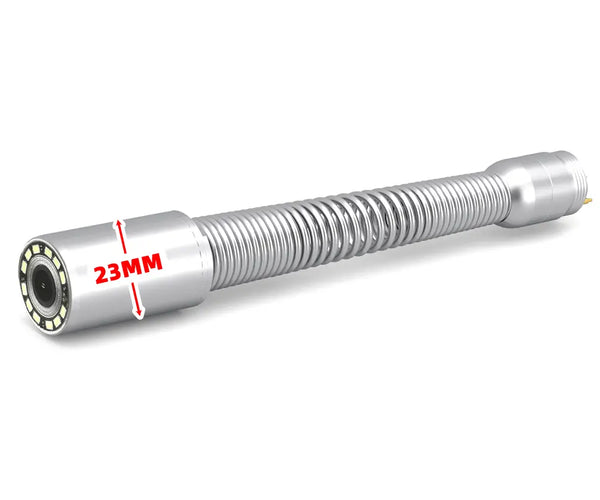
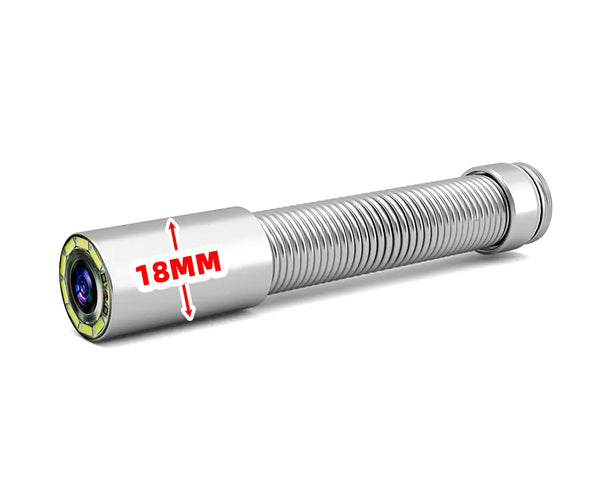
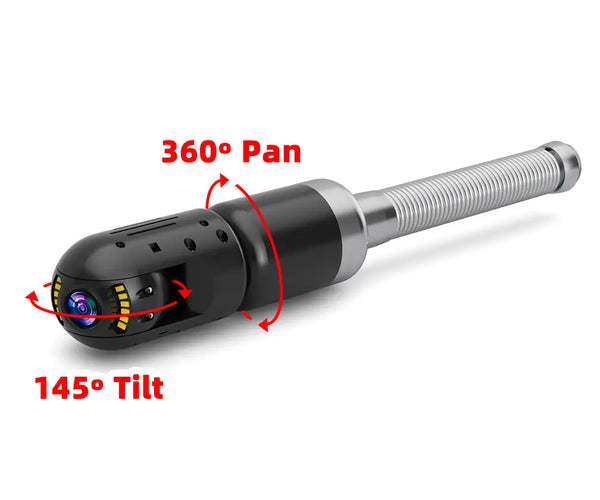
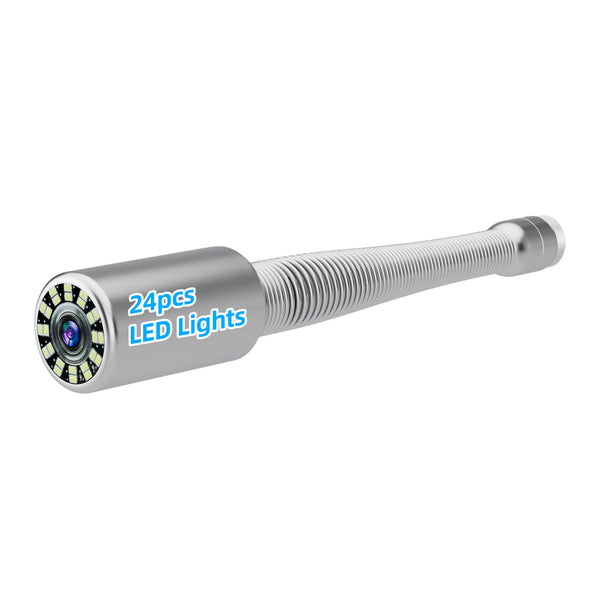
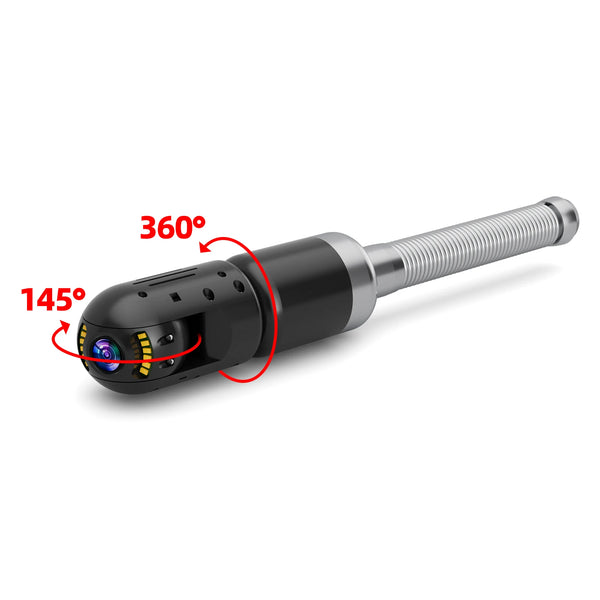
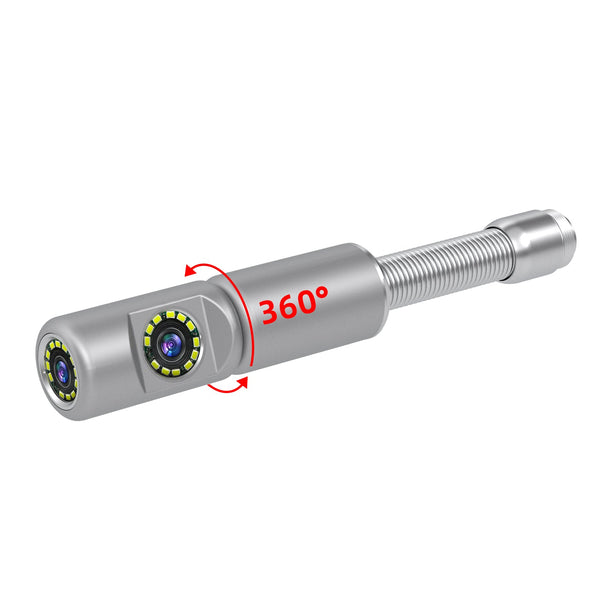
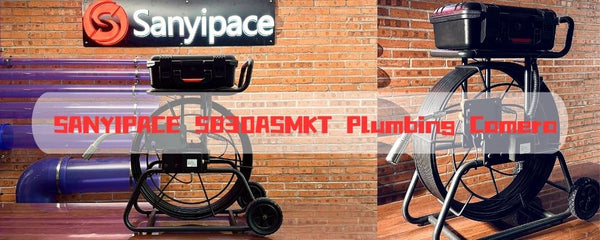
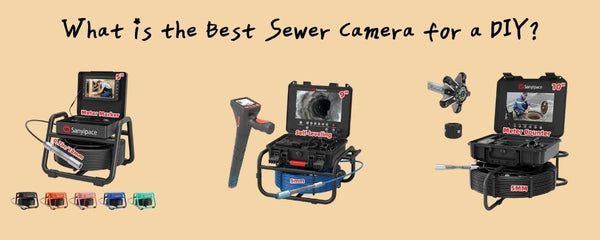
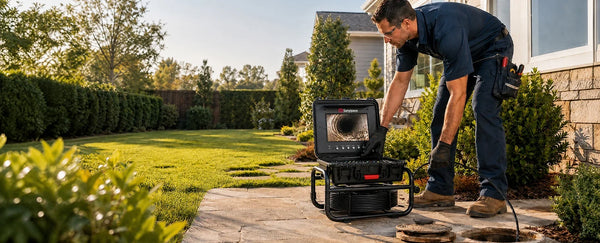
To find out where the pipe led, I decided to use a Sanyipace sewer inspection camera.
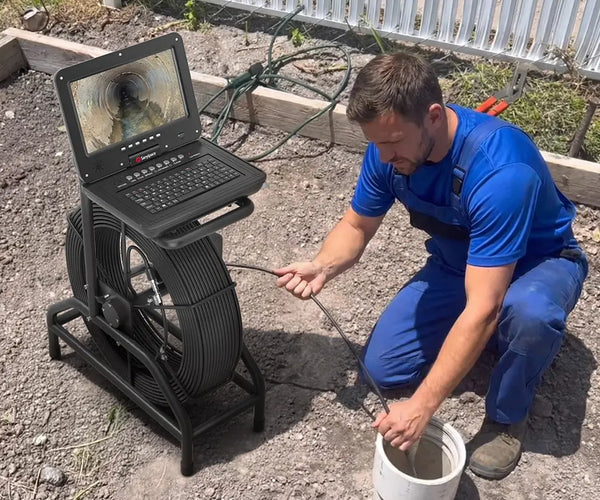
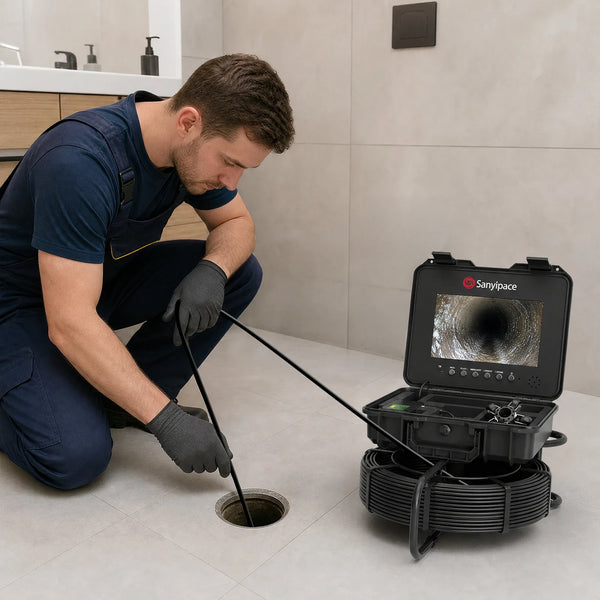
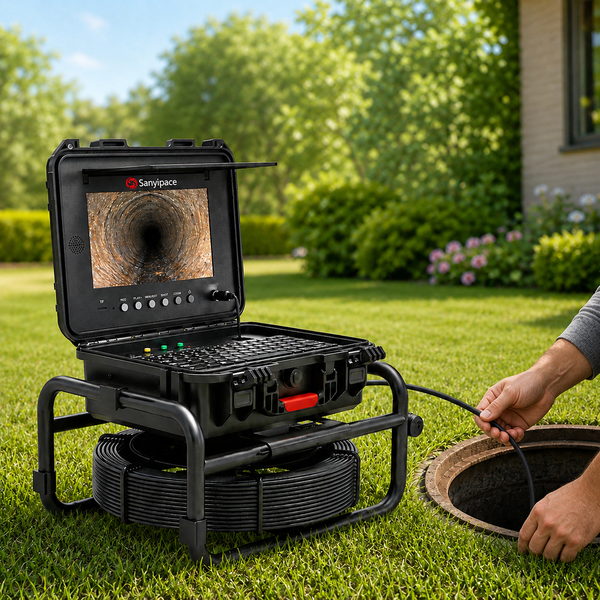
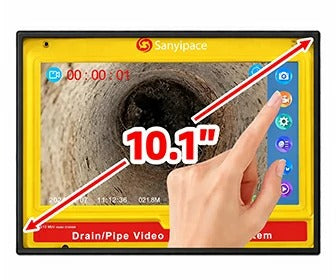
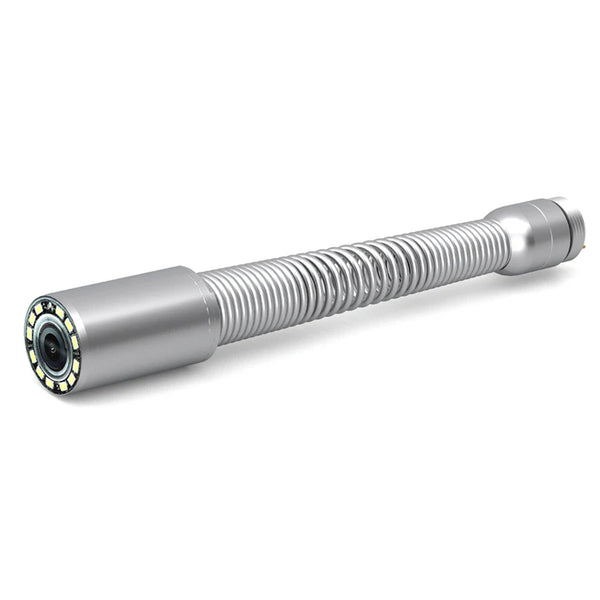
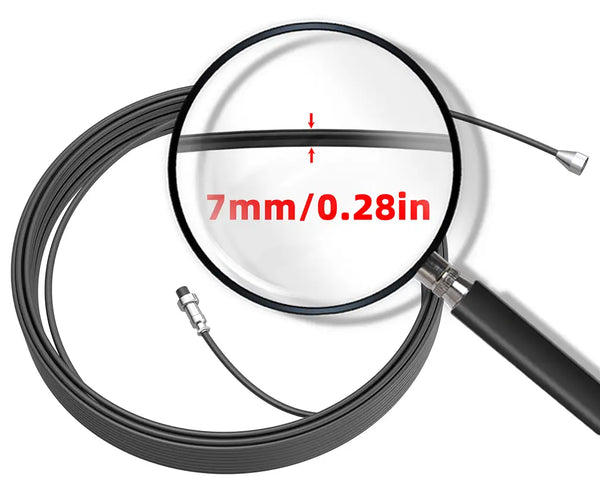
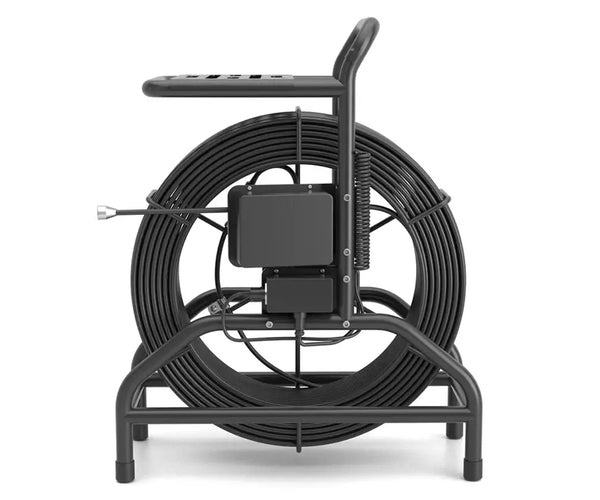
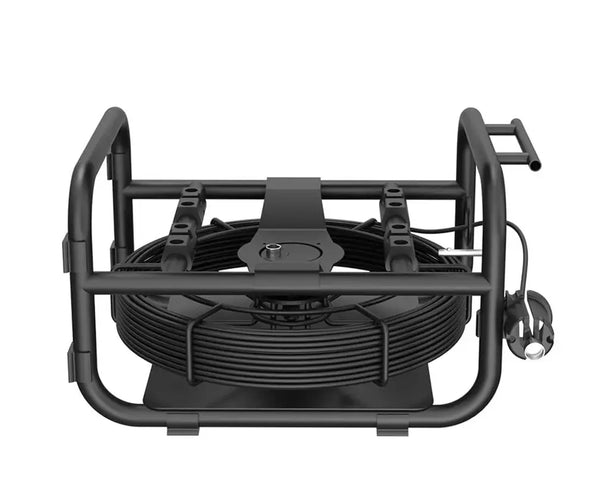
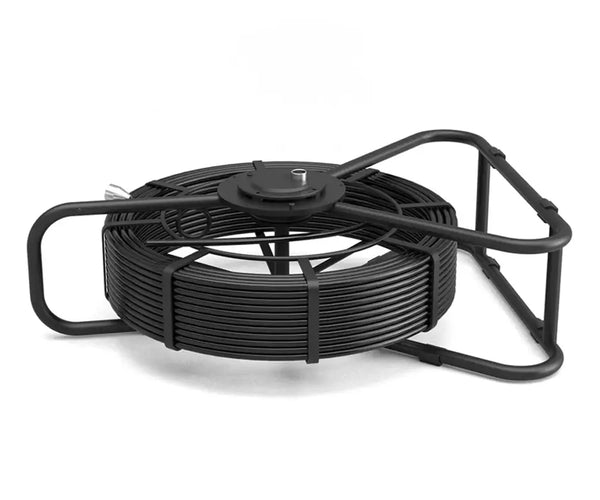
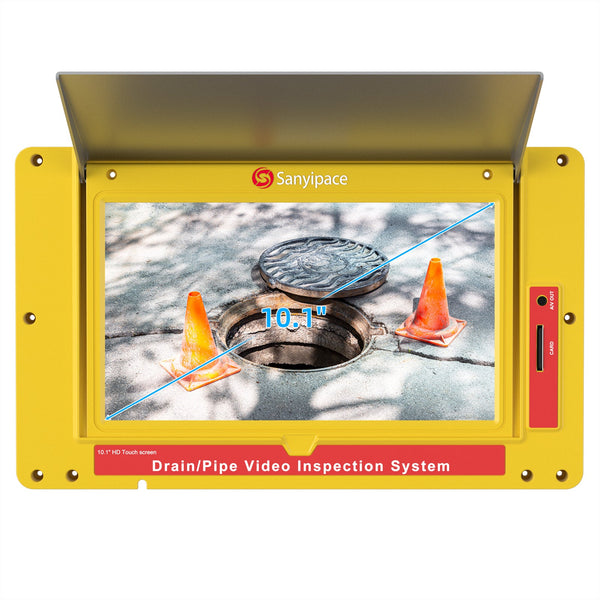
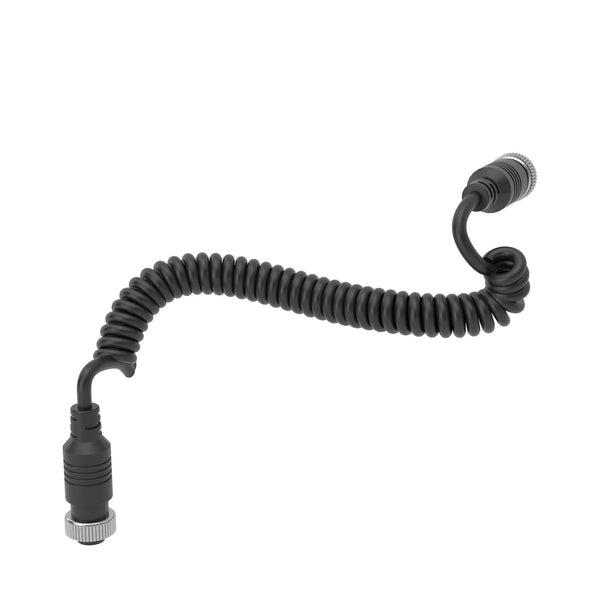
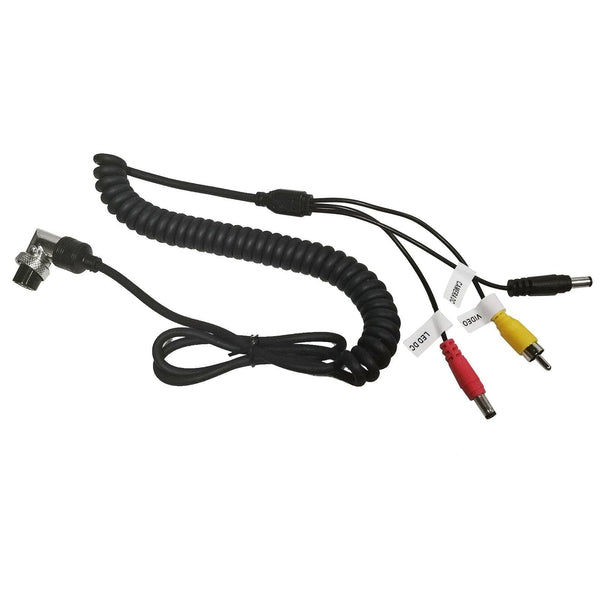
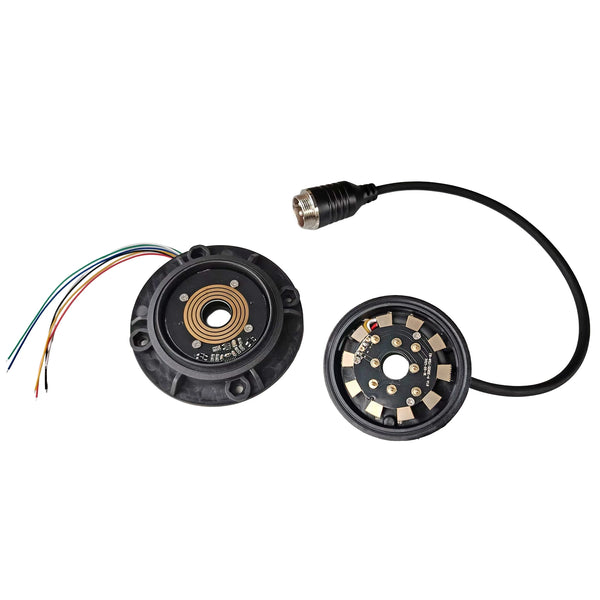
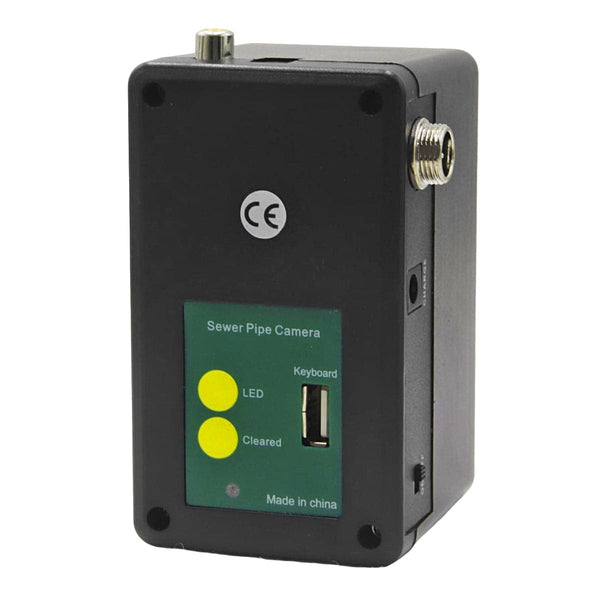
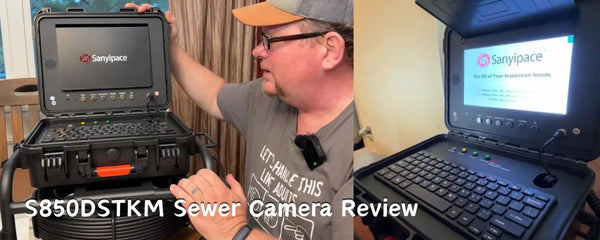
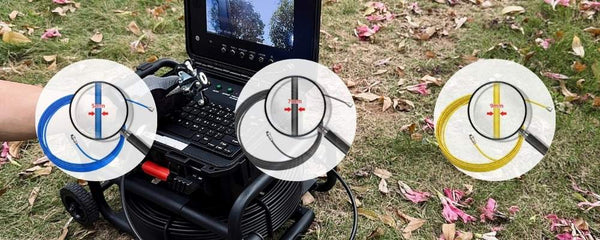
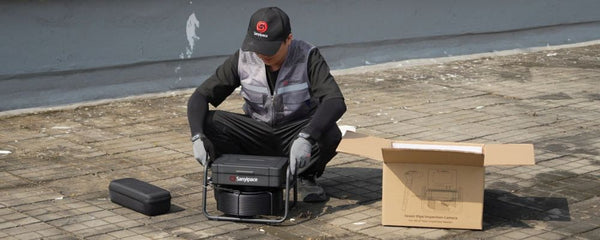
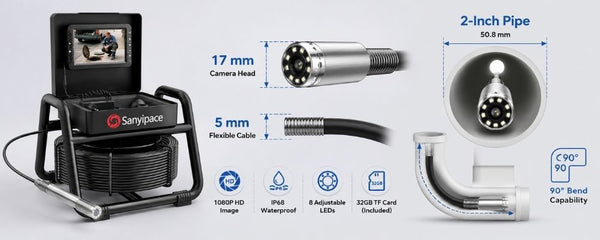
The setup was straightforward. The camera head connects to the cable, the LED lights plug in, and everything connects directly to the monitor. Once everything was screwed together, it was ready for testing.
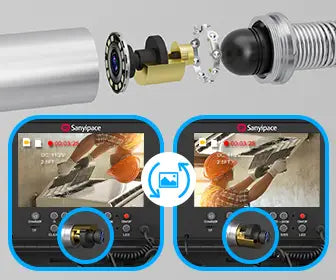
One thing I immediately noticed was how flexible the camera head was, making it much easier to guide it into the pipe.
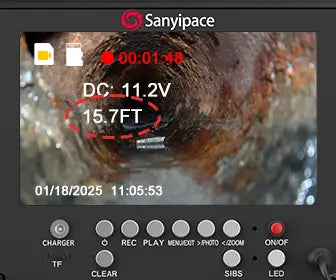
After powering everything on, the live image appeared on the screen.
So far, everything was working exactly as expected.

The Inspection Didn't Last Long
With the pipe camera inside the pipe, I slowly pushed it forward.
Unfortunately, it didn't get very far.
The camera reached roughly two meters before stopping completely. Around the 1.6-meter mark, it became obvious something was blocking the way, and no matter how carefully I tried to advance it, the camera wouldn't go any farther.
There was clearly a solid blockage inside the pipe.
At that point, there wasn't much else I could learn from this direction alone.

Taking a Break to Work Outside
With the inspection temporarily on hold, I turned my attention back to another job around the property.
I've been pruning these willow trees to create a shaded tunnel where we can sit during the hottest part of summer. Today's task was simply trimming underneath them to keep everything tidy.
While working outside, I also wanted to show where most of the water enters our field.
From here you can see the house in the distance, along with the large plum tree and the fig tree nearby. Rainwater comes across the road before entering our stream, and not far from there is another pipe I wanted to investigate.
This turned out to be the missing piece of the puzzle.

Using a 512-Hz Locator to Find the Other End
Since the camera couldn't get past the blockage, I needed another way to figure out where this pipe actually went.
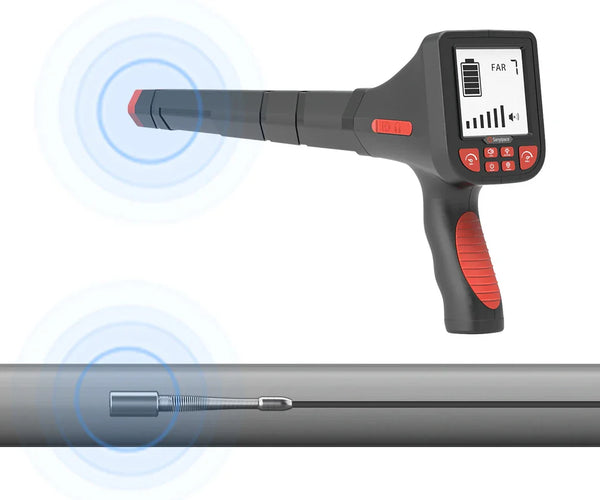
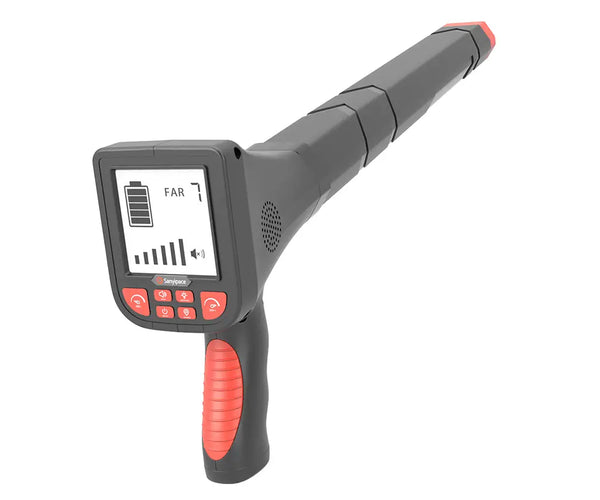
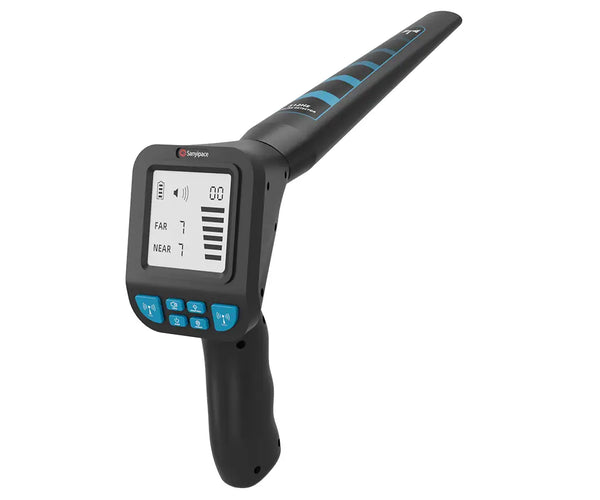
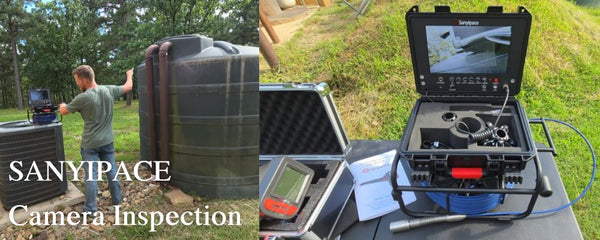
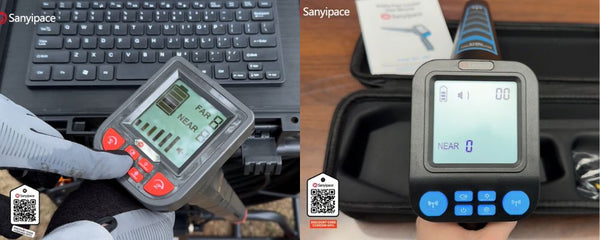
With the assistance of a 512 Hz locator, I was able to locate the end of the rod where the camera was sitting underground. From there, I traced the signal back across the property.
That was when everything finally started to make sense. The 512-Hz locator led me straight back to our big well.
It turns out this wasn't just a random abandoned pipe at all. It was the overflow pipe from the well.
In Portuguese, we call it "tubo ladrão"—the overflow that allows excess water to leave the well once it reaches a certain level. At least now, I finally knew what I was looking at.

Mystery Solved... But There Was Still a Problem
Although the pipe locator answered one question, it also confirmed another.
There was definitely a blockage.
The camera hadn't stopped because of a bend or because I had reached the end of the pipe. It had stopped because something solid was completely blocking the passage.
Unfortunately, the pipe had also been capped. That meant there wasn't any way to continue the inspection from that end.
It was a little disappointing because I had hoped to see the entire length of the pipe, but at least the investigation had answered the biggest question.
The pipe wasn't part of an unknown drainage system after all. It was simply the overflow from the well.
Sometimes that's exactly what an inspection is about—not finding a dramatic problem, but understanding how everything is connected.
Wrapping Up the Basement Work
With the pipe mystery solved, it was time to return to the renovation itself. The first major task had finally been completed.
We managed to remove all of the basement ceilings, along with what felt like a century's worth of dust and dirt.
There was plenty of debris to clean up, and, believe it or not, even a few mummified animals hidden away above the ceiling.
It's amazing what you uncover when working on an old property. Now the basement feels much cleaner and much fresher than before.
With this stage finished, we're finally ready to continue with the renovation plans we have for 2026.
What This Inspection Reminded Me
This wasn't a long sewer inspection. The camera only made it about two metres before hitting a blockage.
But that didn't make the inspection a failure. In fact, it did exactly what I needed it to do.
It helped identify where the pipe was going, confirmed there was a blockage, and, together with the locator, solved a mystery that had probably been sitting there for years.
Without using an inspection camera, I would have been left guessing.
Instead of digging blindly or making assumptions, I now know exactly what this pipe was designed for and where it ends.
Sometimes that's the biggest advantage of using a sewer camera. It's not always about finding a broken pipe. Sometimes it's simply about replacing guesswork with answers.

Final Thoughts
Every renovation project seems to uncover another surprise, and this old overflow pipe was one of them.
What started as the simple task of removing an old basement ceiling quickly turned into an investigation that helped me better understand the property's drainage system.
Even though the sewer camera couldn't make it past the blockage, I still walked away with the information I was looking for.
For anyone restoring an older home, it's a good reminder that hidden pipes often have their own history. Having an inspection camera—and, when needed, a locator—can save a lot of unnecessary digging and help you understand what's beneath your feet before making your next move.
Now that this mystery has been solved, it's time to move on to the next stage of the renovation. Knowing this property, I'm sure there will be another surprise waiting just around the corner.


Leave a comment