








How to Choose the Right Sewer Camera?
Looking to buy one or more sewer cameras that fit your needs?
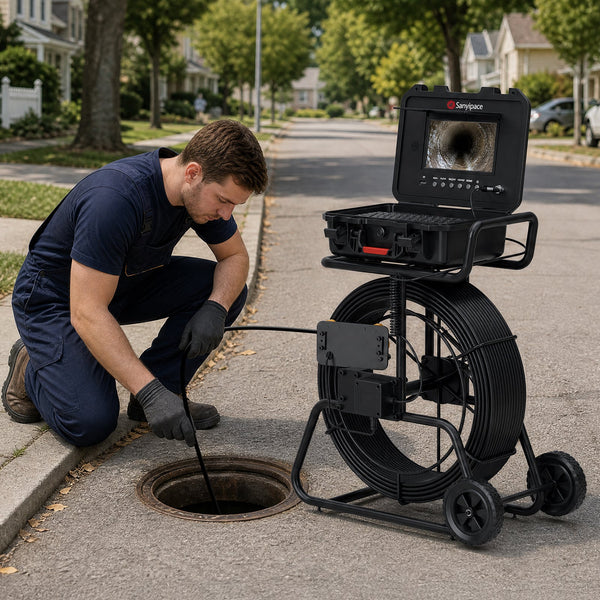
Start by checking for four core features: locating capability, self-leveling, a distance counter, and an IP68-rated waterproof camera head. Then consider your inspection requirements, including pipe diameter, cable length and stiffness, camera head size, and whether you need a rotating camera head. Comparing models based on these factors will help you find the right sewer camera without paying for features you don’t need.

1. Choose Based on Your Inspection Scenario
Start with the type of pipe you usually inspect. Pipe size, bends, and inspection distance determine the right pipe camera head and cable.
|
Your inspection scenario |
Recommended setup |
|
Narrow pipes or multiple tight bends |
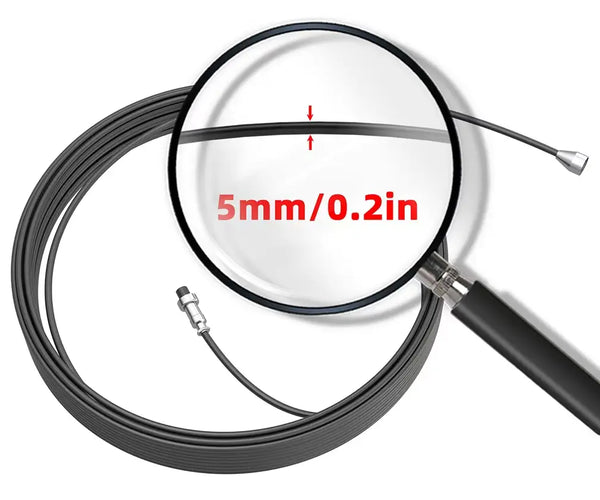
Small camera head + flexible 5 mm cable |
|
Most residential drains and sewer lines |
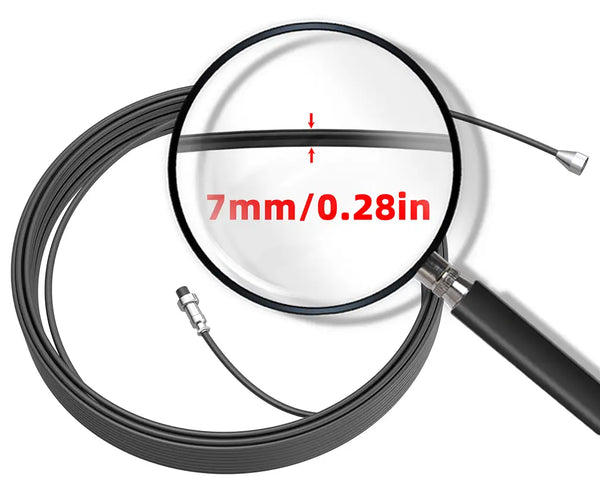
17–23 mm camera head + balanced 7 mm cable |
|
Long, relatively straight sewer lines |
Rigid 9 mm cable |
|
Large commercial or municipal pipes |
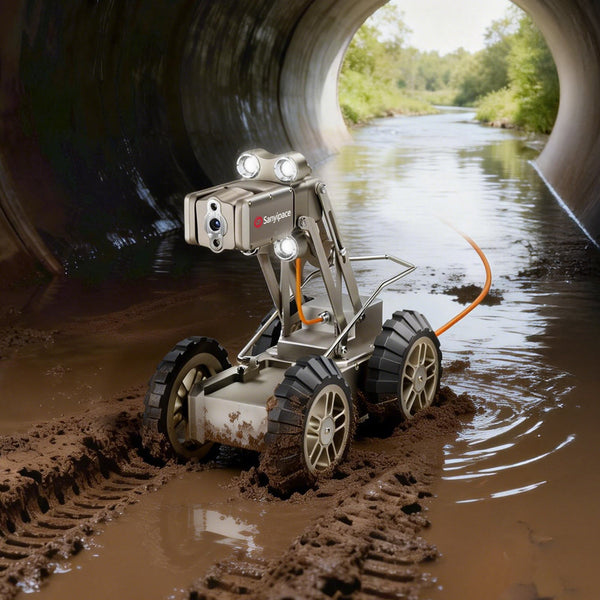
Rotating camera system or motorized crawler |
Flexible cables move through bends more easily, while thicker cables provide better pushability over longer distances.

2. Choose the Cable Length
Measure from the nearest cleanout or access point to the area you need to inspect.
|
Inspection area |
Suggested cable length |
|
Indoor drains and short lines |
65–100 ft |
|
Most residential sewer lines |
100–165 ft |
|
Large homes and commercial properties |
165–230 ft |
|
Long commercial or municipal lines |
230 ft or more |
Choose the usable inspection distance—not the total length of the entire plumbing system.

3. Choose the Sewer Camera Features You Need
|
Feature |
Choose it when you need to… |
|
DVR recording |
Save photos and videos from the inspection |
|
Self-leveling |
Keep the image upright as the camera moves |
|
Meter counter |
See how far the cable has entered the pipe |
|
512 Hz sonde |
Send a locatable signal from inside the pipe |
|
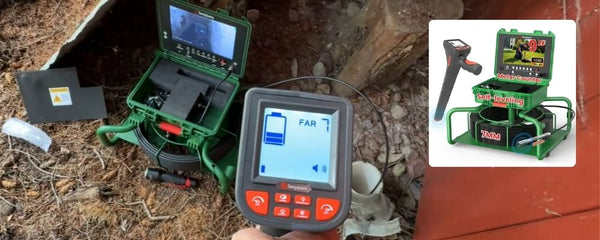
Handheld locator |
Find the camera position above ground |
|
Audio recording |
Add spoken notes to inspection footage |
|
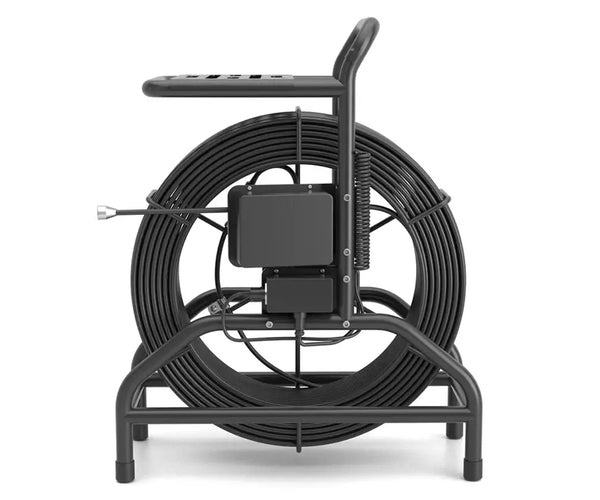
Dual camera heads and cable reels |
Switch between smaller, more flexible setups and larger setups for longer runs; check the features available on each camera head. |
|
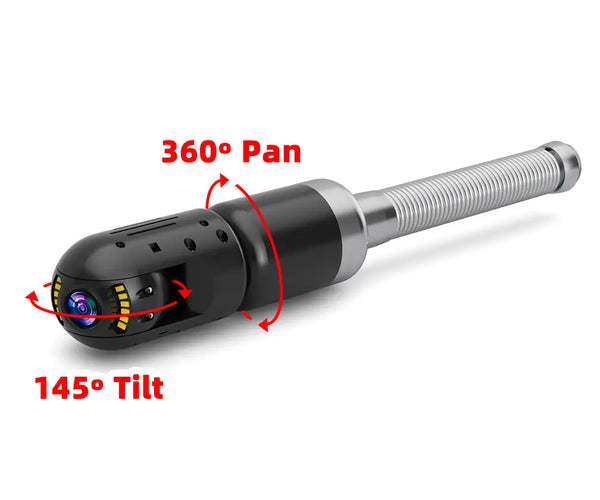
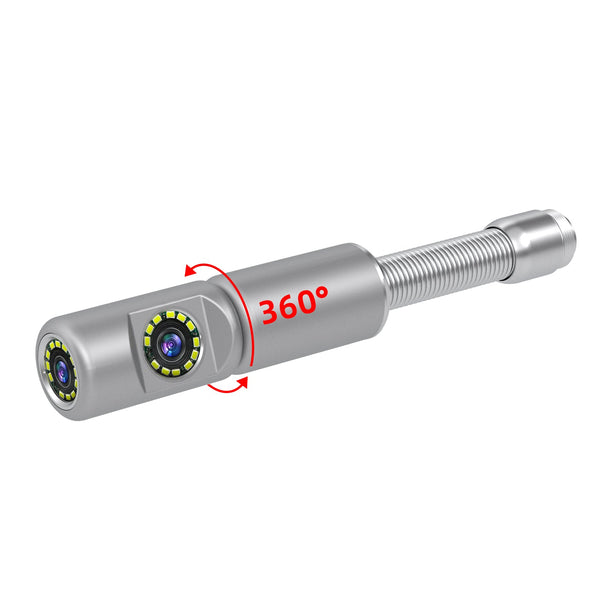
360° camera head |
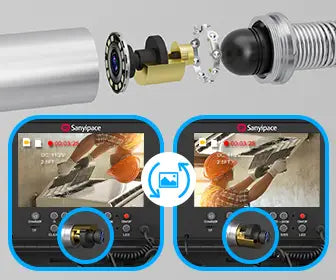
Examine the pipe wall from multiple angles |
| Adjustable LED lighting | Adjust brightness for different pipe conditions and reduce glare from nearby pipe walls. |
| Text annotations | Add job details and observations to supported inspection recordings. |
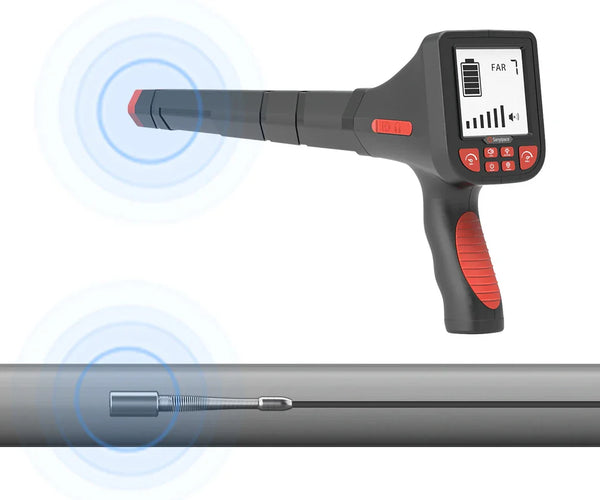
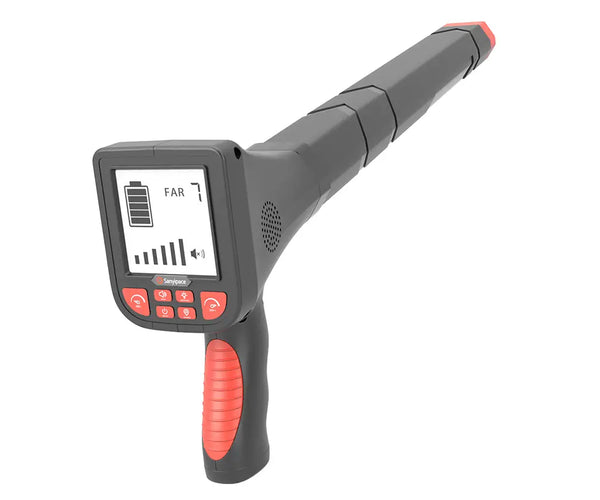
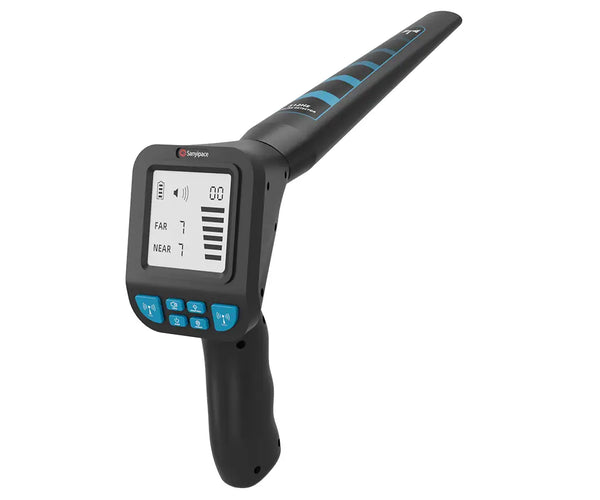
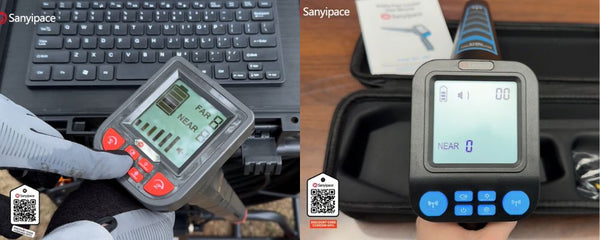
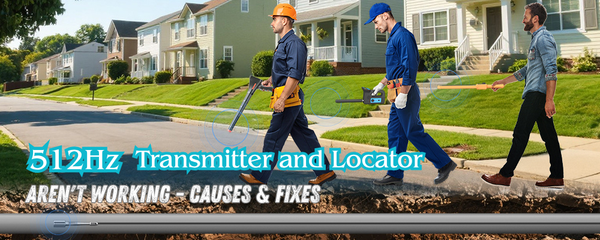
Important note: A 512 Hz sonde sends the signal. A handheld locator receives it above ground. Check the selected package before ordering—the locator may be included, optional, or sold separately.

4. Check Pipe Diameter and Bend Compatibility
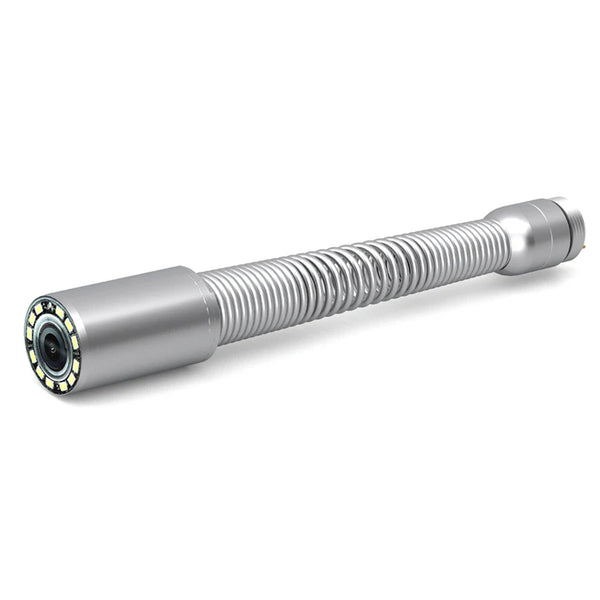
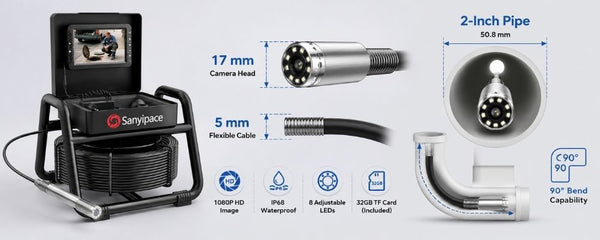
The pipe diameter is one of the most important factors when choosing a sewer camera. A larger camera head may provide stronger lighting and durability, but a smaller head is usually easier to guide through narrow pipes and tight bends.
Before choosing a model, check the camera head diameter, cable size, and the smallest pipe section you need to inspect.
| Pipe condition | Recommended setup |
|---|---|
| Small drains, sink lines, and pipes with multiple bends | 13–17 mm camera head + 5 mm flexible cable |
| Most residential sewer lines (3–6 inch pipes) | 17–23 mm camera head + 7 mm cable |
| Long straight sewer lines or professional inspections | 23–31 mm camera head + 9 mm cable |
| Large commercial pipelines | Crawler camera system |
Camera head size reference
| Camera head diameter | Best for |
|---|---|
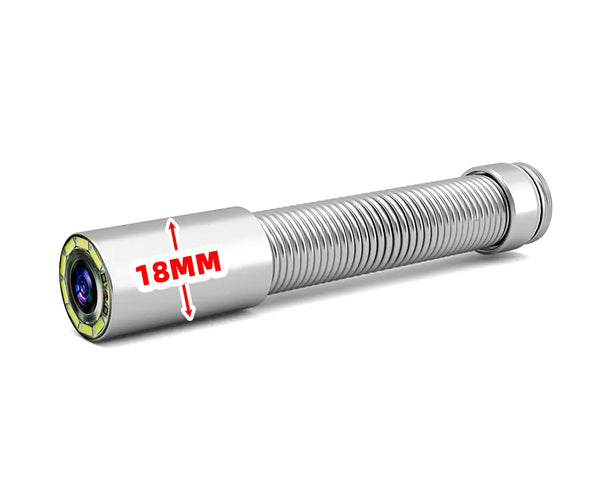
| 13–17 mm | Narrow pipes, smaller drains, tight bends |
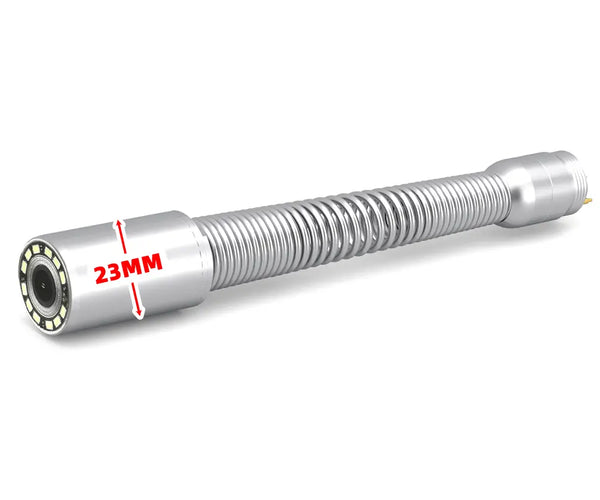
| 23 mm | The most common choice for residential sewer inspection |
| 31 mm | Larger pipes where stronger lighting and durability are preferred |
Cable flexibility matters too
| Cable size | Main advantage |
|---|---|
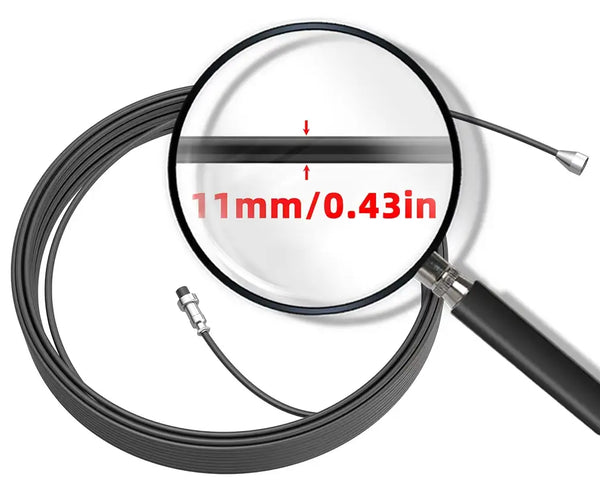
| 5 mm cable | Easier to push through bends, but less pushing force over long distances |
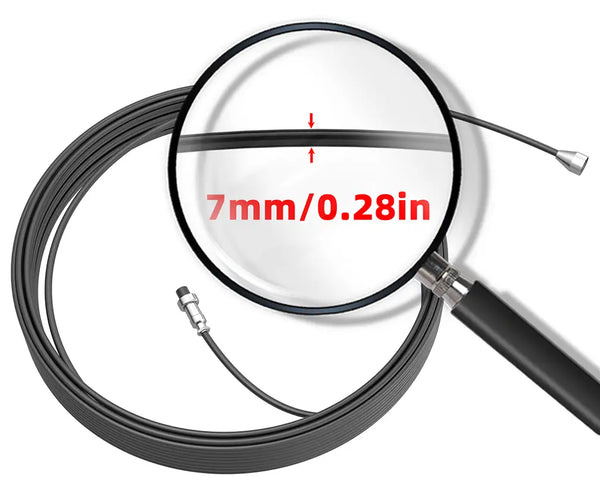
| 7 mm cable | Best balance between flexibility and pushing strength |
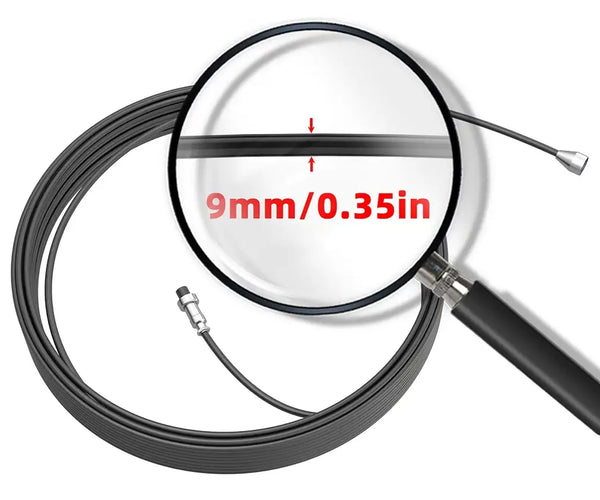
| 9 mm cable | Better for longer, straighter inspections |
A camera does not pass through pipes based only on head diameter. The complete system — camera head length, spring design, cable stiffness, pipe diameter, and bend radius — determines performance.
5. Compare Image Quality and Screen Usability
A sewer camera is only useful when you can clearly identify pipe conditions. Resolution, lighting, screen size, and camera stability all affect what you can see.
| Feature | Recommended reference |
|---|---|
| Camera resolution | 720P is enough for basic checks. 1080P is recommended for professional inspections and customer reports. |
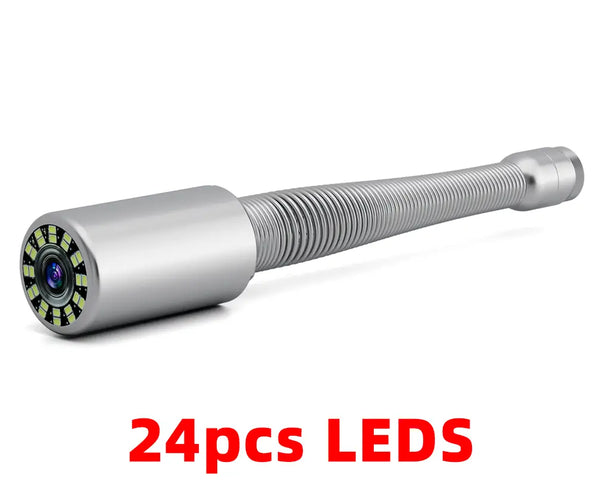
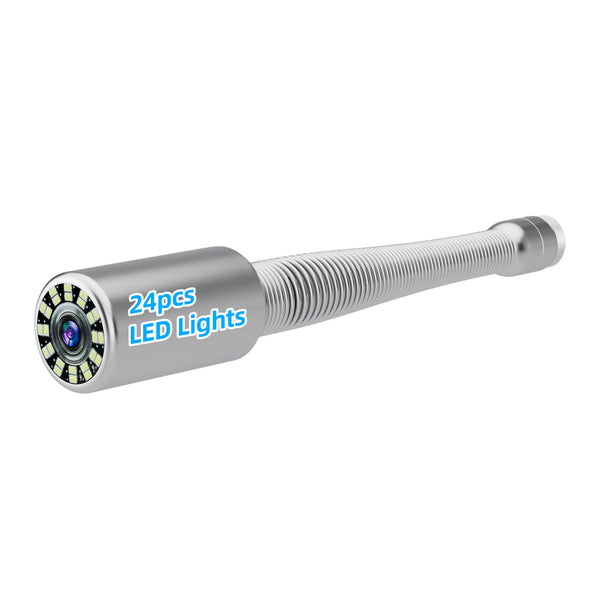
| Camera LEDs | 8–12 LEDs are suitable for general residential inspections. 24 LEDs provide stronger illumination for larger or darker pipes. |
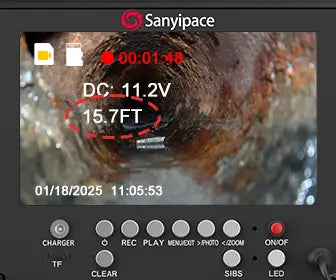
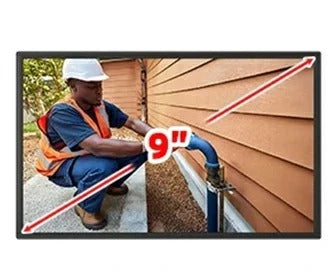
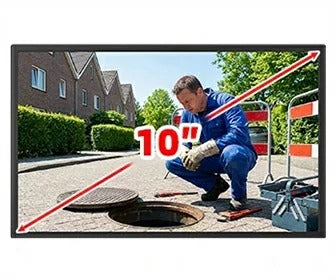
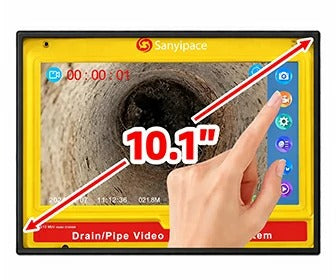
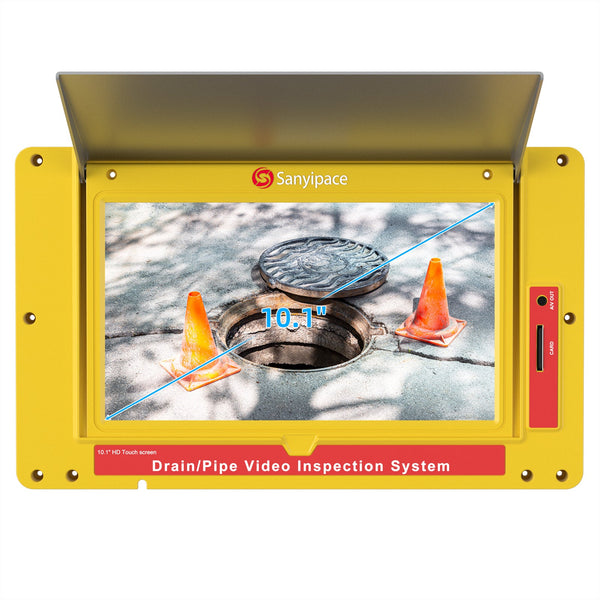
| Screen size | 5-inch screens prioritize portability. 9–10-inch displays provide easier viewing for professional work. |
| Self-leveling | Recommended if you regularly inspect long pipes or share footage with customers. |
Choose based on your work:
| User type | Recommended setup |
|---|---|
| Homeowner occasional use | 5–7 inch screen + basic recording |
| Plumbing service | 1080P + self-leveling + meter counter |
| Professional inspection company | Large display + self-leveling + 512Hz locating |
6. Choose the Right Cable Length and Portability
Longer cables are not always better. Extra cable adds weight and friction, making the system harder to transport and push.
| Inspection distance | Recommended cable length |
|---|---|
| Indoor drains and short inspections | 20–30 m (65–100 ft) |
| Most residential sewer inspections | 50 m (165 ft) |
| Larger properties or professional plumbing work | 70–100 m (230–330 ft) |
| Municipal or industrial inspection | 100 m+ or crawler systems |
Before choosing a cable length, measure from the access point to the area you need to inspect.
7. Check Features, Accessories, and Long-Term Cost
The right sewer camera is not only about the camera itself. Professional inspection often requires additional tools for measuring, locating, and documenting problems.
| Feature | When you need it |
|---|---|
| Meter counter | When you need to record the exact distance of damage or blockage |
| 512Hz sonde + locator | When you need to locate underground pipe problems before digging |
| Self-leveling camera | When image orientation matters during inspection |
| Recording function | When you need inspection reports or customer evidence |
Do you need a locator?
A 512Hz transmitter inside the camera head allows a compatible locator to detect the camera position underground.
It is especially useful for:
- Sewer repair planning
- Finding blockage locations
- Reducing unnecessary digging
Find the Right Camera for the Job
Compare camera size, cable flexibility and professional features based on the work you do.

Basic Home Drain Inspections
S5517DC Sewer Camera
A practical entry-level camera for checking household drains, simple blockages and visible pipe damage.
- Compact and portable
- Flexible drain cable
- Photo and video recording
- Multiple configurations
Keep in mind: Choose a professional model if you need self-leveling, locating, or stronger long-distance pushing power.

Small Pipes & Tight Bends
S5981DSRTKMS58 Sewer Camera
A compact system that moves more easily through narrow drain lines and routes with several bends.
- Small camera head
- Flexible 5 mm cable
- Self-leveling image
- Meter counter + 512 Hz
Keep in mind: The flexible cable turns more easily but has less pushing power over long, rough lines.

Residential & Professional Inspections
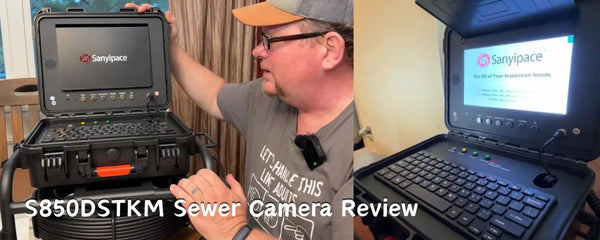
S850DSTKM Sewer Camera
The strongest all-around balance of maneuverability, pushing power and professional inspection features.
- 23 mm self-leveling head
- Balanced 7 mm cable
- Meter counter + 512 Hz
- Locator bundles available
Best for: Plumbers, contractors, property managers and home inspectors.

Long, Relatively Straight Lines
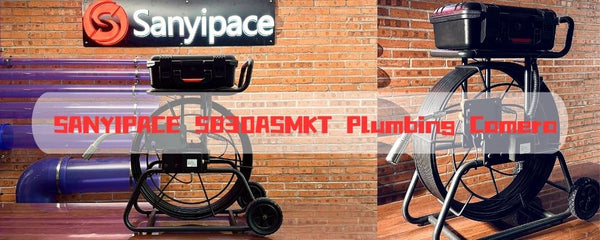
S830ASMKT Sewer Camera
Built for inspections where cable rigidity and long-distance pushing strength matter more than bend flexibility.
- Rigid 9 mm cable
- 31 mm self-leveling head
- Bright 24-LED lighting
- Meter counter + 512 Hz
Keep in mind: The larger head and thicker cable are not ideal for small pipes or multiple tight bends.

Different Pipe Sizes
S820TSMKTR Sewer Camera
Two independent camera systems let professionals move between small drains and larger sewer lines.
- 17 mm + 23 mm heads
- 5 mm + 7 mm cables
- Two independent reels
- Self-leveling + locating
Best for: Teams that value pipe-size versatility more than maximum cable length.

Detailed Pipe-Wall Inspections
S810ASMKT360 Sewer Camera
Controlled camera rotation provides a closer look at pipe walls, joints, cracks, and side connections.
- Controlled 360° rotation
- Front and side viewing
- Self-leveling image
- Meter counter + 512 Hz
Best for: Detailed inspection work where viewing direction and documentation matter.

Large Commercial & Municipal Pipelines
U99360 Crawler Camera
A motorized crawler for large pipelines where a standard push camera cannot provide enough control, stability, or inspection range.
- Motorized pipe movement
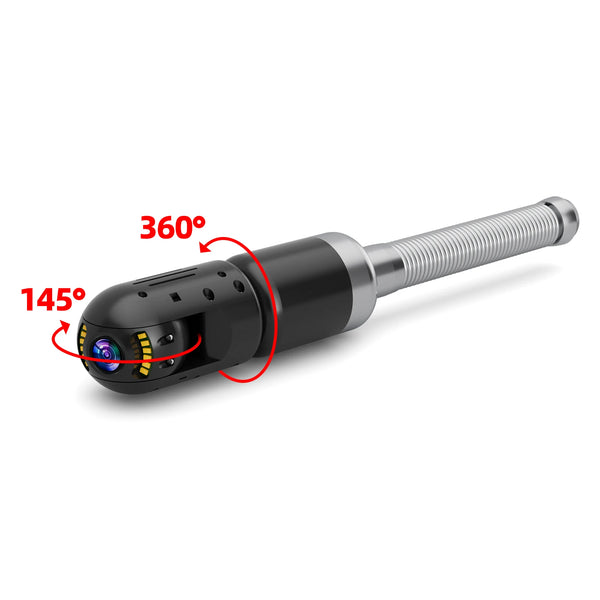
- 360° rotating camera
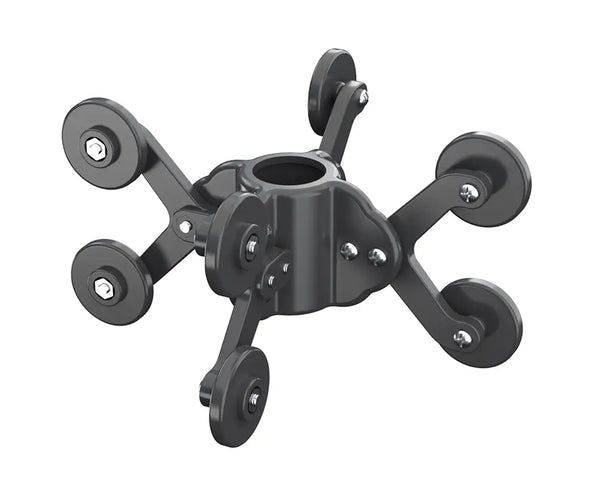
- Adjustable wheel setups
- Long cable options
Keep in mind: Designed for large, accessible pipelines—not compact residential drains.
Compare Recommended Sewer Camera Systems
|
Model |
Product Picture |
Best for |
Cable setup |
Self-leveling |
Meter counter |
512 Hz locating |
|
Home and DIY checks |
5 mm class/compact |
No |
Cable markings |
No |
|
|
Small pipes and bends |
5 mm |
Yes |
Yes |
Sonde; check package |
|
|
|
Flexible residential work |
5 mm; 100/165 ft |
Yes |
Yes |
Locator optional |
|
|
General residential sewer lines |
7 mm; 100/165 ft |
Yes |
Yes |
Sonde; locator option |
|
 |
Mobile professional use |
5 or 7 mm options |
Yes |
Yes |
Locator configuration available |
|
 |
Long, relatively straight lines |
9 mm; long-range options |
Yes |
Yes |
Sonde; locator option |
|
|
Different pipe sizes and views |
5 mm + 7 mm dual system |
On lower camera |
Yes |
On lower camera |
|
|
Detailed wall inspection |
Rotating dual-lens system |
Rotating view |
Yes |
512 Hz sonde |
|
 |
Large municipal/industrial pipes |
Motorized crawler; 197/393 ft |
Rotating camera |
Job dependent |
Professional system |

TIPS: Features and package contents can vary by cable length and configuration. Review the selected product option before checkout.
Still Not Sure? Answer These Four Questions
A sewer camera should match the conditions inside the pipes—not simply offer the longest cable or the largest screen. Use these four questions to narrow down your options.
1. What Pipe Sizes Do You Normally Inspect?
Camera-head size determines which pipes the system can enter, while cable diameter affects how easily the camera moves through the line.
- Choose a smaller camera head and flexible cable for narrow drains or routes with tight bends.
- Choose a standard 23 mm head and balanced cable for most residential sewer inspections.
- Choose a larger head and more rigid cable for wider, longer, and relatively straight lines.
- Choose a crawler system for large commercial, industrial, or municipal pipelines.
Recommended models:
- Small pipes and tight bends: S5981DSRTKMS58
- General residential work: S850DSTKM
- Larger, straighter lines: S830ASMKT
- Multiple pipe sizes: S820TSMKTR
2. How Far Must the Camera Actually Travel?
Measure from the cleanout or access point to the area you need to inspect, not the total length of the plumbing system. If you are unsure how cable length translates into usable inspection range, read our guide to how far a sewer camera can actually travel.
Allow additional cable for:
- Bends and changes in direction
- Friction against the pipe wall
- Rough, corroded or partially blocked pipes
- Indirect access routes
A longer cable does not automatically provide a greater real-world inspection distance. The cable must also have enough pushing strength for the pipe conditions.
Recommended models:
- Short household inspections: S5517DC
- Typical residential lines: S850DSTKM
- Long, relatively straight runs: S830ASMKT
- Large controlled inspections: U99360 Crawler
3. Are There Tight or Multiple Bends?
Cable flexibility and pushing strength work against each other. A flexible cable moves through bends more easily, while a rigid cable pushes farther through long lines. See our 5 mm vs. 7 mm vs. 9 mm sewer camera cable comparison for more details.
- 5 mm cable: More flexible and suitable for smaller pipes and routes with multiple bends.
- 7 mm cable: Provides balanced flexibility and pushing power for general plumbing work.
- 9 mm cable: Offers stronger pushing power for longer and straighter sewer lines.
A thicker cable is not always better. It may struggle in small pipes, P-traps, or routes with several sharp bends.
Recommended models:
- Multiple bends: S5981DSRTKMS58
- Mixed residential conditions: S850DSTKM
- Long runs with fewer bends: S830ASMKT
- Flexible and rigid cable options in one system: S820TSMKTR
4. Do You Need to Locate the Problem Above Ground?
Choose locating capability if you need to determine where a blockage, break, or damaged pipe section is positioned before digging or opening a wall. Our 512 Hz sewer camera locator guide explains signal range, locating depth, accuracy, and possible interference.
A locating system has two separate components:
- A 512 Hz sonde inside the camera head transmits a signal.
- A compatible handheld locator receives that signal above ground.
A camera with a built-in sonde cannot be located without a compatible receiver. Always check whether the locator is included with the selected package or must be purchased separately.
Recommended models:
- No underground locating required: S5517DC
- Small pipes with locating: S5981DSRTKMS58
- General professional locating work: S850DSTKM
- Long-line locating: S830ASMKT
- Rotating inspections with locating: S810ASMKT360
Need Help Choosing?
Tell us about your typical inspection work, and our team will help you choose a suitable sewer camera system before you order.
- Minimum and maximum pipe diameter
- Approximate inspection distance
- Number and type of bends
- Pipe material and condition
- Whether locating is required
- Occasional or professional use


