





Can You Get a Good Sewer Camera for $200?
Yes. Homeowners can purchase a practical sewer camera for $200, complete with a dedicated monitor, a 1080p waterproof camera, adjustable lighting, recording capabilities, and sufficient cable for common household drainage checks.
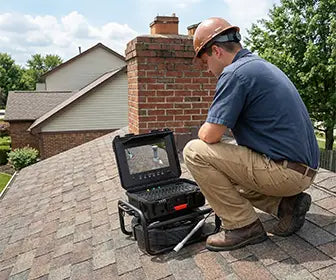
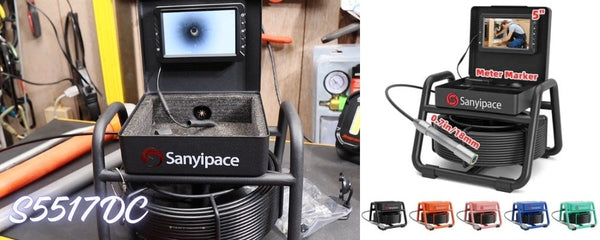
The SANYIPACE S5517DC sewer camera is a good example. Starting in the $200 price range, it focuses on practical features for homeowners, DIY users, property managers, and occasional drain inspections.

What Should a Good $200 Sewer Camera Include?
A $200 price doesn't mean you can only buy a basic handheld drain camera; you can still focus on these features when making your purchase.
| Essential feature | Why it matters |
|---|---|
| Dedicated monitor | Lets you inspect without depending on a phone, app, or wireless connection |
| Waterproof camera head | Protects the camera in wet and dirty drain conditions |
| Adjustable LED lighting | Helps illuminate dark pipes without excessive close-range glare |
| Purpose-built push cable | Allows the camera to be pushed deeper into a drain |
| Suitable camera-head size | Determines which pipes and bends the camera can enter |
| Photo and video recording | Lets you document, review, and share what you find |
| Sufficient cable length | Provides more reach than a short handheld endoscope |
| Cable storage system | Makes feeding, retrieving, and storing the cable easier |
| Available replacement parts | Extends the useful life of the equipment |
| Warranty and customer support | Provides help if a component develops a problem |
A good homeowner sewer camera is not necessarily the model with the longest cable, largest screen, or most advanced features. It is the one that matches the size, layout, and inspection needs of your household plumbing.
What Do You Get With the SANYIPACE S5517DC?
The S5517DC is designed as a compact, all-in-one sewer camera for home maintenance and occasional inspections.
| Feature | SANYIPACE S5517DC |
|---|---|
| Monitor | 5-inch 1080P color display |
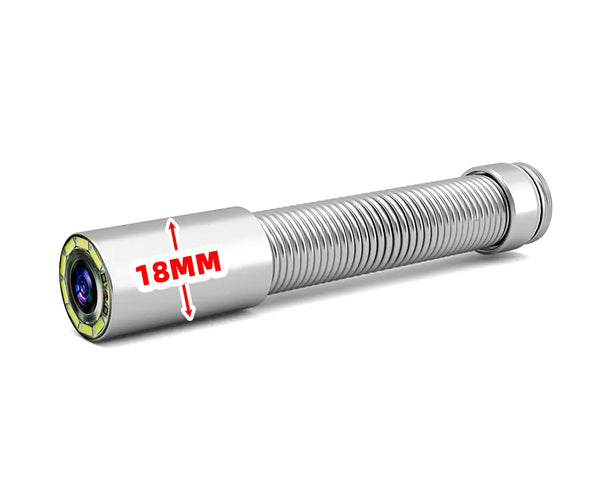
| Camera head | 0.71-inch/18 mm close-focus camera |
| Viewing angle | 145° |
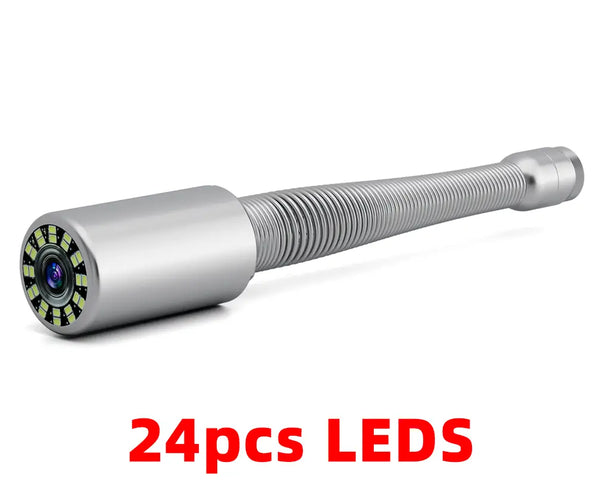
| Lighting | 8 LEDs with three brightness levels |
| Waterproof rating | IP68 camera head |
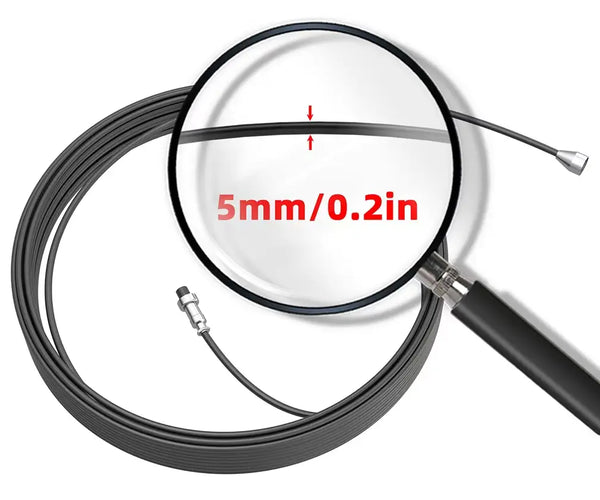
| Push cable | Flexible 0.2-inch/5 mm cable |
| Cable choices | 65 ft/20 m or 100 ft/30 m |
| Recording | Photos, video, audio, date and time |
| Storage | Included 32GB TF card |
| Distance reference | Markings along the cable |
| Battery | 2100mAh rechargeable battery |
| Installation | Fixed setup or magnetic stand |
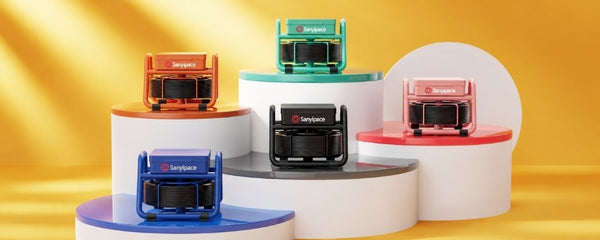
| Color choices | Black, blue, green, orange, or pink |
| Intended users | Homeowners, DIY users, and property managers |
These specifications do not turn the S5517DC into a heavy-duty municipal inspection system. They do, however, provide the essential functions needed for many basic residential drain checks.
Why the S5517DC Is a Good Sewer Camera in the $200 Price Range
1. It Is a Complete Inspection System
Some inexpensive inspection cameras are little more than a camera on a soft cable that connects to a phone. They may work when you only need to look just beyond a drain opening, behind a wall, or inside an appliance.
A sewer camera needs to do more.
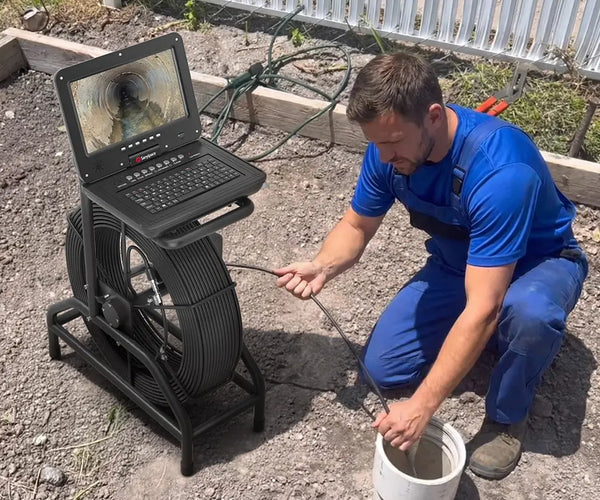
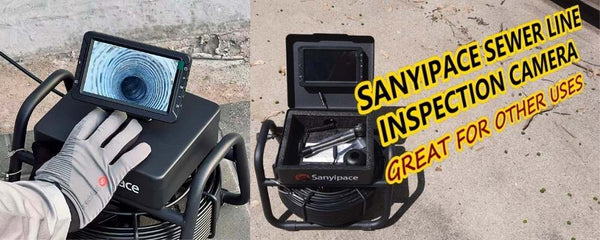
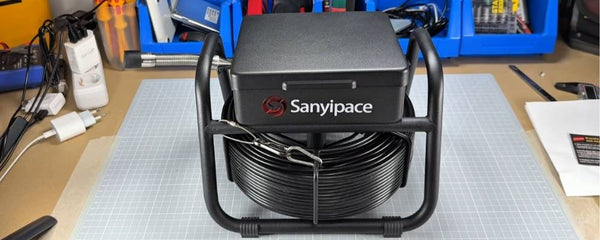
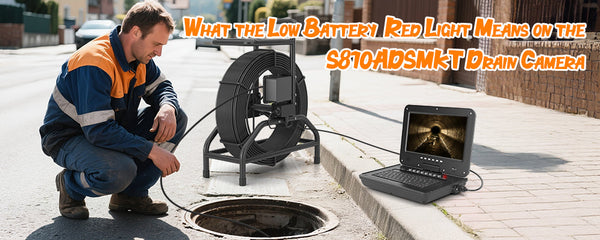
The S5517DC combines the camera, push cable, monitor, battery, recording system, and cable reel in one unit. There is no need to place your phone beside a dirty drain or troubleshoot an app before starting the inspection.
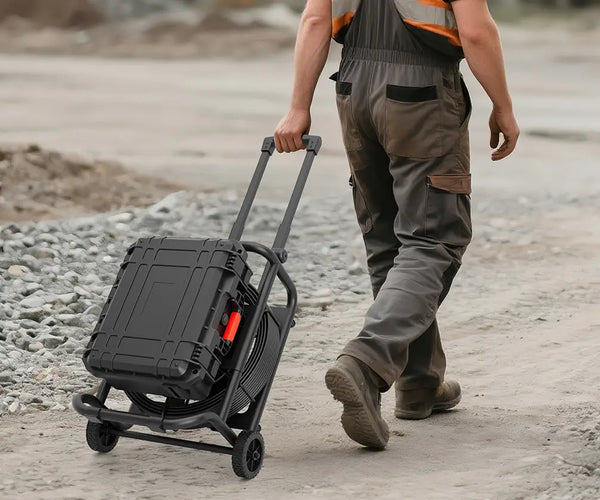
You can charge the unit, turn it on, feed the camera into an accessible pipe, and watch the live image on the built-in screen. The integrated reel also helps keep 65 or 100 feet of cable organized during use and storage.
2. The 18 mm Camera Head Fits Many Residential Inspection Jobs

Camera size affects where a sewer camera can go.
A large camera head may provide a broader view in a large pipe, but it can struggle to enter smaller drains or pass through bends. A smaller head generally offers more flexibility for residential work.
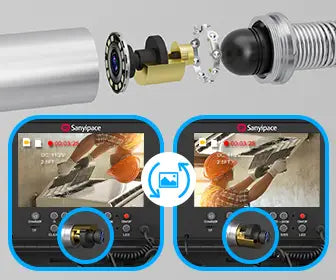
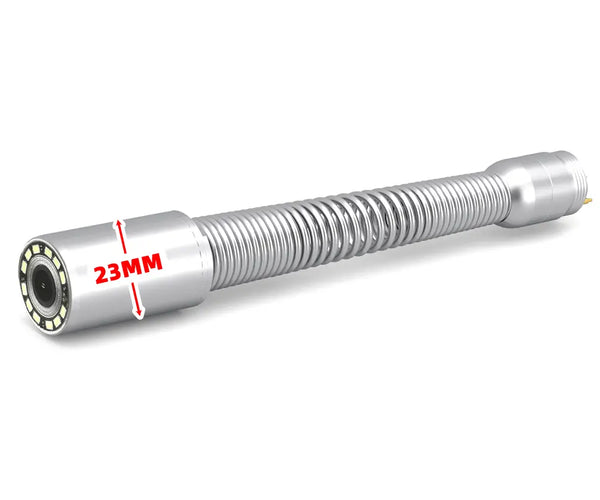
The S5517DC uses a 0.71-inch/18 mm camera head attached to a flexible spring. This compact design makes it suitable for inspecting many household drains, floor drains, cleanouts, and accessible residential sewer lines.
It may help you see:
- Hair and soap buildup
- Grease deposits
- Foreign objects
- Standing water
- Visible cracks
- Separated joints
- Corrosion
- Possible root intrusion
- Changes in pipe condition before and after cleaning
However, no camera can be guaranteed to pass through every P-trap, sharp bend, offset joint, or blockage. Pipe diameter, bend angle, existing debris, and the access point all affect how far the camera can travel.
Always confirm the smallest pipe diameter and the path the camera must follow before buying.
3. The Flexible 5 mm Cable Is Better Suited to Household Bends

The cable is one of the most important—and most overlooked—parts of a sewer camera.
A very soft cable may fold or coil instead of moving forward. A thick, stiff cable can be pushed farther along a straight sewer line, but it may have difficulty navigating smaller pipes and repeated bends.
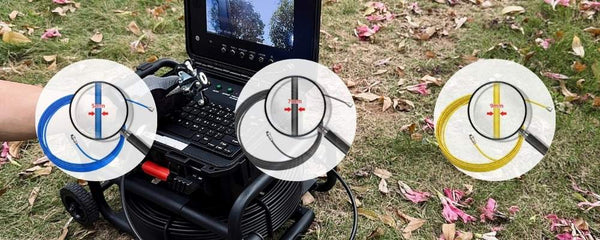
The S5517DC uses a flexible 0.2-inch/5 mm cable. For many household inspections, that flexibility can be more useful than the maximum pushing strength of a heavy professional cable.
It is particularly helpful for short- to medium-distance inspections where the pipe includes curves or limited access. The flexible spring behind the camera also helps the probe change direction as it moves through the line.
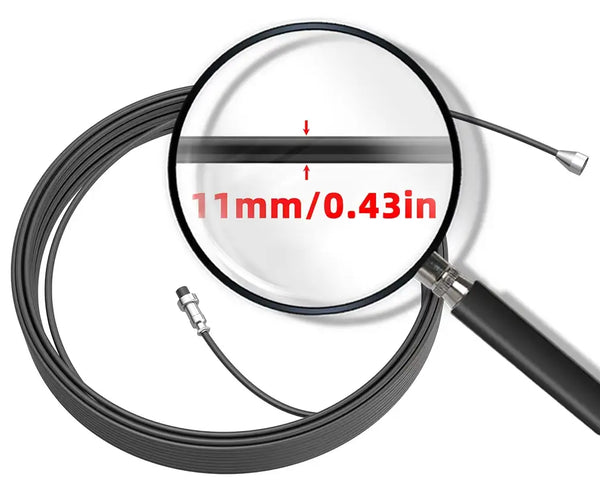
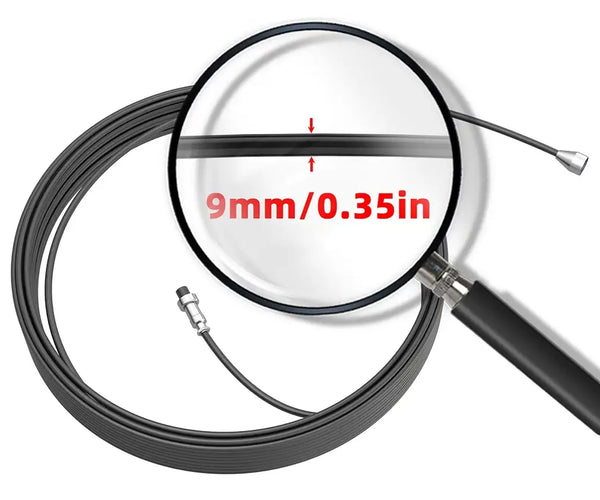
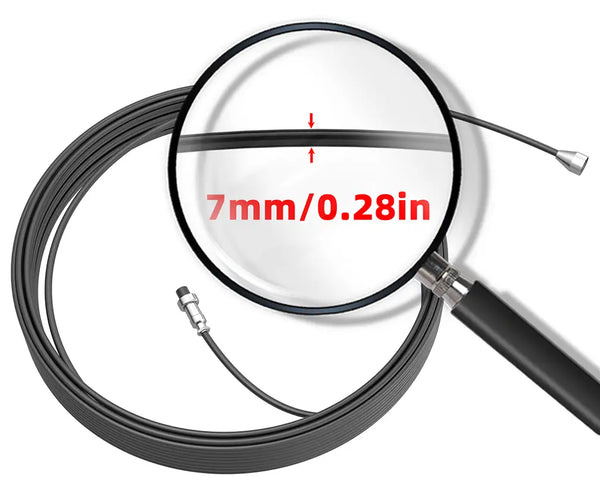
There is still a trade-off. A 5 mm cable does not offer the same long-distance pushability as a heavy 9 mm professional cable. If you need to inspect a very long, relatively straight sewer lateral, a thicker professional system may be more appropriate.
Never force the cable when it encounters strong resistance. The camera could be pushed into a solid blockage or become caught in a damaged section of pipe.
4. The 65 ft and 100 ft Options Provide Useful Residential Reach
Short phone endoscopes are often sufficient for inspecting an area close to an opening. They are less helpful when the suspected problem is farther down a branch drain or sewer line.
The S5517DC is available in two cable lengths:
-
65 ft/20 m: A practical choice for short- and medium-distance household inspections
-
100 ft/30 m: Better when the cleanout or access point is farther from the area you want to inspect
More cable is not automatically better. Longer cable requires more handling and storage, and the full advertised length does not guarantee that the camera can be pushed that far through every pipe.
Choose the length based on the distance from the closest safe access point to the area you need to inspect—not the total amount of plumbing in the house.
If the target is approximately 40 feet from a cleanout, for example, a 65-foot system may be sufficient. If the only accessible cleanout is much farther away, the 100-foot option provides additional reach.
5. The Close-Focus Camera Helps Reveal Nearby Pipe Details
Sewer camera resolution matters, but the highest number printed on the product page does not automatically produce the most useful inspection.
Inside a pipe, the camera is usually viewing surfaces, joints, buildup, or obstructions at close range. Lighting, focus distance, lens cleanliness, water clarity, and movement can matter as much as the nominal resolution.
The S5517DC combines a 1080P display with a close-focus camera. This design is intended to provide clearer views of nearby pipe walls and objects, making it easier to examine visible cracks, corrosion, debris, or joint problems as the camera approaches them.

Because it uses a close-focus lens, distant objects may appear slightly blurred. That is normal for this type of camera. Its purpose is to show details near the camera head rather than provide a clear long-distance view down an empty pipe.
6. Eight Adjustable LEDs Improve Visibility in Dark Pipes
Drain lines have little or no natural light. A sewer camera therefore depends on its built-in LEDs to produce a usable image.
The S5517DC camera head has eight LEDs with three brightness levels. You can increase the light in dark sections or reduce it when wet pipe walls create excessive reflection.

More light is not always better. If the camera is close to a light-colored PVC wall, maximum brightness may wash out surface details. Reducing the brightness can make joints, buildup, and small defects easier to see.
The ability to adjust the lighting is more useful than having LEDs that operate at only one fixed level.
7. The Built-In Screen Keeps Your Phone Away From the Work

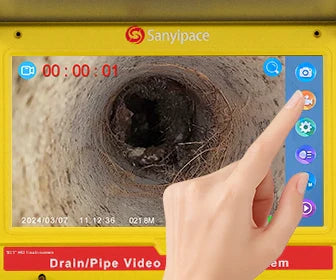
The S5517DC includes a dedicated 5-inch screen, so the inspection does not depend on a smartphone.
This offers several practical benefits:
-
No app installation or phone compatibility issues
-
No wireless connection that can drop during the inspection
-
No need to handle a personal phone with dirty gloves
-
A display designed to remain with the inspection unit
-
Faster setup for occasional users
A 5-inch screen is smaller than the 9- or 10-inch monitors found on many professional systems, but it provides enough viewing area for basic residential inspections while keeping the unit compact.
A larger monitor may be helpful when several people need to review footage on-site. It does not necessarily improve the image captured by the camera.
8. Photo, Video and Audio Recording Create Useful Documentation
Live viewing can help identify a problem, but recording makes the inspection more useful after the camera is removed.
The S5517DC can save photos and videos to the included 32GB TF card. It also has a built-in microphone and speaker for audio-enabled recording.
Homeowners can use these functions to:
- Review footage more carefully after the inspection
- Send a video to a plumber before a service visit
- Document an object or damaged section of pipe
- Compare conditions before and after drain cleaning
- Keep maintenance records for a rental property
- Record spoken notes while inspecting the line
The audio feature is primarily useful for adding observations such as the access point, estimated distance, or type of damage. It is not intended to diagnose a pipe by recording drain sounds.

9. Cable Markings Help Estimate How Far the Camera Has Traveled
Knowing the approximate distance to a problem can help you describe your findings.
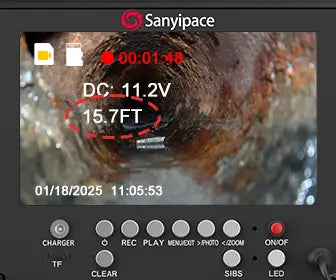
The S5517DC uses markings along the cable as a simple distance reference. This gives homeowners an estimate of how far the camera has traveled without requiring a more expensive electronic meter counter.
Keep in mind that cable markings show distance along the route traveled. They do not tell you the camera’s exact position under a floor, yard, or driveway.

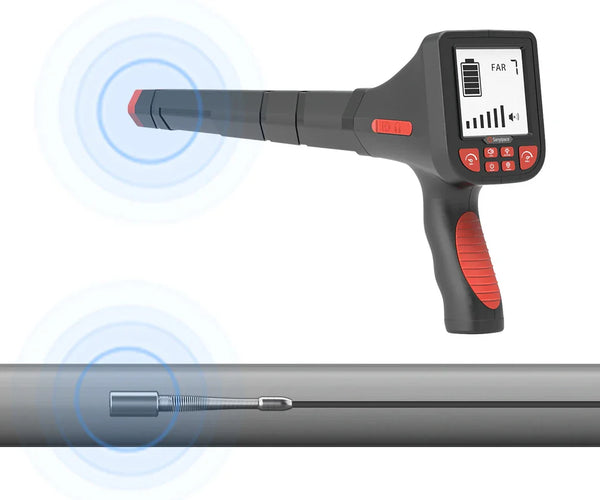
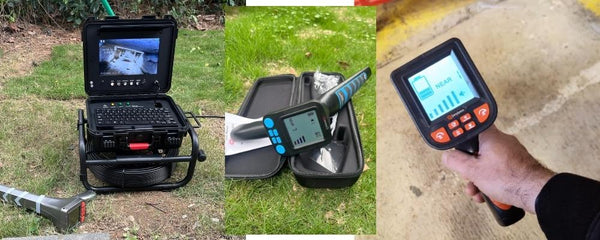
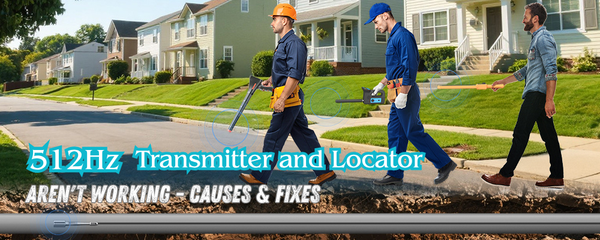
For precise above-ground locating, you would need a camera with a built-in sonde—commonly operating at 512 Hz—and a compatible handheld locator. The sonde transmits the signal from inside the pipe, while the locator receives it above ground. These are separate parts of a locating system.
Most homeowners do not need this equipment for a basic visual inspection. It becomes important when you need to mark a repair or excavation point accurately.
10. Available Replacement Parts Add Long-Term Value
The purchase price is only one part of a tool’s value. A lower-cost camera becomes less economical if a damaged cable, camera head, guide wheel, connector, or charger cannot be replaced.
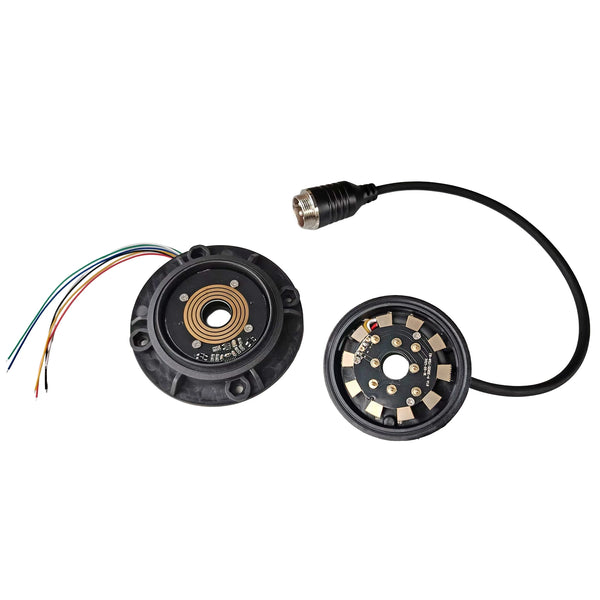
SANYIPACE offers replacement parts for the S5517DC, including the camera port, 5 mm cable coil, connectors, protective covers, guide wheels, and power plugs.
Parts availability can extend the useful life of the system and may prevent users from having to replace the entire camera because one component has worn out or become damaged.
What Problems Can the S5517DC Help You Find?
The S5517DC helps homeowners visually inspect accessible drain lines when a problem keeps returning, or its cause is unclear. By viewing the inside of the pipe, you can look for visible blockages, standing water, root intrusion, and signs of pipe damage.
| If you notice… | The camera may help reveal… |
|---|---|
| A drain stays slow after cleaning | Remaining grease, hair, soap buildup, or another restriction |
| Water backs up repeatedly | A foreign object or heavily narrowed section of pipe |
| The same drain clogs frequently | Recurring buildup, possible roots, or visible pipe damage |
| Water collects inside the line | A low spot, poor drainage, or a possible slope problem |
| An older pipe is causing concern | Corrosion, cracks, deterioration, or separated joints |
| Cleaning results are uncertain | Debris left behind or changes in the pipe before and after cleaning |
Common Ways Homeowners Use It
The S5517DC can also be used to:
- Inspect a drain before choosing a cleaning or repair method
- Compare pipe conditions before and after maintenance
- Check accessible drains in older homes or rental properties
- Record photos and videos for future reference
- Share inspection footage with a plumber for further evaluation
Example: A Drain That Keeps Slowing Down
If a drain becomes slow again shortly after cleaning, insert the camera through a suitable access point. The footage may show whether buildup remains, an object is restricting the pipe, water is collecting in a low section, or visible damage is affecting drainage.
The S5517DC does not diagnose every plumbing problem or determine the correct repair by itself. It provides visual evidence to help you decide whether the pipe needs further cleaning, continued monitoring, or professional inspection.
What the S5517DC Is Not Designed to Do

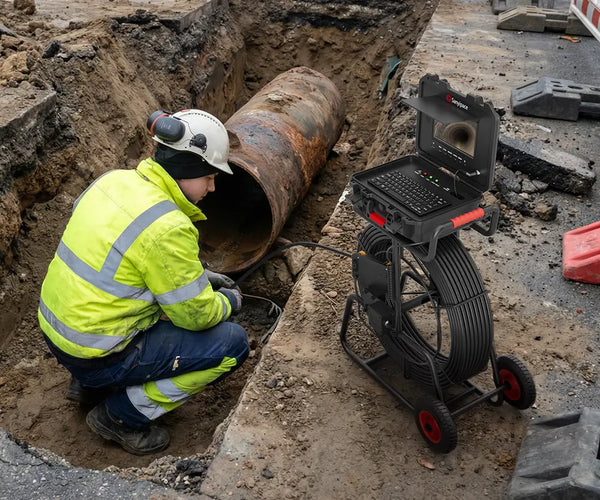
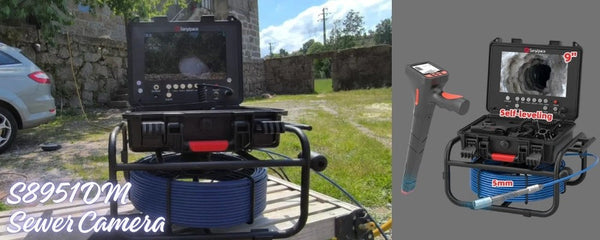
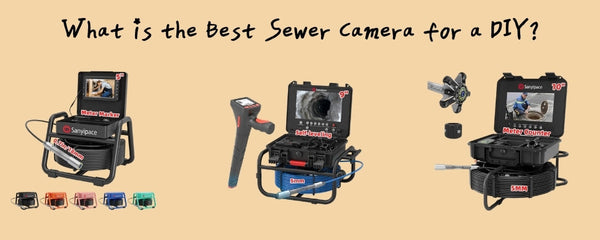
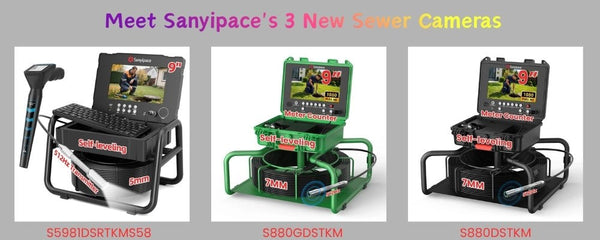
The S5517DC is designed for visual inspections, not pipe cleaning or professional underground diagnosis. It does not include self-leveling, electronic distance measurement, or a 512 Hz locating system, and its flexible 5 mm cable cannot match the long-distance pushability of a heavy 9 mm cable.
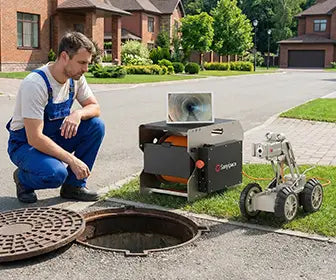
It cannot pass through complete blockages or collapsed pipes and is not intended for large municipal pipelines. These limitations help keep the system affordable while retaining the practical features most homeowners need for basic drain inspections.
Which Professional Features Can Most Homeowners Skip?
| Professional feature | When it is useful | Why many homeowners can skip it |
|---|---|---|
| Self-leveling camera | Frequent inspections and easier video interpretation | A standard image can still show visible problems |
| 512 Hz sonde and locator | Finding the camera above ground before excavation | Not required for an initial visual check |
| Electronic meter counter | Precise inspection records | Cable markings provide a basic distance estimate |
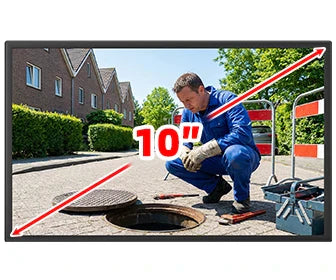
| 9- or 10-inch monitor | On-site reporting and group viewing | A compact display is sufficient for many DIY checks |
| Heavy 9 mm cable | Long, relatively straight sewer lines | It can be harder to navigate through small household bends |
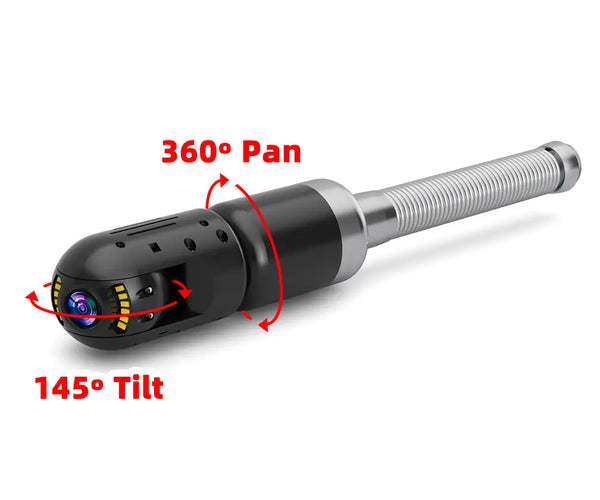
| 360° camera | Detailed examination of the entire pipe wall | Usually unnecessary for identifying common clogs or visible damage |
A good homeowner camera is not the one with the most functions. It is the one that includes the functions needed for the intended job without making the buyer pay for equipment that will rarely be used.
S5517DC vs. a Basic Phone Endoscope
A phone endoscope and a sewer camera can both provide a view inside a confined space, but they are built for different types of work.
| Feature | S5517DC sewer camera | Basic phone endoscope |
|---|---|---|
| Dedicated display | Yes | Usually no |
| Purpose-built push cable | Yes | Often too soft to push far |
| Available reach | 65 or 100 ft | Commonly much shorter |
| Cable reel | Yes | Usually no |
| Adjustable camera lighting | Yes | Varies by model |
| Photo and video recording | Included | Depends on the phone and app |
| Wet-work convenience | Keeps your phone away from the drain | Requires a phone nearby |
| Best application | Actual household drain inspection | Very short, close-range viewing |
A phone endoscope may be the more economical choice when you only need to look a few feet beyond an opening or inspect inside a wall cavity.
The S5517DC makes more sense when you need a complete system that can be fed farther into an actual drain line.
Is the S5517DC Worth Around $200?

For many homeowners, the S5517DC is worth the investment if you regularly deal with drain issues or want to inspect pipes before calling a plumber.
A professional sewer inspection can cost hundreds of dollars, while the S5517DC allows you to check your pipes whenever problems appear, such as slow drains, recurring clogs, or suspected blockages. For occasional troubleshooting and routine maintenance, a $200 inspection camera can provide long-term value.
However, the S5517DC is not a replacement for professional plumbing services. It is designed to help you identify visible pipe conditions and make better repair decisions—not diagnose every complex sewer problem.
The S5517DC Is Worth Considering If You:
- Frequently experience slow drains, clogs, or drainage problems
- Want to inspect pipes before paying for repairs
- Own multiple properties or handle regular maintenance
- Need video records to compare pipe conditions before and after cleaning
- Want a more capable tool than a basic phone endoscope
Consider Another Solution If You:
- Only need a one-time inspection
- Suspect severe pipe damage or a collapsed line
- Need precise underground pipe locating
- Require a certified inspection report
- Plan to use the camera for professional daily plumbing work
Overall, the S5517DC works best as a homeowner diagnostic tool. It helps you understand what is happening inside your pipes and avoid unnecessary service calls, but serious damage still requires professional evaluation.
Final Verdict: What Does $200 Actually Buy?
Yes, a budget in the $200 range can buy a good sewer camera—as long as “good” means suitable for the work you actually need to perform.
The SANYIPACE S5517DC provides a dedicated 5-inch 1080P display, an 18 mm IP68 camera head, adjustable LED lighting, a flexible 5 mm cable, 65- or 100-foot reach, and photo, video, and audio recording. Its all-in-one design also makes it easier to use and store than a basic camera attached to a loose cable.
It does not include self-leveling or underground locating. It also cannot match the long-distance pushability or daily durability of a more expensive professional system. For many homeowners, however, those are specialized capabilities—not essential requirements.
For inspecting accessible household drains, documenting visible problems, and deciding whether professional help is needed, the S5517DC offers the practical features most DIY users need without the cost of a professional locating system.
Ready to take a closer look inside your drains?
View the SANYIPACE S5517DC Sewer Camera

Frequently Asked Questions
Is the SANYIPACE S5517DC suitable for home use?
Yes. It is designed for homeowners, DIY users, property managers, and occasional inspections of accessible household drains. It is not intended to replace a heavy-duty professional sewer inspection system.
What pipe sizes can the S5517DC inspect?
The camera head measures 0.71 inch/18 mm. The pipe must be wide enough to accommodate the camera head, spring, and any installed protective cover. Actual access also depends on the pipe’s bends, joints, debris, and existing blockage.
Should I choose the 65 ft or 100 ft cable?
Choose based on the distance from the nearest safe access point to the area you want to inspect. The 65-foot version is suitable for many short- and medium-distance household checks. The 100-foot version provides more reach for longer residential lines.
Can the S5517DC pass through a P-trap?
It may pass through some traps and bends, but this cannot be guaranteed. The result depends on the trap size, bend angle, pipe diameter, access direction, and pipe condition. Do not force the camera if it encounters strong resistance.
Can it find the exact location of a blockage?
It can show a visible obstruction and use cable markings to estimate how far the camera has traveled. It cannot identify the precise above-ground location because it does not include a 512 Hz sonde and handheld locator.
Does the S5517DC record inspection videos?
Yes. It can record photos, video, and audio to the included 32GB TF card. Date and time information can also help organize inspection records.
Can a sewer camera unclog a drain?
No. A sewer camera is a diagnostic tool. It allows you to view the inside of the pipe but does not remove roots, grease, debris, or other blockages.
When should I call a professional plumber?
Contact a professional if the line appears collapsed, the camera cannot move past an obstruction, the footage shows serious structural damage, precise locating is required, or you are unsure how to interpret or safely address what you find.
Related reading: The 7 Best Sewer Cameras


Hagyj megjegyzést