










Is a Rainwater First Flush Necessary? A SANYIPACE Camera Inspection
This review is derived from a YouTube video featuring the creator’s real-world experience with the product. To improve readability, the original commentary has been organized into a written format while preserving the reviewer’s personal perspective and overall impressions.
One of the most common questions I get is why I don't use a first flush diverter on my rainwater collection systems. In this review blog, I'm going to explain my reasoning and inspect the pipes from the inside to see just how dirty they really are.
For those unfamiliar with the concept, a first flush diverter captures and diverts the initial runoff from your roof—the water that may contain dust, pollen, bird droppings, and other debris. Instead of entering your storage tanks, that first batch of dirty water is discarded.

Why I Don't Use a First Flush Diverter
There are a couple of reasons.
1. I Don’t Want to Waste Water
When we're in a drought, I'm not interested in dumping valuable rainwater onto the ground. I'd rather have slightly dirty water than no water at all.
We average about 49 inches of rainfall per year, and I collect roughly 1,800 gallons of water from my roof for every inch of rain. However, there can be long stretches between rain events, so every gallon matters.
2. Less Maintenance
I'm also not interested in adding another component that requires maintenance.
Instead, my downspouts connect directly to the gutters and run underground to my tanks. Beneath this section, I have a Y-fitting with a threaded cap.
If we're expecting several days of freezing temperatures, I'll remove that cap and flush the line. If it's been a while between rainstorms and I suspect debris may have accumulated, I'll do the same thing. It's a simple solution that has worked well for me.
That said, I realized it's been quite some time since I last checked these lines—probably not since January. So today seemed like a good opportunity to see what's really inside.

How I Manage Debris Without a First Flush
Not having a first flush diverter does not mean that I allow leaves and roof debris to flow freely into my tanks.
I use gutter screens to stop most pine needles, leaves, and other large debris before it enters the downspout lines. At the end of one gutter section, I intentionally leave an accessible area without a screen so I can remove accumulated material by hand.
At the bottom of the downspout pipe, I have a Y-fitting with a threaded cap. I can remove the cap to drain and flush the line, particularly before freezing weather or after debris has had time to accumulate.
Before the collected water reaches the house, it also passes through several filtration stages. I begin at approximately 50 microns and filter down to around 5 microns. A stainless-steel sediment filter is installed before the water enters the main tank.
Fine sediment still reaches the tanks, but the system is designed to allow that material to settle rather than flow directly into the house.
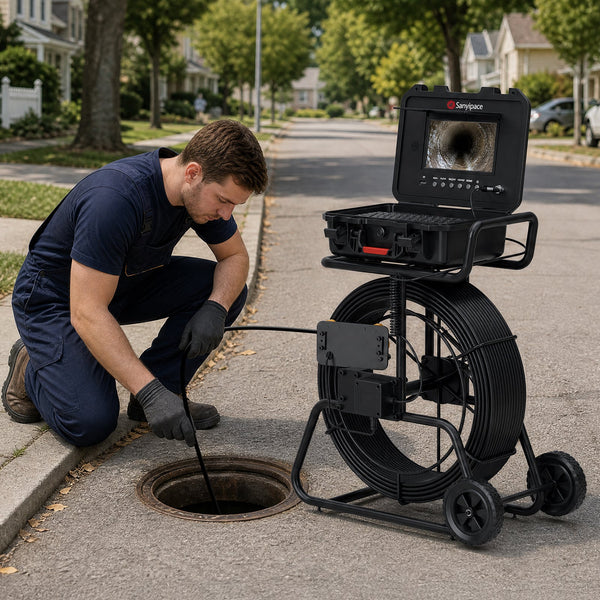
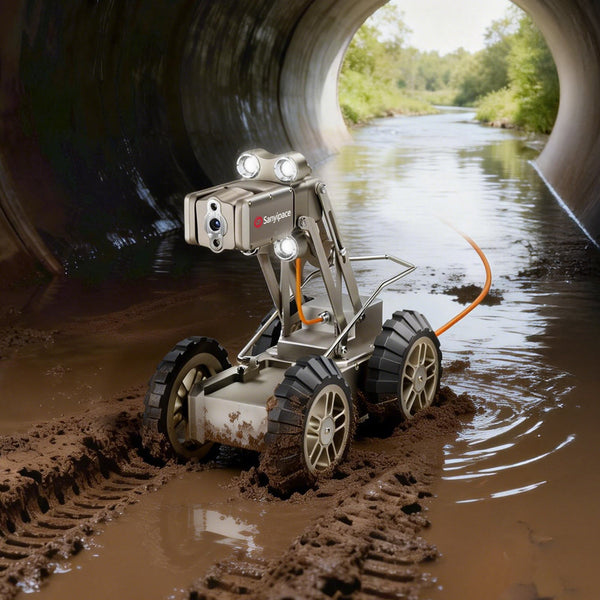
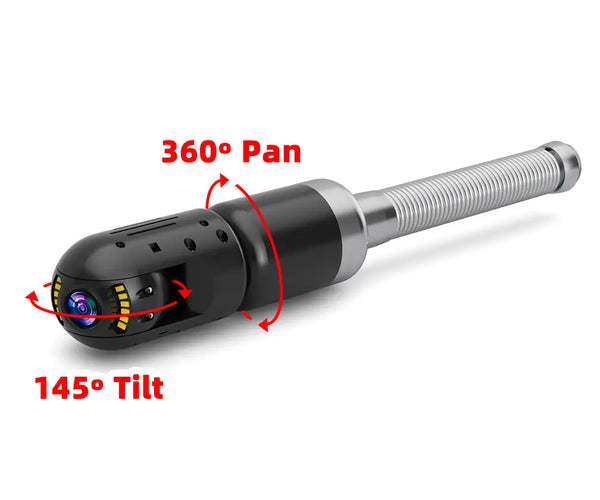
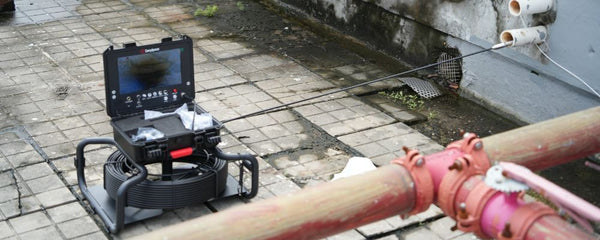
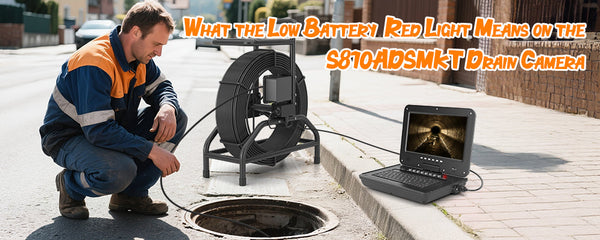
The SANYIPACE Sewer Inspection Camera I Used
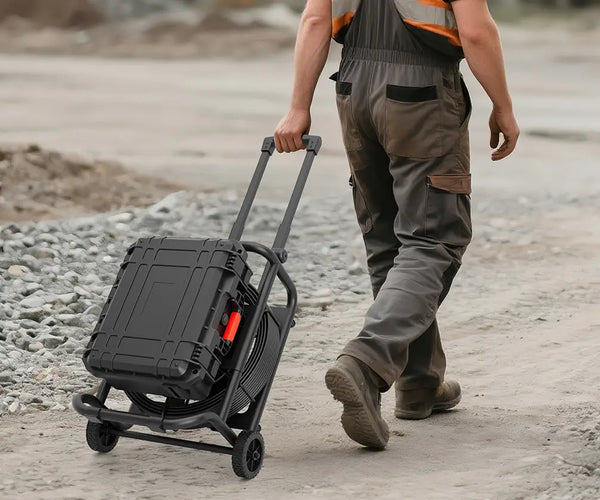
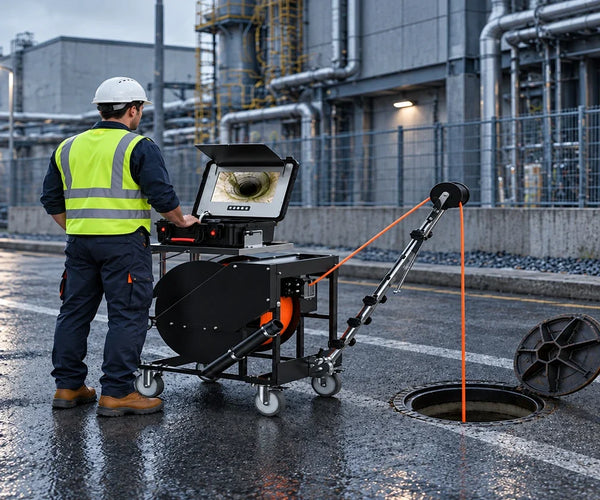
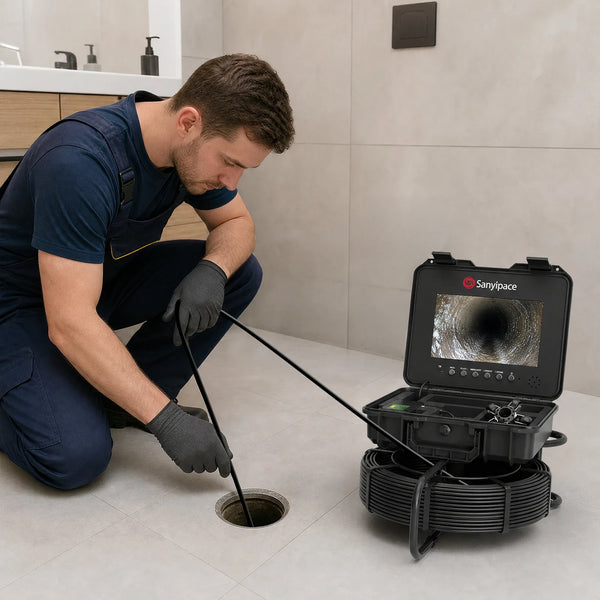
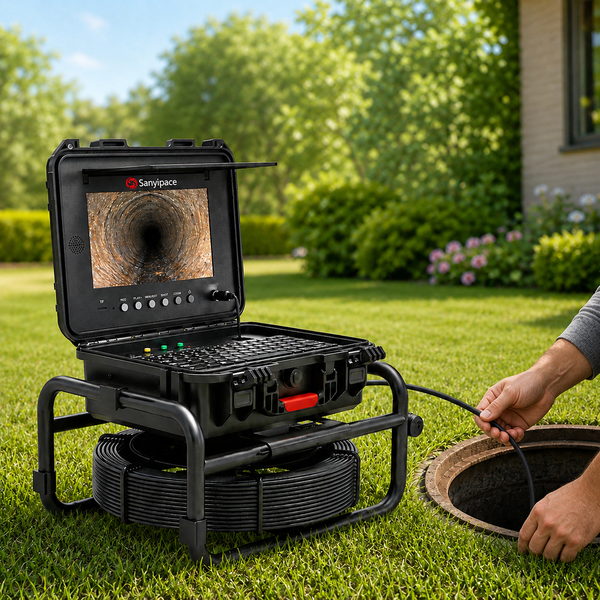
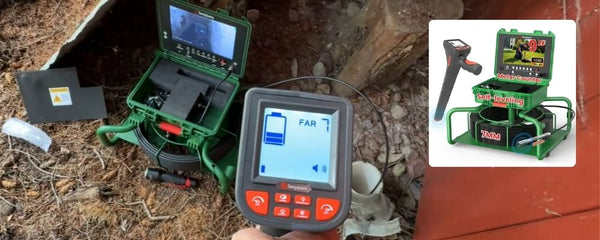
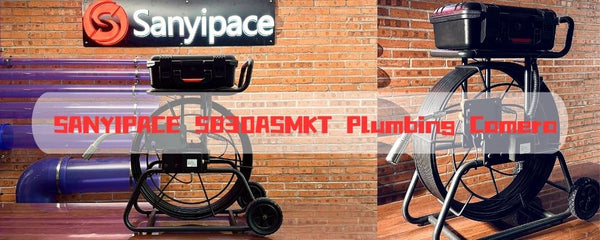
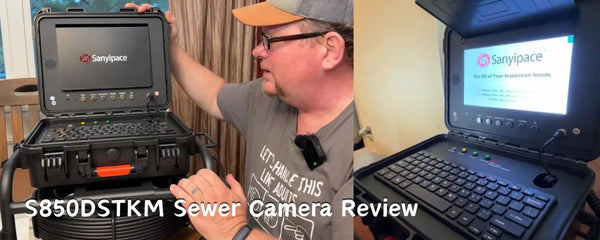
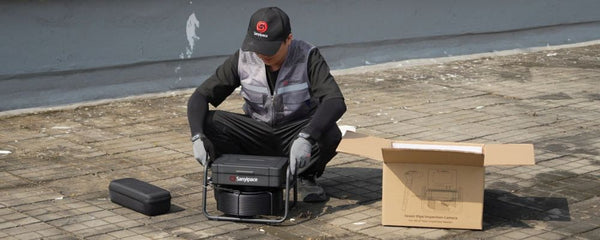
SANYIPACE supplied the plumbing and sewer inspection camera used for this inspection.
I explained that I do not normally inspect septic systems, but I could use the camera to examine rainwater pipes and storage tanks. This allowed me to answer a question that viewers have been asking for years: How dirty are my rainwater lines and tanks without a first flush diverter?
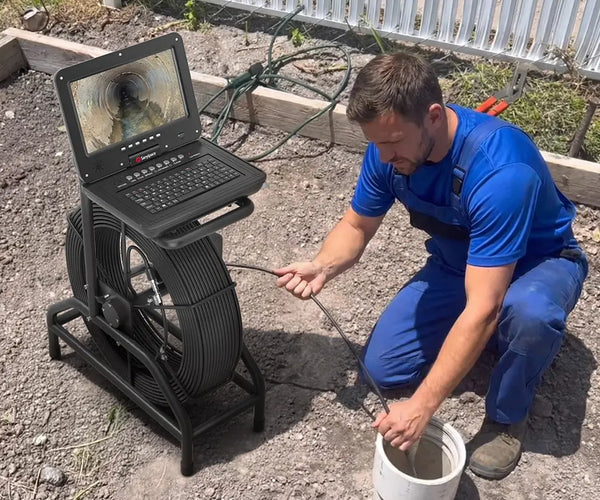
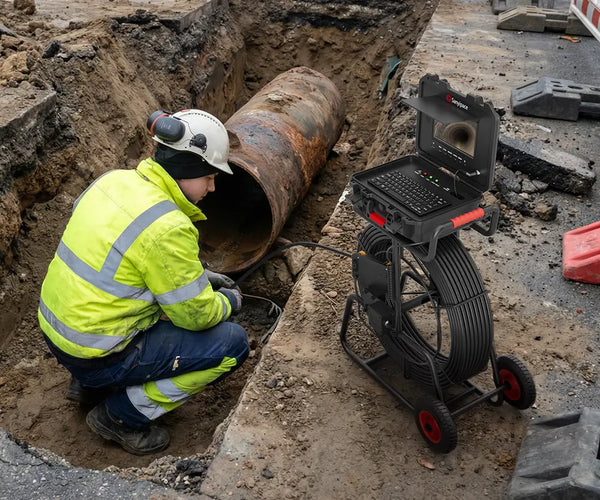
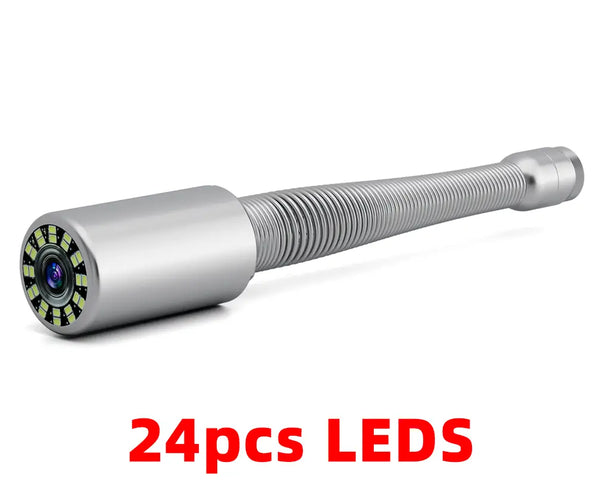
The S8951DM sewer camera system includes:
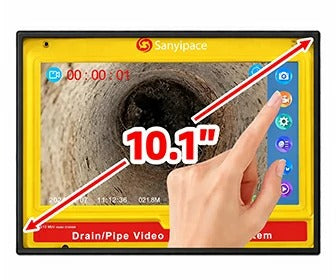
- A built-in display
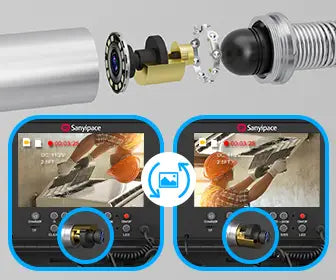
- Adjustable LED lights around the camera head
- Photo and video recording
- An SD card for storing inspection footage
- A rechargeable battery
- Protective accessories for the camera head
- A centering guide for larger pipes
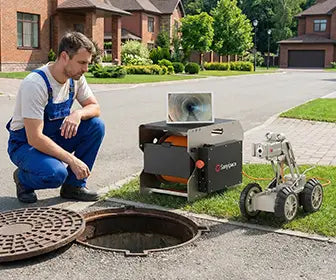
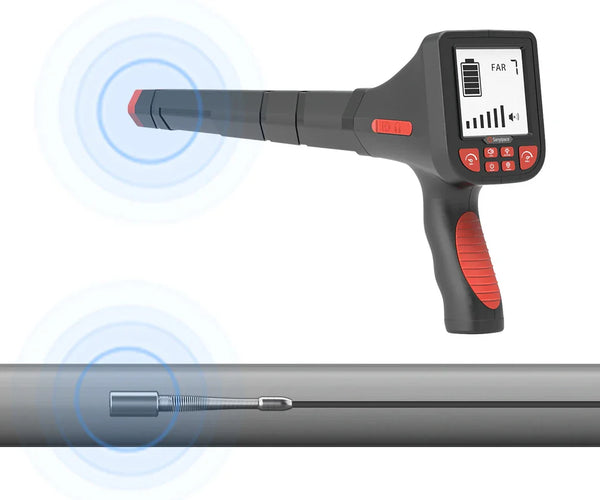
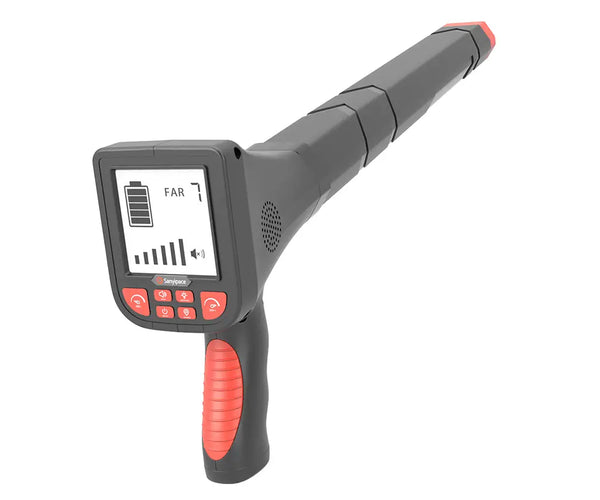
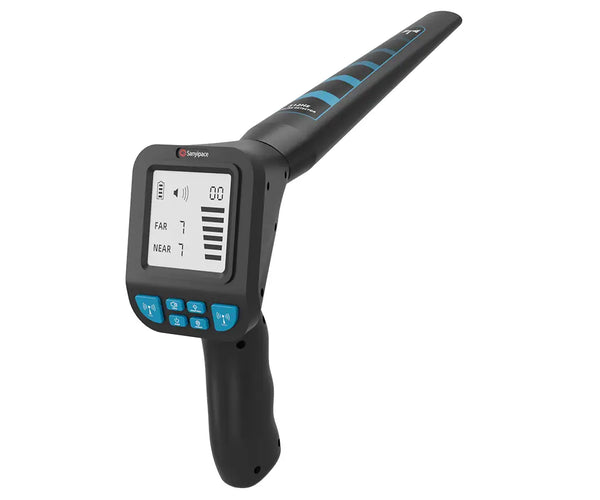
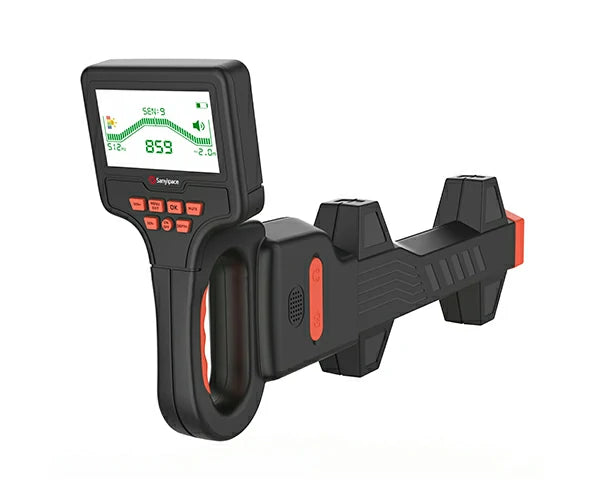
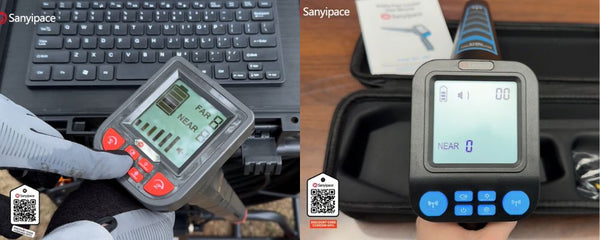
SANYIPACE also supplied a line locator. I did not need it for this tank inspection, but it could be useful for tracing buried plumbing or drainage lines and identifying the approximate location of a blockage or damaged section.

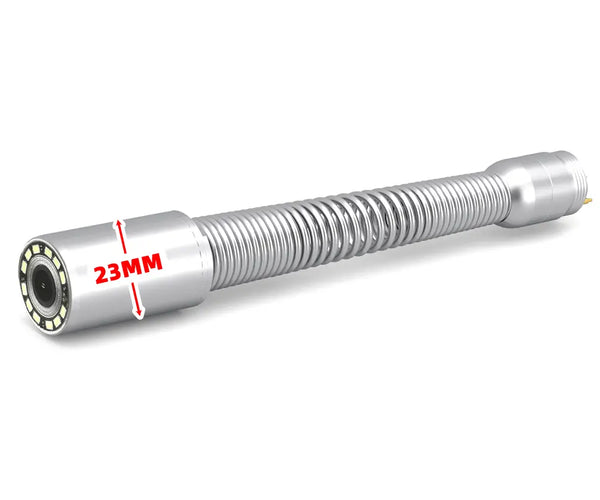
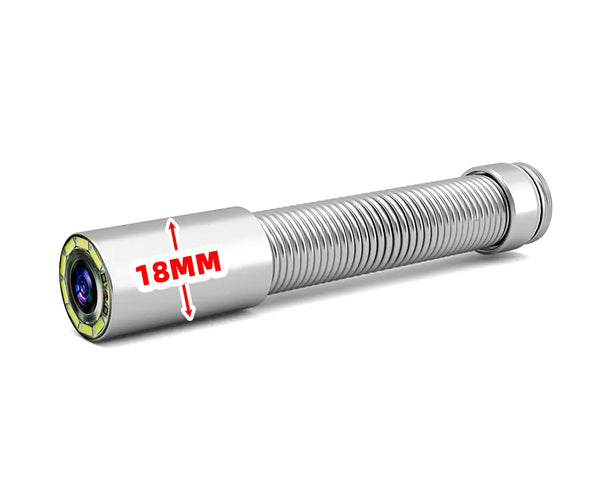
The centering guide was too large for my downspout opening, so I attached a smaller protective cover and inserted the camera directly into the pipe.
Inspecting the Rainwater Downspout Line

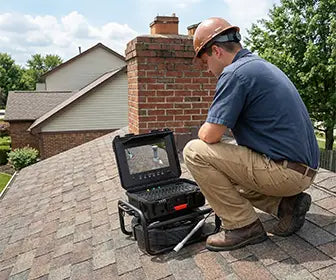
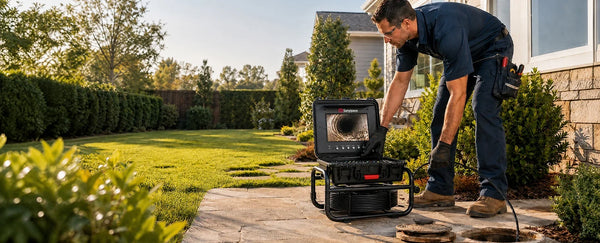
I climbed the ladder and lowered the sewer camera into the downspout.
One thing you'll notice is that I intentionally leave the very end of this gutter section without a gutter guard. That gives me a convenient access point to remove any debris by hand if necessary.
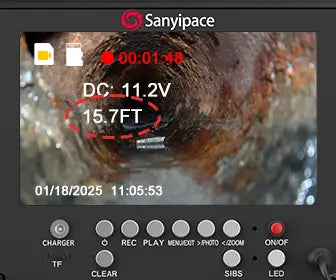
As the drain camera descended, I immediately noticed water in the pipe. The good news was that everything looked remarkably clean.
There were no visible blockages, and the pipe walls appeared to be in excellent condition.
When the camera reached the underground section, I could see some sediment suspended in the water, but nothing concerning. The gutter guards are doing exactly what they're supposed to do—keeping most pine needles, leaves, and larger debris out of the system.
What the Inspection Revealed
As you can see, the pipe is nowhere near as dirty as some people assume.
Is there sediment in the system? Absolutely.
But there are no significant blockages or debris accumulations. That's largely because the gutter guards remove most of the larger material before it ever enters the piping.
My filtration system handles any fine sediment that does make its way through.
My setup starts with a 50-micron filter and progressively filters down to about 5 microns before the water enters the house. In addition, I use a stainless-steel sediment filter before water even reaches the main storage tanks.
So yes, some sediment enters the system—but that's completely normal.

Looking Inside My Main Settlement Tank
After inspecting the pipe, I lowered the pipe camera into the first rainwater tank.
This is the tank that receives most of the incoming sediment and debris. I had not cleaned it for at least a year, and it may have been closer to two years.

When the tank becomes empty during a severe drought, I usually take the opportunity to clean it thoroughly. I pressure-wash the walls, pump out the remaining water, remove sediment with a wet vacuum, and wipe down the interior. However, the tank does not become empty very often, so this is not an annual project.
As I slowly lowered the camera into the tank, I could see some sediment on the bottom, along with a few leaves and pine needles. However, I did not find a thick layer of material or anything resembling a serious buildup.

When I moved the camera across the floor, it disturbed the sediment and created a visible clean spot. This made it easier to judge the depth of the layer. The sediment was present, but it was not particularly deep.
That distinction matters because the tank outlet sits approximately three inches above the bottom. Sediment can settle on the floor without immediately flowing into the next tank. It would have to accumulate to the height of the outlet before it could begin moving downstream in any significant amount.
I also keep the tank valves closed for a period after rain whenever possible. This allows suspended particles to settle before I transfer the water to another tank.
Based on what I could see through the camera, the sediment was nowhere close to reaching the outlet.
What I Found in the Second Tank
Before putting the camera away, I decided to inspect a second tank.
The first tank serves mainly as my settlement tank, while the two tanks are connected through underground piping and equalize as they fill. Once they are full, I can close the valves and isolate them.
The second tank was full when I inspected it. The water appeared surprisingly clear from the moment the camera entered.
Near the inlet fitting, the incoming water had pushed sediment away from the center and toward the sides of the tank. This works well for my setup because the settled material remains away from the area where water enters and exits.
Once again, I found some sediment, but not enough to cause concern or require immediate cleaning. The filtration and settlement design appeared to be managing it effectively.

What the Inspection Camera Revealed
The inspection confirmed several things about my rainwater collection system:
- The downspout line did not contain any major blockage.
- My gutter screens were stopping most leaves and pine needles.
- Fine sediment was entering the system, as expected.
- Most of that sediment was settling at the bottom of the first tank.
- The sediment was well below the raised tank outlet.
- The water in the second tank remained clear.
- I did not find enough buildup to justify immediate tank cleaning.
The camera gave me a much clearer answer than I could have obtained by looking through the tank opening from above. I could examine the bottom, view the inlet and outlet areas, and record the conditions without draining the tanks or climbing inside them.

My Experience With the SANYIPACE Camera
For this inspection, the SANYIPACE camera worked well.
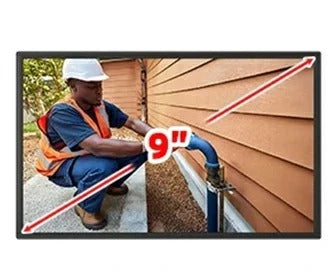
The integrated screen made the system straightforward to set up outdoors, and I did not need to connect it to a phone or separate monitor. The rechargeable battery also meant I could inspect the pipes and tanks without searching for an electrical outlet.
The adjustable LED lights were especially useful. I could change the brightness as the camera moved between the dark pipe, the water, and the lighter tank interior. Being able to record videos and take photos also gave me a useful record of the tank conditions.
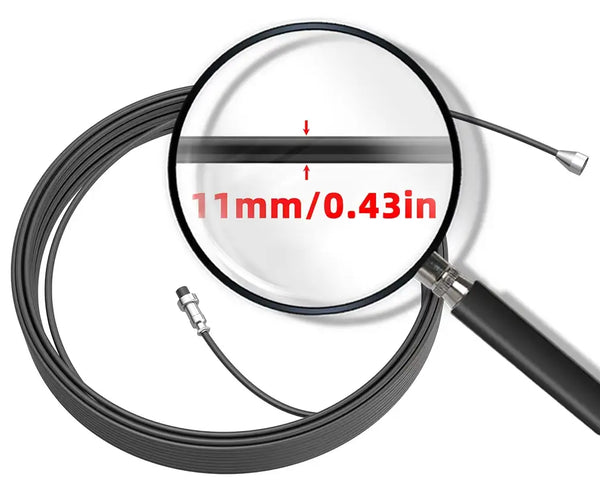
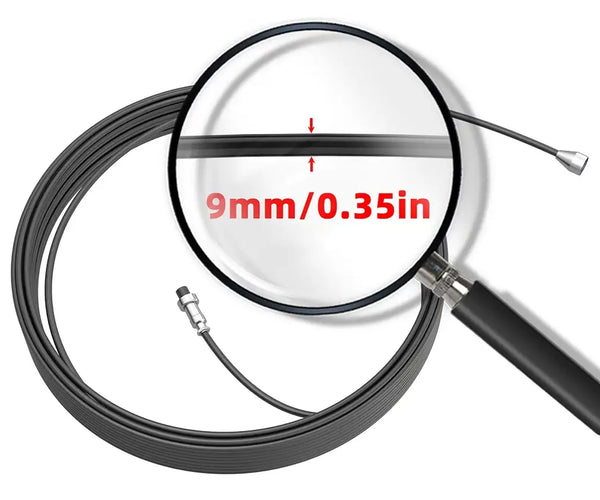
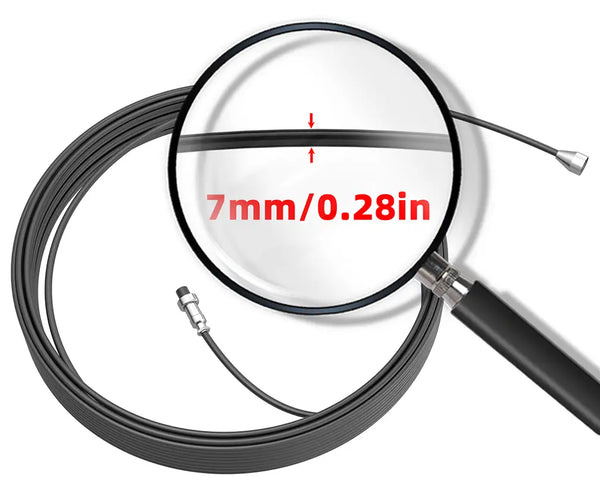
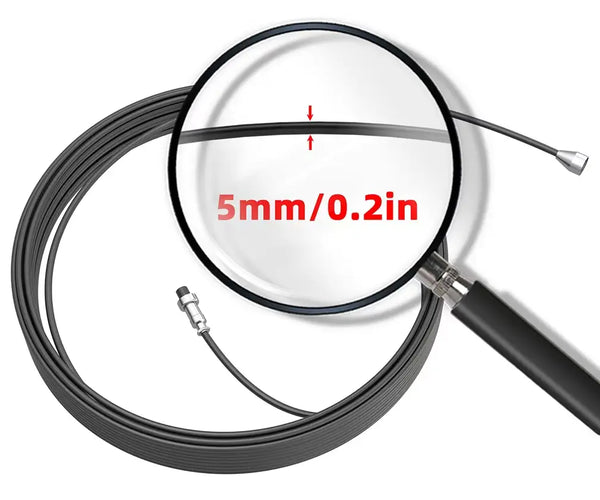
The flexible cable moved through the rainwater pipe successfully, including a bend in the line. It also made it easy to lower the camera to the bottom of the tanks.
There were a few limitations. The camera head could not be actively steered, so pointing it toward a specific part of a large tank required moving and repositioning the cable. I also could not completely close the storage case while the camera cable was connected.
Neither issue prevented me from completing the inspection, but a steerable camera would make it easier to examine specific areas inside a large tank.
Why I Still Don’t Use a First Flush Diverter
After seeing the actual condition of the pipes and tanks, my opinion hasn't changed.
For me, a first flush diverter simply isn't necessary.
A small amount of sediment in the tank is not a major issue, especially when proper filtration is in place. The cost, maintenance requirements, and water loss outweigh the benefits in my particular setup.
That doesn't mean a first flush diverter is wrong. If you have the budget, don't mind sacrificing some collected water, and want an additional layer of protection, by all means install one.
I'm not saying my way is the only way.
I'm simply showing you how I've successfully operated this system for the past eight years.
Final Thoughts
So, is a rainwater first flush necessary?
For my system, the answer is currently no.
The SANYIPACE camera showed that my downspout line was free from major blockages and that the sediment inside the tanks was relatively minor. My gutter screens, cleanout fittings, settlement tank, raised outlet, and filtration system appear to be controlling debris effectively.
That does not mean my approach is right for everyone. If you have the budget, do not need to capture every gallon, and can find a first flush system that works well for your setup, installing one may still be worthwhile.
I am simply sharing what has worked for me over the past eight years. Inspecting the pipes and tanks allowed me to base the decision on their actual condition rather than assumptions.
For this job, the SANYIPACE inspection camera gave me exactly what I needed: a clear look inside the system without draining the tanks or taking the pipes apart.
Watch the full inspection: Is a Rainwater First Flush Necessary? Let’s Inspect These Tanks & Lines
FAQ
1. What is a first flush diverter?
A first flush diverter redirects the initial roof runoff away from the storage tank. This first portion of rainwater may contain higher levels of dust, pollen, bird droppings, leaves, and other roof debris.
2. Can gutter screens replace a first flush diverter?
No. Gutter screens primarily stop leaves and larger debris, while a first flush diverter helps remove some of the finer contaminants washed from the roof. Screens can reduce the load entering a system, but the two components perform different functions.
3. How much sediment in a rainwater tank is normal?
A small amount of settled sediment is common, but there is no single acceptable depth for every system. Tank design, outlet height, water use, filtration, and intended application all matter. Sediment should be monitored before it reaches the outlet or begins affecting water quality.
4. How often should a rainwater tank be cleaned?
There is no universal schedule. Inspect the tank periodically and clean it when sediment accumulation, water quality, odor, debris, or system performance indicates that maintenance is needed. Local requirements may also specify an inspection or cleaning schedule.
5. Can a sewer camera inspect a rainwater tank?
Yes. If the camera head fits through a suitable opening, a sewer inspection camera can help examine tank sediment, fittings, and visible internal conditions without immediately draining or entering the tank.
6. Can rainwater be used in a home without filtration?
Untreated rainwater can contain biological, chemical, and physical contaminants. The required filtration and treatment depend on its intended use and local regulations. Water intended for drinking or other household uses may require filtration, disinfection, testing, and professional system design.
Related reading:


Hinterlassen Sie einen Kommentar