





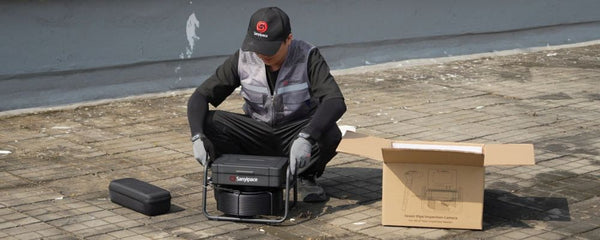
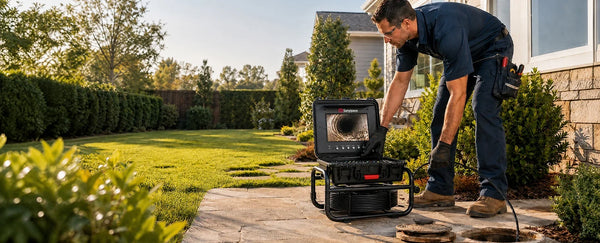
SANYIPACE S830ASMKT Review: Inspect Without Guesswork
A dark image is more than an inconvenience during a sewer inspection. If you cannot clearly identify a crack, blockage, root intrusion, or corroded section, you may need to repeat the inspection—or make repair decisions without enough information.
Finding a defect on the screen is only part of the job. You also need to determine how far the camera has traveled, locate the problem from above ground, and document what you found for the customer.
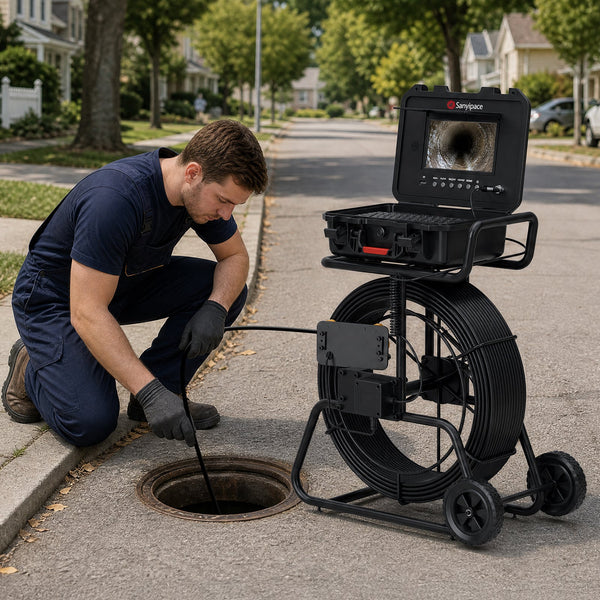
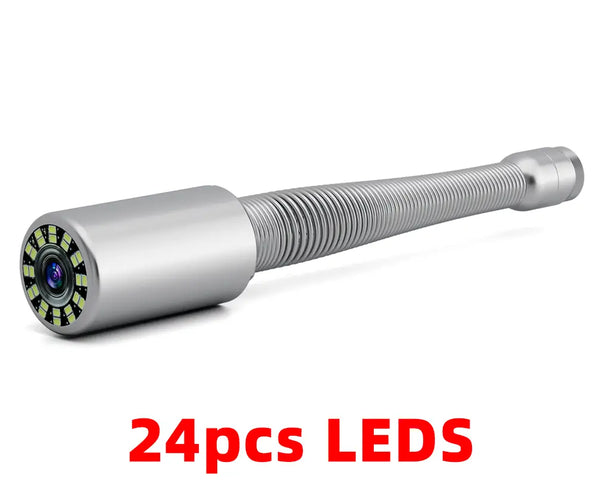
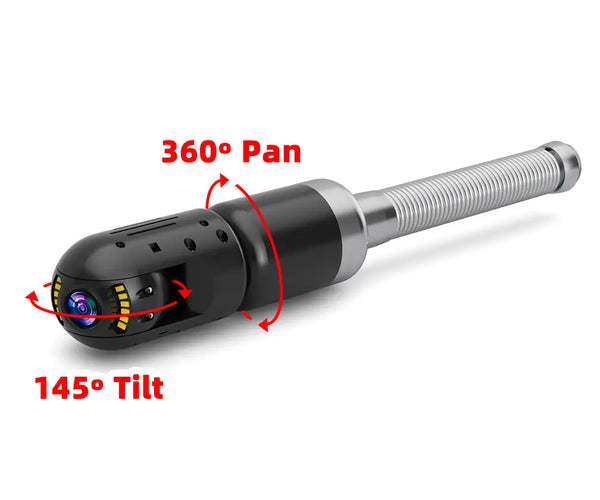
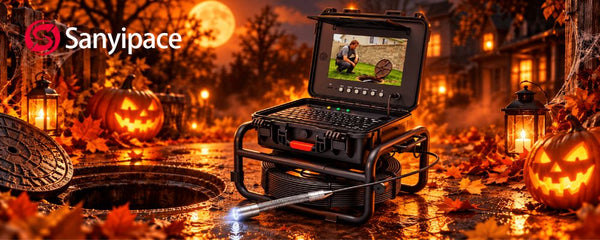
The SANYIPACE S830ASMKT is designed to bring these steps together in one inspection system. Its main features include a 31mm self-leveling camera with 24 adjustable LEDs, a rigid 9mm push rod, a distance counter, a built-in 512Hz sonde, and photo and video recording.
In this official review, we walk through the inspection process shown in our S830ASMKT video demonstration and explain where the system performs best—as well as what buyers should consider before choosing it.
S830ASMKT Sewer Camera at a Glance
| Feature | S830ASMKT specification |
|---|---|
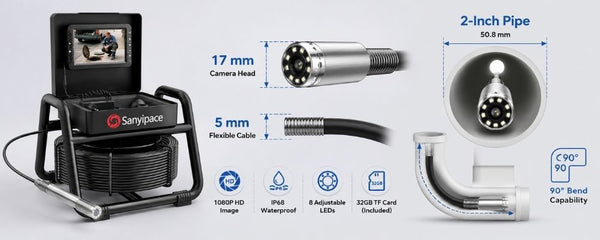
| Camera head | 31mm/1.2-inch self-leveling camera |
| Lighting | 24 LEDs with five adjustable brightness levels |
| Camera rating | IP68 waterproof |
| Video resolution | AHD 1080P |
| Monitor | 9-inch IPS display with DVR |
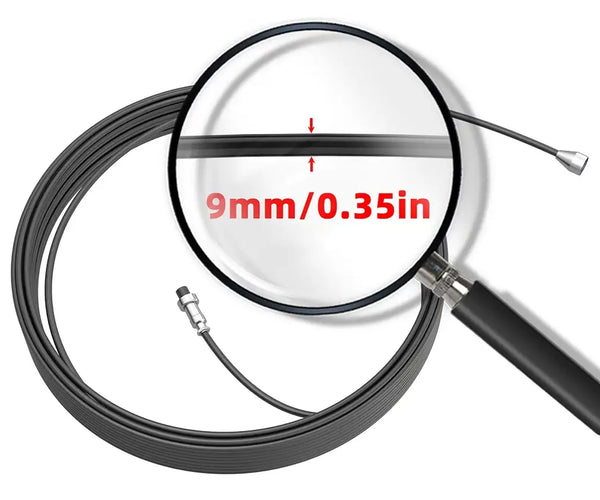
| Push rod | 9mm/0.35-inch rigid cable |
| Cable options | 50m/165ft, 70m/230ft, or 100m/328ft |
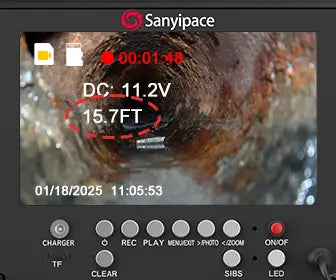
| Distance measurement | Real-time feet/meters counter |
| Locating | Built-in 512Hz sonde; compatible receiver available |
| Digital zoom | Up to 5X |
| Storage | Included 32GB SD card |
| Documentation | Photos, video recording, playback, and text entry |
| Best suited for | Long runs and medium-to-large pipes |
Quick Verdict
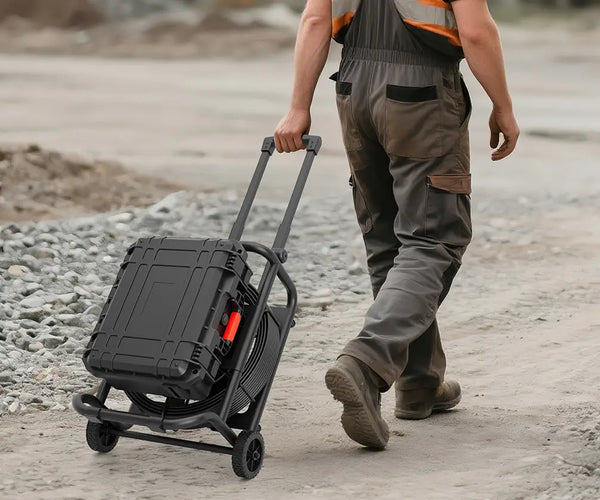
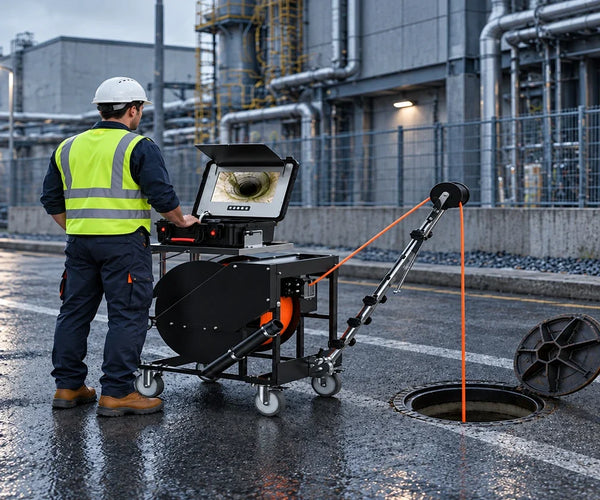
The SANYIPACE S830ASMKT is best suited to plumbers, drain contractors, inspectors, and maintenance teams that regularly work in long or relatively large pipelines.
Its biggest advantage is not one individual feature. It is the way the camera, lighting, push rod, meter counter, 512Hz sonde, and recording tools work together. The operator can see a problem, estimate its distance, locate it above ground, and save visual evidence without switching between unrelated inspection systems.
However, the 31mm camera head and rigid 9mm push rod make this a more specialized choice for long and larger pipelines. Contractors who mainly inspect narrow indoor drain lines with several tight bends may be better served by a smaller camera head and a more flexible cable.
Limited-Time Labor Day Offer
If the S830ASMKT fits your inspection needs, our Labor Day Sale runs from September 6 through September 13, 2026.
Selected S830ASMKT configurations are included in the promotion. The 50m/165ft standalone model is available at a directly reduced price, while the 70m/230ft, 100m/328ft, and selected S830ASMKT packages with the S68R locator qualify for $100 off.
Customers purchasing an eligible 512Hz camera without a receiver can also add a compatible locator for $299.99.
Discounts vary by configuration, so check the offer shown on the product page before placing your order.
Explore the S830ASMKT Labor Day offers
What Does the S830ASMKT Inspection Process Look Like?

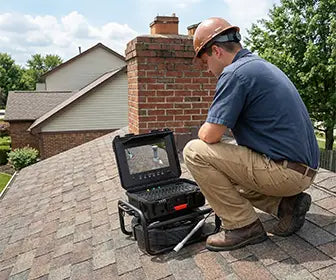
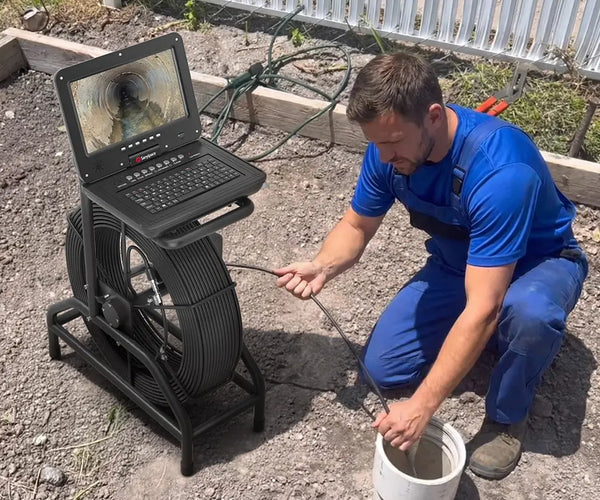
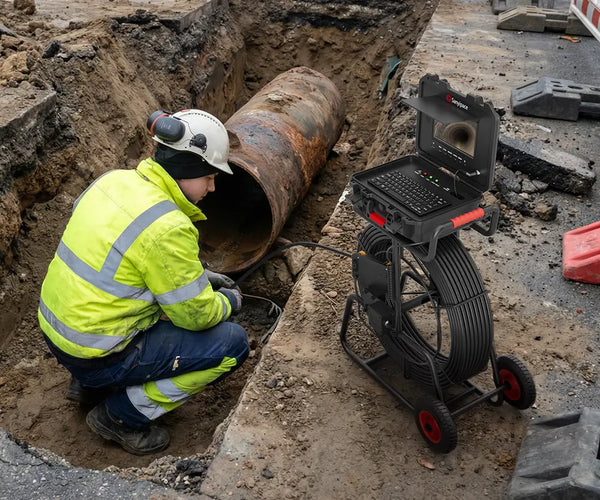
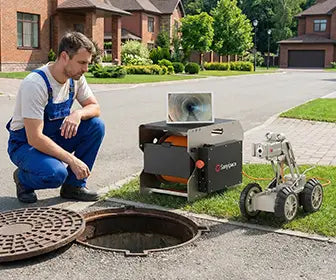
The video demonstrates a complete inspection workflow rather than only displaying the machine and its specifications.
The process includes:
- Turning on the monitor and adjusting the camera lighting.
- Feeding the camera into the pipe.
- Monitoring the upright 1080P image.
- Checking the insertion distance in feet or meters.
- Examining suspicious areas with digital zoom.
- Saving photos and video evidence.
- Using the 512Hz signal to locate the camera above ground.
- Retracting and cleaning the camera and push rod after the job.
This workflow matters because a professional pipe inspection is not simply about getting an image. The information needs to help the operator decide what the defect is, where it is located, and what should happen next.
Visibility Review: Do 24 LEDs Make a Practical Difference?

The upgraded 24-LED camera head is the S830ASMKT’s most recognizable feature. It surrounds the lens with more lighting points to illuminate dark pipe interiors.
More LEDs do not automatically guarantee a better inspection. The usefulness of the lighting depends on whether the operator can adjust it for different pipe conditions. Wet PVC, standing water, and metallic pipe surfaces can reflect too much light, while large, dark, or heavily corroded lines may require stronger illumination.
The S830ASMKT addresses this with five brightness levels. Pressing the F6 key allows the operator to increase or reduce the illumination without removing the camera from the pipe.
That flexibility can help in several situations:
- Lower settings can reduce glare on wet or reflective pipe walls.
- Medium settings may provide a balanced view in ordinary drain lines.
- Higher settings can reveal more of the surrounding wall in dark or larger pipes.
- Lighting can be adjusted as conditions change during the same inspection.
In other words, the practical benefit is not simply that the sewer inspection camera has 24 LEDs. It is the ability to manage that light during the inspection.
Image Review: 1080P, Self-Leveling, and 5X Zoom
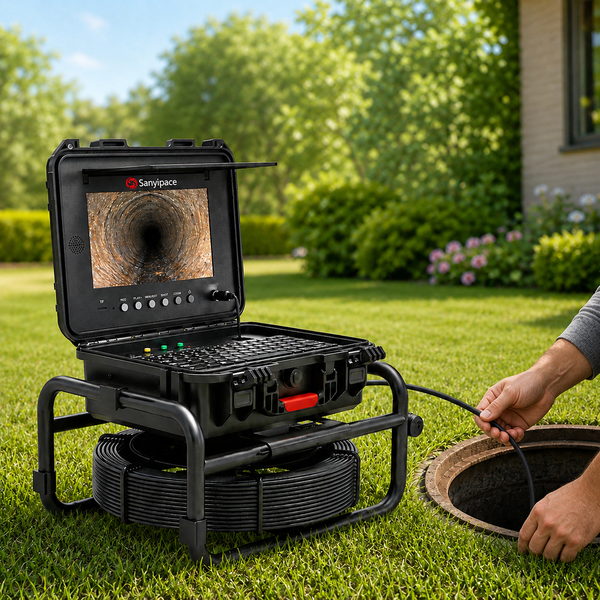
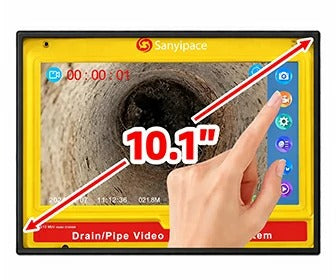
The camera sends a 1080P AHD image to a 9-inch IPS monitor. In the demonstration, the screen is used to examine cracks, corrosion, deposits, and suspected blockages as the camera moves through the pipe.
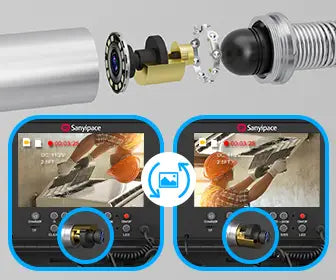
1. Self-Leveling View

A conventional camera head may rotate with the push rod, causing the image to appear sideways or upside down. This can make it harder to interpret the position of a defect, especially when reviewing a long recording.
The gravity-based self-leveling mechanism in the S830ASMKT helps keep the image upright as the camera moves. It does not control or rotate the camera head, but it makes the footage easier to understand.
This is useful when:
- Following the camera through a long pipe;
- Determining whether a defect is near the top, bottom, or side of the pipe;
- Reviewing recorded footage after the inspection;
- Explaining the findings to a customer.
2. 5X Digital Zoom

When the operator notices a suspicious area, the image can be enlarged with the 5X digital zoom. This makes it easier to take a closer look without immediately repositioning the camera head.
Because this is digital rather than optical zoom, it enlarges the existing image instead of adding new image detail. It is most useful for reviewing a specific part of the screen, not as a substitute for moving the camera closer when conditions allow.
Push Rod Review: Where the 9mm Cable Works Best

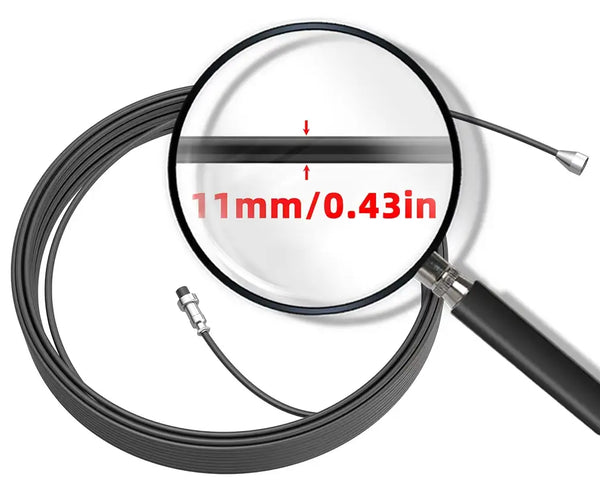
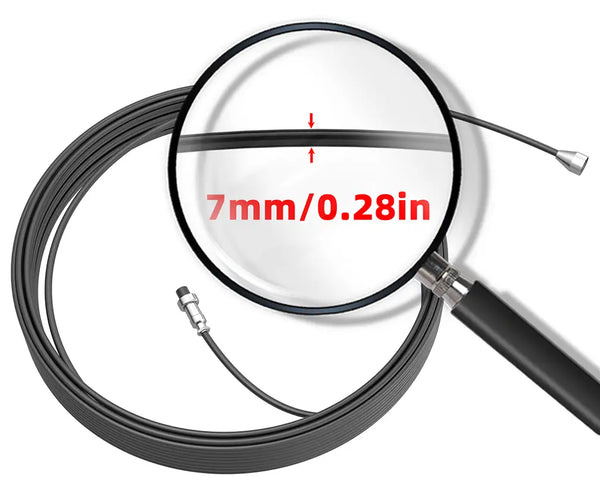
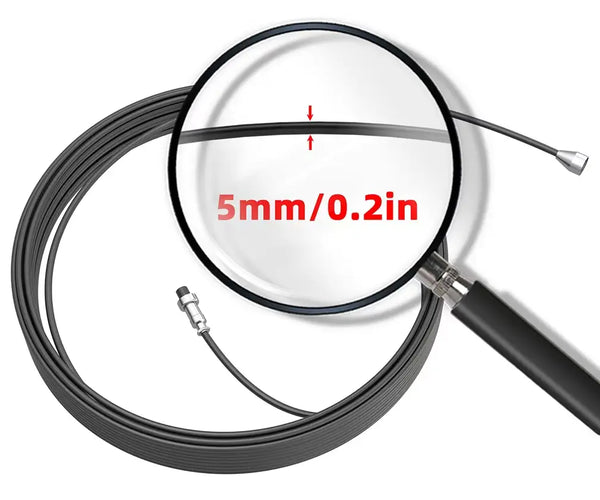
The S830ASMKT uses a 9mm/0.35-inch push rod. Compared with thinner 5mm or 7mm cables, the thicker rod emphasizes rigidity and pushing strength.
That makes it particularly useful when an operator needs to move the camera through:
- Long sewer laterals;
- Medium-to-large drain lines;
- Straight or moderately curved pipelines;
- Pipes where a thinner cable may flex before reaching the required distance.
The system is available with 50m/165ft, 70m/230ft, and 100m/328ft cable options. However, cable length should not be interpreted as a guaranteed inspection distance in every pipe.
The distance a camera can actually travel depends on several factors:
- Pipe diameter;
- Number and angle of bends;
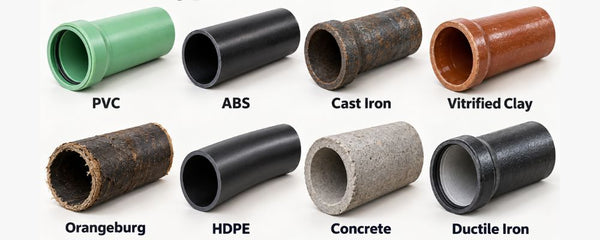
- Pipe material;
- Deposits, roots, or debris;
- Condition of the push rod;
- Access-point design;
- Friction between the camera, guide wheel, and pipe wall.
A 100m cable provides the available length, but it does not guarantee that the camera will pass through 100 meters of a narrow pipe containing multiple sharp elbows.
Pipe Diameter Compatibility
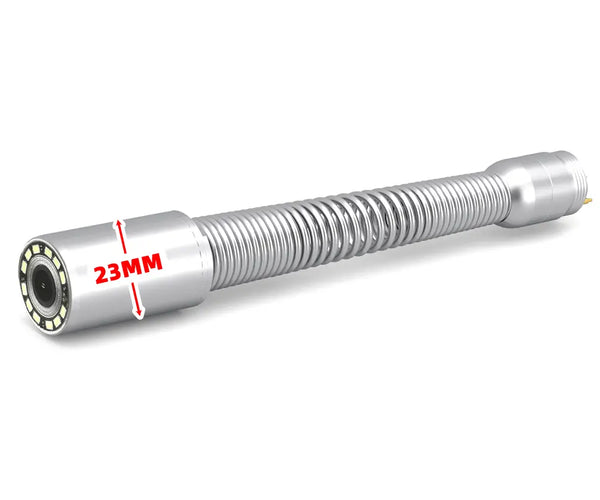
The camera head measures approximately 31mm/1.2 inches in diameter and is intended for pipes larger than approximately 40mm/1.6 inches.
The included guide wheel increases the operating diameter to approximately 108mm/4.25 inches. This helps center and stabilize the camera in pipes larger than approximately 120mm/4.7 inches.

The current product guidance also notes that passing through a 90-degree elbow requires a pipe diameter greater than approximately 100mm/3.94 inches. Actual bend performance will still depend on the elbow radius and surrounding pipe conditions.
The S830ASMKT is therefore better suited to longer and larger lines than to narrow household drains with repeated tight turns.
Meter Counter Review: Measuring How Far the Camera Has Traveled

Once a problem appears on the monitor, the operator needs to know where it is located along the pipe.
The built-in counter measures the amount of cable deployed and displays the distance on the screen in real time. The F4 key switches the measurement between feet and meters, while the counter can be reset before starting a new inspection.
This gives the operator a useful reference point for:
- Estimating the defect’s distance from the access point;
- Comparing multiple problem areas;
- Recording inspection findings;
- Planning cleaning or repair work;
- Explaining the location to a customer.
The counter indicates deployed cable length. It should not be treated as a complete substitute for above-ground locating, because bends and changes in pipe direction can affect how the measured cable distance relates to the surface position.
512Hz Locating: From On-Screen Defect to Surface Position

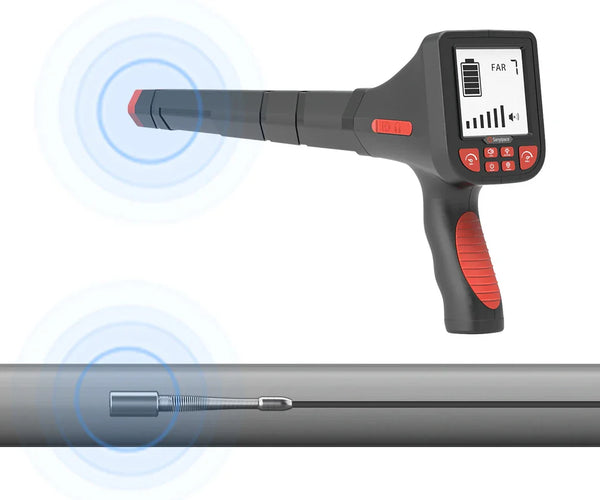
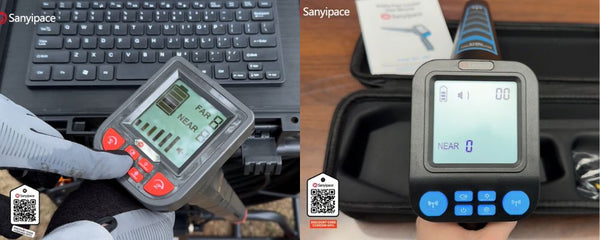
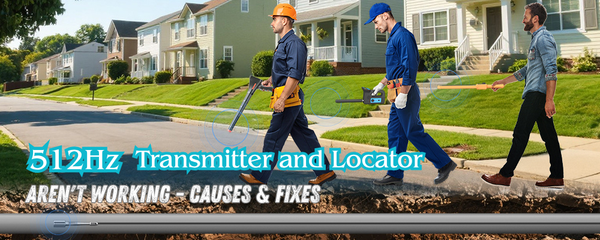
The camera head includes a 512Hz sonde that transmits a signal while it is inside the pipe. A compatible 512Hz receiver can then be used above ground to trace the signal and narrow down the camera’s location.
A typical locating workflow looks like this:
- Identify the suspected defect on the monitor.
- Stop advancing the camera.
- Record the distance shown by the meter counter.
- Scan the area above ground with the receiver.
- Mark the strongest signal location.
- Use the image, measured distance, and surface signal together when planning the repair.
This can help reduce unnecessary excavation by giving the contractor more information before digging.
It is important to distinguish between the built-in sonde and the receiver. The camera system transmits the 512Hz signal, but the above-ground locator is only included when the customer selects a package with a compatible receiver.
Locating performance may also vary depending on burial depth, soil conditions, nearby metal, electrical interference, and other site-specific factors. The locator should be treated as a diagnostic aid rather than a guarantee of exact excavation coordinates.
Recording and Reporting: Turning Footage Into Evidence

A pipe inspection becomes more valuable when the findings can be saved and shared.
The S830ASMKT includes a 32GB SD card and supports 1080P video recording, still images, and playback on the monitor. An included keyboard also allows the operator to add text notes to the footage.
This can be useful for documenting:
- The property or job number;
- Inspection date;
- Pipe section;
- Approximate defect distance;
- Type of suspected damage;
- Recommended follow-up work.
Instead of only describing the problem verbally, a contractor can show the customer what was found and preserve the footage for later review.
Recorded evidence can support discussions about cleaning, repair, excavation, or additional diagnosis. It may also make it easier to compare the pipe’s condition before and after work is completed.
Cleaning and Post-Job Handling

After the inspection, the push rod can be retracted onto the reel while the operator removes residue from the cable.
The IP68-rated camera head is designed for wet pipe environments and can be rinsed and wiped after use. The cable should also be cleaned before being returned fully to the reel to reduce dirt buildup inside the system.
However, the IP68 rating applies to the camera head—not automatically to the monitor, control box, connectors, keyboard, or charger. These components should be kept dry and cleaned according to the user manual.
Before storing the system:
- Remove sewage and debris from the camera and cable;
- Dry the camera head and connectors;
- Inspect the spring and lens cover for damage;
- Retract the cable evenly;
- Make sure the equipment is dry before closing or storing it.
What We Like About the S830ASMKT

1. Adjustable Illumination
The 24 LEDs and five brightness settings offer more control than a fixed-brightness camera, especially when moving between reflective, dark, and large pipe sections.
2. Upright Inspection Footage
The self-leveling camera makes live viewing and recorded footage easier to interpret.
3. Long-Range Configuration Options
The rigid 9mm push rod and cable options up to 100m/328ft make the system suitable for long inspection projects, provided pipe conditions allow the camera to advance.
4. Combined Distance and Surface Locating
The meter counter provides a cable-distance reference, while the 512Hz sonde supports above-ground locating with a compatible receiver.
5. Built-In Documentation Tools
Photos, 1080P recordings, playback, SD card storage, and keyboard notes help turn an inspection into a customer-ready record.
What to Consider Before Buying

No sewer camera is ideal for every pipe. Before choosing the S830ASMKT, consider the following limitations:
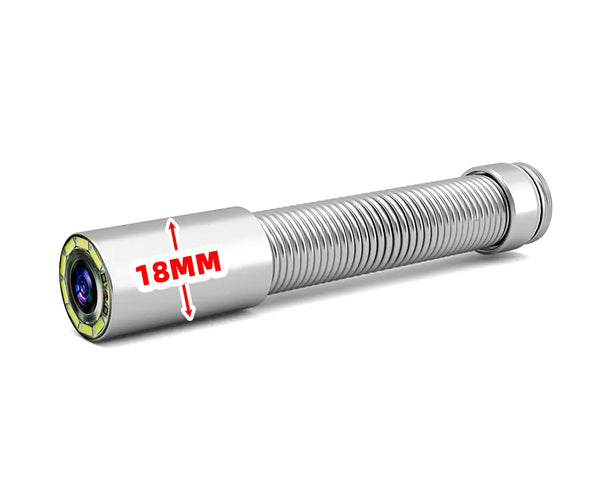
- The 31mm head may be too large for narrow household drains.
- The rigid 9mm cable prioritizes pushing strength over maximum flexibility.
- Passing tight or repeated elbows depends heavily on pipe diameter and bend radius.
- The 5X zoom is digital, not optical.
- The 512Hz receiver is not included with every configuration.
- Maximum cable length does not guarantee maximum travel through a complex pipe.
- The video demonstration does not establish long-term durability under daily field use.
These are not necessarily disadvantages for the intended user. They help define where the system is—and is not—the right fit.
Who Should Choose the S830ASMKT?

The S830ASMKT is worth considering if you are:
- A plumber or drain-cleaning contractor;
- A sewer or underground infrastructure inspector;
- A property or facility maintenance professional;
- Inspecting long, dark, or relatively large pipelines;
- Looking for a rigid push rod with up to 100m/328ft of available length;
- Producing inspection footage or reports for customers;
- Planning repairs that may benefit from 512Hz locating.
A smaller camera may be more suitable if you primarily inspect:
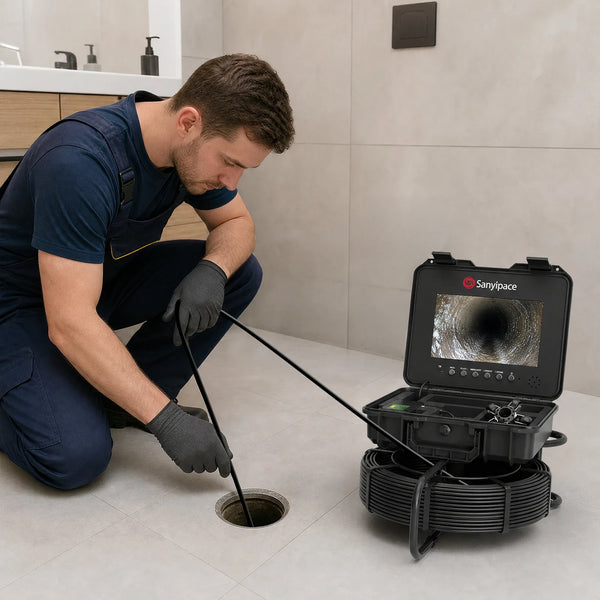
- Sink, shower, or other narrow indoor drains;
- Pipes with several close, sharp bends;
- Short lines that do not require a distance counter or sonde;
- Occasional DIY problems where a simpler system is sufficient.
Final Verdict: Is the S830ASMKT Worth It?
The SANYIPACE S830ASMKT is not built around visibility alone. Its strongest feature is the complete process it supports: illuminating the pipe, maintaining an upright image, reaching farther with a rigid push rod, measuring the deployed distance, locating the camera above ground, and documenting the result.
The 24 adjustable LEDs are particularly useful in dark and larger pipes, while the self-leveling camera makes the footage easier to interpret. The 9mm push rod adds the rigidity needed for longer runs, although buyers should account for pipe diameter and bend complexity. The meter counter, 512Hz sonde, and recording system then turn the image into information that can guide the next step.
For professionals who regularly inspect medium-to-large pipes and need both locating and reporting capabilities, the S830ASMKT offers a practical all-in-one workflow.
For narrow lines with repeated tight bends, a smaller and more flexible camera system may be the better choice.
Explore the SANYIPACE S830ASMKT and available cable configurations.
Frequently Asked Questions

1. Does the S830ASMKT include a 512Hz locator?
The camera includes a built-in 512Hz transmitting sonde. The above-ground receiver is included only when you select a package that comes with a compatible locator.
2. What pipe size is the S830ASMKT designed for?
The 31mm camera head is intended for pipes larger than approximately 40mm/1.6 inches. With the 108mm guide wheel installed, it is better suited to pipes larger than approximately 120mm/4.7 inches.
3. Can the S830ASMKT pass through a 90-degree bend?
It may pass a 90-degree elbow when the pipe is sufficiently large. Current product guidance recommends a diameter greater than approximately 100mm/3.94 inches. Performance will depend on the bend radius, pipe condition, and number of elbows.
4. Can the S830ASMKT inspect a full 100m/328ft line?
A 100m configuration provides up to 328 feet of cable, but actual travel distance depends on pipe diameter, bends, friction, debris, and access conditions. Cable length should not be interpreted as a guaranteed inspection distance in every pipeline.
5. Can inspection videos be transferred to another device?
Yes. Photos and videos are stored on the included SD card and can be reviewed on the monitor or transferred to a compatible computer or device for reporting and storage.
Related reading: One Tool, Two Cameras: A Professional Review of the SANYIPACE S820TSMKTR


Deixe um comentário