





Self-Leveling vs. Non-Self-Leveling Sewer Camera: How to Choose?
When selecting a sewer camera, pixel count is often fixed (most inspection devices now come equipped with 1080p HD cameras). What you need to consider is whether the self-leveling feature is necessary.
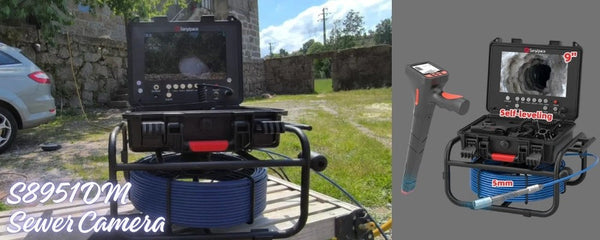
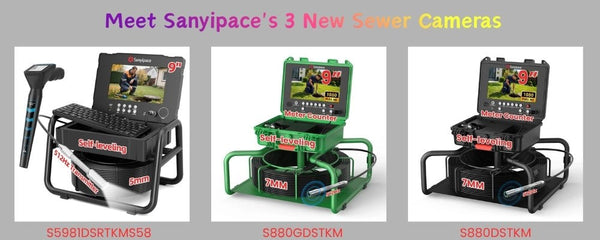
A sewer camera with self-leveling capability allows you to maintain a vertical, upward-facing orientation throughout the job without getting disoriented.
Next, we'll break down the differences between these two types and help you determine if this feature is right for you.
What is Self-Leveling?

The Principle Behind “Always Facing Up”
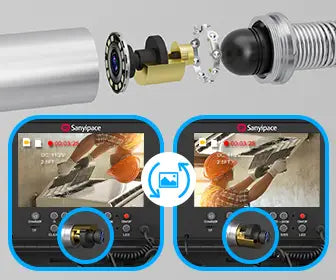
Simply put, a self-leveling lens is like having a “roly-poly toy” or “gravity balancer” inside the camera.
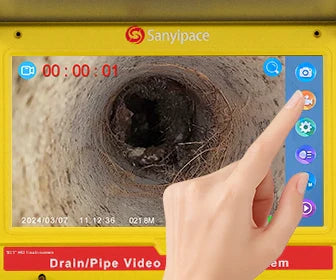
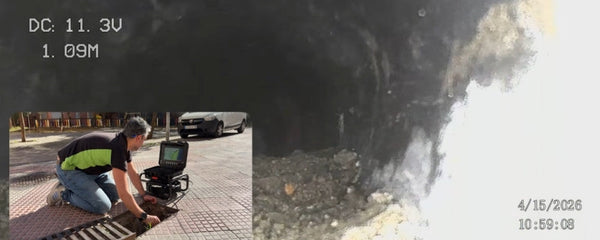
When you push a standard camera into a winding pipe, it twists and turns with the cable. On the monitor, the image might spin wildly or tilt sideways. Self-leveling lenses use internal mechanical counterweights or electronic sensors to ensure the “top” in the camera's view always corresponds to the physical “up” in the real world.
Core pain points addressed: Orientation and diagnostic efficiency
Eliminates dizziness: Staring at a constantly rotating image for ten minutes will make anyone feel dizzy and nauseous.
Direction identification: Spotted a crack above the pipe? Without self-leveling, you can't tell if it's the pipe's top or bottom. Self-leveling lets you instantly understand: Is that the “12 o'clock direction” or the “6 o'clock direction”?
Self-Leveling vs. Non-Self-Leveling Sewer Camera: Key Differences

1. Inspection Speed
Self-Leveling: Push in and see. No need to stop and adjust cable angles—just focus on finding the fault point.
Non-Self-Leveling: You must frequently rotate the cable to find the “horizon” or constantly mentally translate spatial positions, resulting in significantly slower inspection progress.
2. Accuracy
Orientation matters when identifying cracks, joint misalignments, or collapses. Self-leveling enables swift, precise conclusions (e.g., “Tree roots penetrating from the 4 o'clock position on the left”), providing valuable insights for subsequent precision excavation or trenchless repairs.
3. Learning Curve
Self-leveling: Zero learning curve. As intuitive as watching a dashcam.
Non-Self-Leveling: Requires a certain “feel.” Experienced technicians can gauge the camera's orientation by the cable's resistance, but novices often get lost in the maze-like pipes.
4. Cost & Maintenance
Self-Leveling: Typically more expensive. Additionally, due to its internal moving mechanical components, it's more delicate than fixed-lens cameras, resulting in slightly higher repair costs.
Non-Self-Leveling: Simple construction, rugged durability, and relatively lower purchase cost—typically 20%-30% cheaper, depending on the model.
5. Battery/Weight Trade-offs
While modern electronic self-leveling technology is lightweight, mechanical self-leveling often slightly increases lens head length and weight. In extremely narrow or 90-degree sharp-bend pipes, shorter standard lenses may sometimes navigate more easily.
Who Should Definitely Buy "Self-Leveling"?

Professional plumbers/property maintenance staff: Efficiency is money. If you need to submit multiple inspection reports daily, self-leveling saves you significant time on post-processing and explanations.
Those requiring precise repair location: If your next step is “digging up the floor,” you absolutely don't want to misidentify the damaged spot.
Complex pipe network operations: With numerous pipe bends and branch lines, self-leveling keeps you oriented at all times.
When is "Non-Self-Leveling" Sufficient?
Occasional DIY or home use: If you just want to check if your home drain is clogged with toilet paper, the image orientation won't affect your judgment of “where the blockage is.”
Budget-conscious users: Within limited budgets, extending cable length or purchasing a higher-resolution (e.g., 1080P) standard lens often delivers greater value than self-leveling.
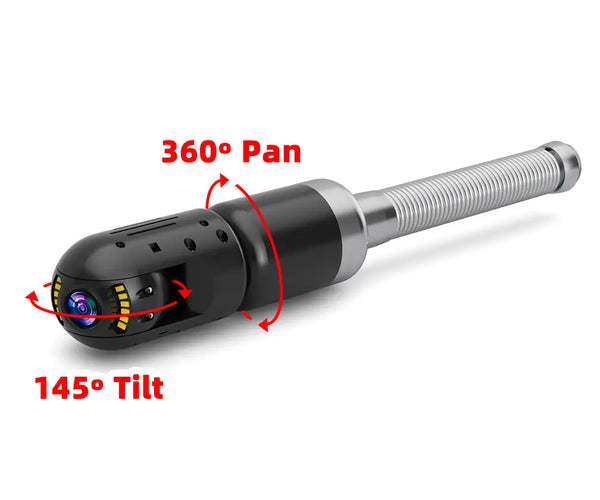
Ultra-narrow pipe inspections: In extremely tight conduits, the bulk of a self-leveling lens may become an obstacle—consider a rotatable drain camera instead.
Buying Tips

Before deciding to purchase a gimbal stabilizer, beyond checking whether “the footage stays level,” the following three practical metrics directly determine your return on investment:
1. Self-Leveling + Lens Diameter/Barrel Diameter Matching
Physical Limitations: Gimbal lenses typically feature longer lens modules than standard lenses due to built-in counterweights or complex electronic gyroscopes.
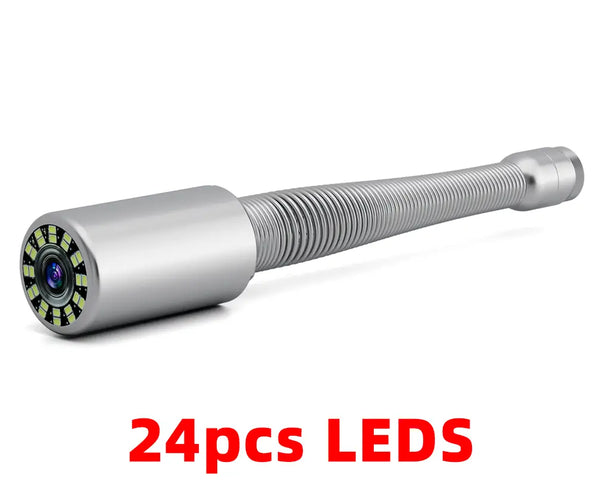
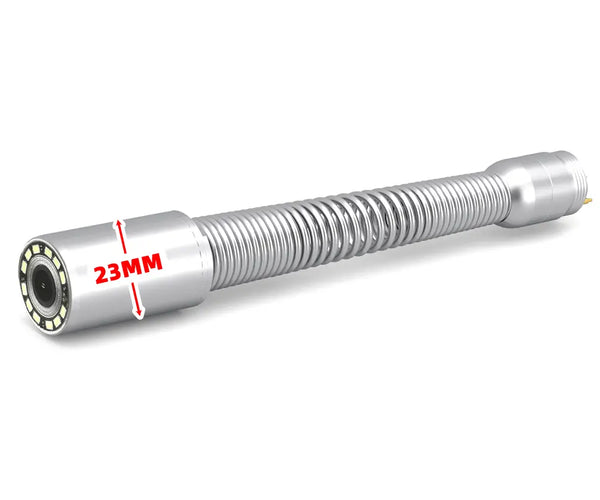
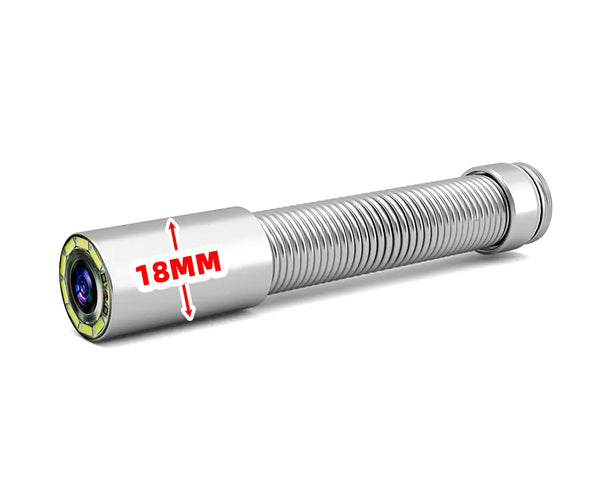
Data Reference: Standard non-self-leveling lenses can achieve diameters of 14mm-20mm. Self-leveling lenses typically range from 23 mm to 38 mm in diameter.
Avoid pitfalls: If you frequently inspect 2-inch (approx. 50mm) pipes with 90-degree bends, a 23mm self-leveling lens might barely clear the bend, while a 38mm lens will almost certainly get stuck. Recommendation: Lens diameter should be less than half the pipe diameter.
2. Self-leveling ≠ Higher Clarity
Image Quality Misconception: Many budget brands advertise “self-leveling HD,” but the actual resolution may only be a 480-line analog signal.
Key Metrics: Pixel Count: Seek at least 1080P digital signals. Additionally, verify DVR (recording) functionality support. Professional self-leveling devices typically include 7-10-inch displays. For brightness, opt for adjustable LED lighting to adapt illumination levels to varying environments.
3. Combination Strategy with “Cable Rigidity/Length.”
Thrust Balance: Heavier lenses (self-leveling lenses are typically heavier) demand higher-grade push rods.
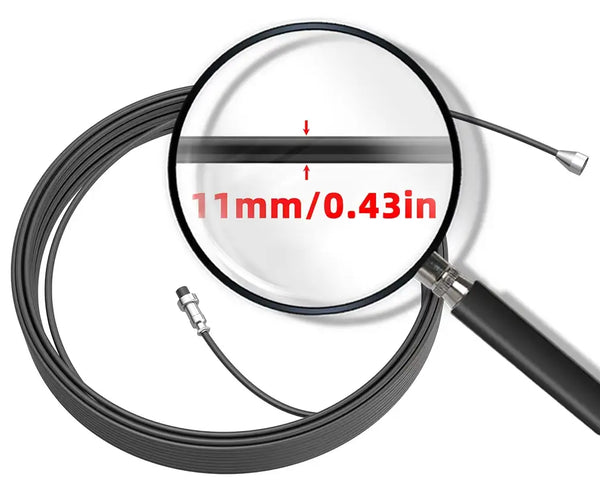
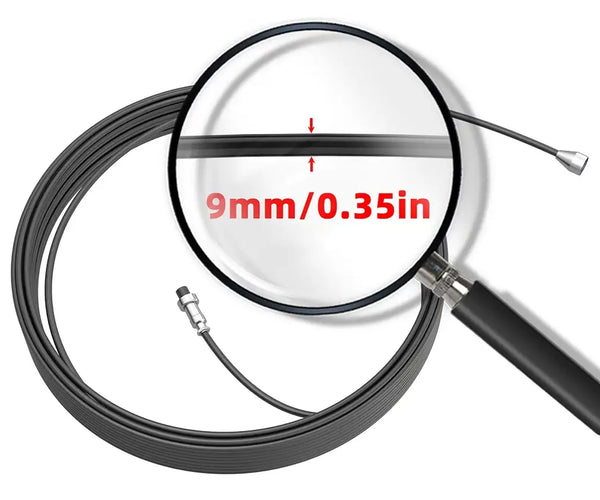
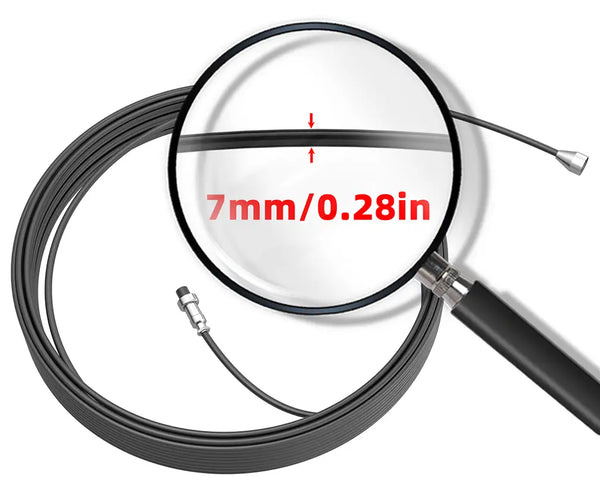
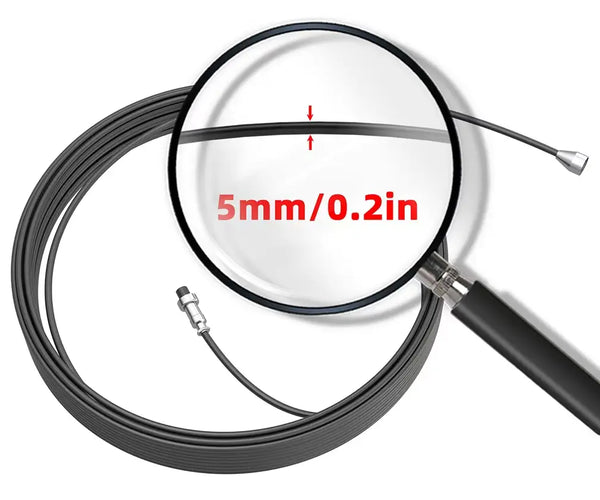
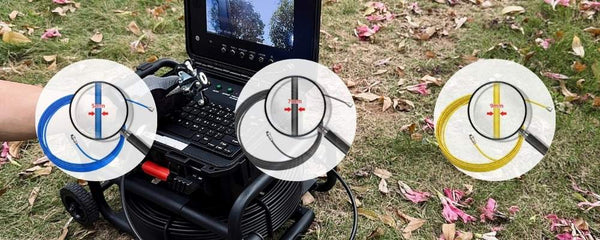
Specification Recommendation: For 30-40m cables: We recommend 5mm-7mm diameter fiberglass rigid cables, which provide sufficient thrust to feed into the self-leveling lens.
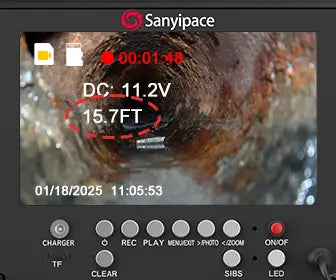
Flexibility: Ensure the cable includes a “meter counter.” Combined with the self-leveling system's orientation sensing, this allows precise positioning of the leak point relative to the wellhead.
Summary: How to Choose Your Pipeline “Navigation” Solution?

Choosing between self-leveling and non-self-leveling essentially involves balancing “initial purchase cost” against “long-term communication efficiency.”
If you're a professional pipeline inspector needing to provide clients with standard inspection reports (Video Inspection Reports), self-leveling is standard equipment. It makes your reports look more professional and prevents clients from questioning the findings because of confusion about upside-down footage.
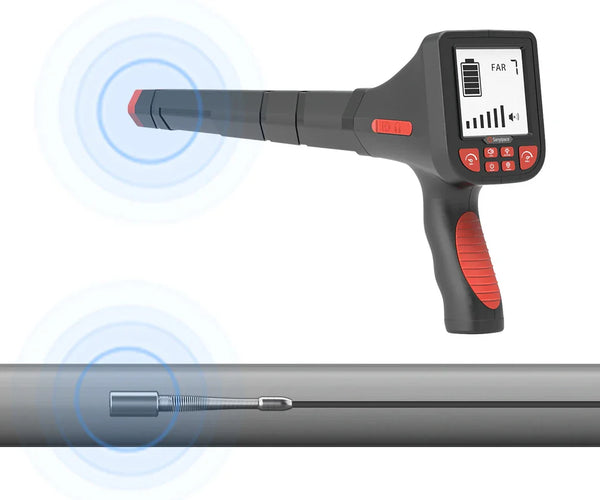
If you only occasionally handle household clogs or have a budget under $500, saving money by purchasing a basic camera with a 512 Hz locator (512Hz Sonde) makes more practical sense. After all, “locating the issue” is more urgent than “whether the image is upright.”
Core Principle: A good tool doesn't just let you see the pipe; it lets you see the pipe while simultaneously holding a clear mental map of its location.
Related reading: Why Choose a Self-Leveling Sewer Camera?


Lascia un commento