





How to Choose a Sewer Camera During Halloween Sales: A Buyer’s Guide
Buying a sewer camera is not just about choosing a camera with a long cable or a high-resolution screen. The right system needs to fit the pipes you inspect, navigate the bends along the route, and provide enough visibility to identify potential problems.
If you are planning to invest in a pipe inspection system, Halloween sales can be a good opportunity to compare equipment and save on a model that meets your needs. But before looking at discounts, it helps to understand which specifications actually matter.
At SANYIPACE, we offer sewer inspection cameras in different configurations for residential plumbing, professional drain inspections, and more demanding underground pipe work. This guide covers the features to compare, the SANYIPACE models worth considering during the 2026 Halloween Sale, and how to make a more informed buying decision.

1. What Should You Look for When Buying a Sewer Camera?
Three specifications deserve particular attention when comparing sewer cameras: camera head size, push cable diameter, and inspection distance. Recording, lighting, and locating functions also matter, depending on the work you do.
(1)Camera Head Size and Pipe Diameter
A camera head must fit through the narrowest part of the inspection route, not just the main pipe.
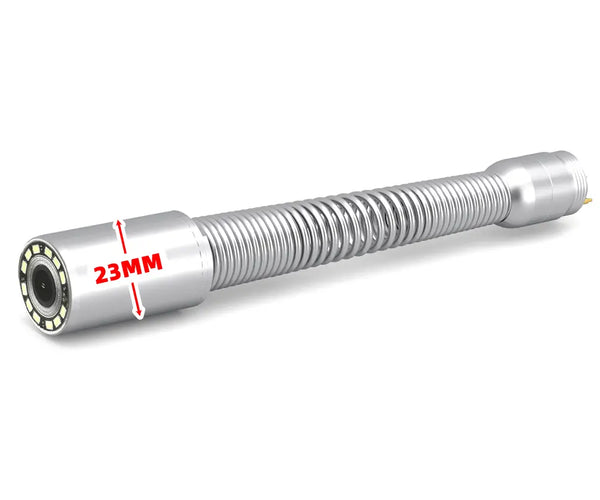
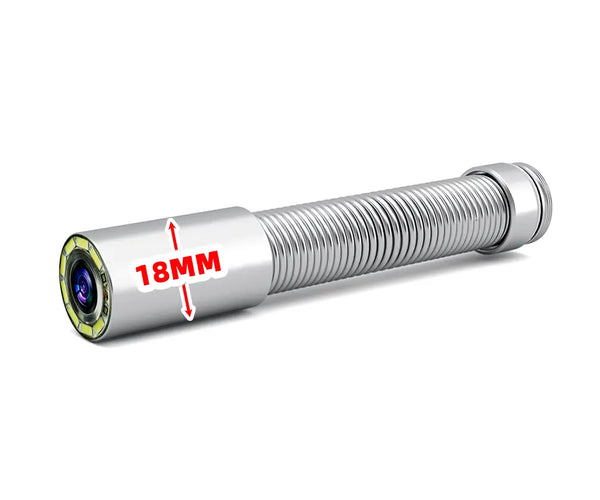
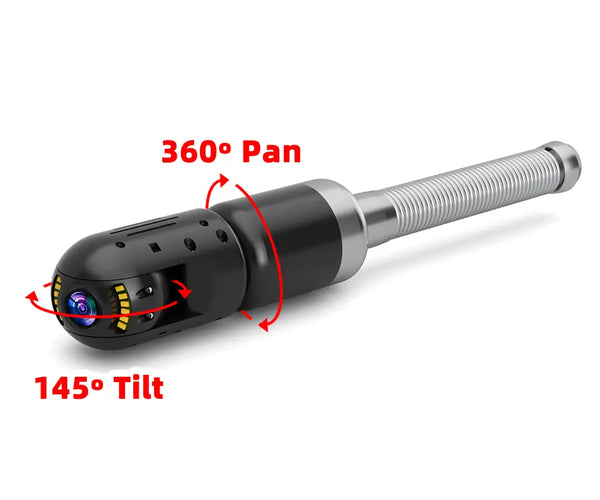
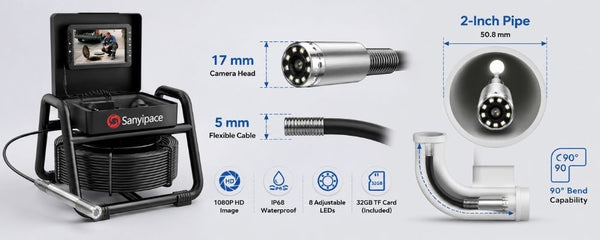
For example, a 23 mm camera head can be a practical starting point for many 3- to 4-inch residential drain lines. A smaller 17 mm head may be more suitable for narrow branches or routes with restrictive fittings, while a 31 mm head can provide a larger housing and accommodate stronger lighting for bigger pipes.
However, the camera's bare diameter is only part of the picture. The spring behind the head, protective cover, and guide wheel can increase its overall size. A camera that fits inside a straight pipe may still struggle with a tight elbow or P-trap.
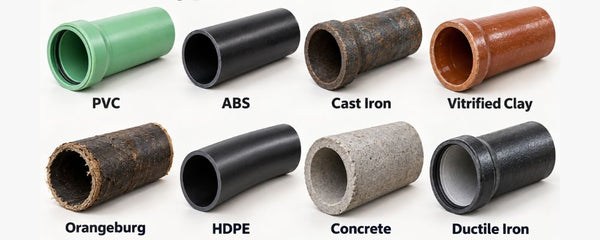
Before buying, check the complete camera assembly's actual dimensions and consider the pipe's condition, including corrosion, deposits, and offset joints.
For a more detailed breakdown, see our guide on what size sewer camera you need for different pipe diameters.
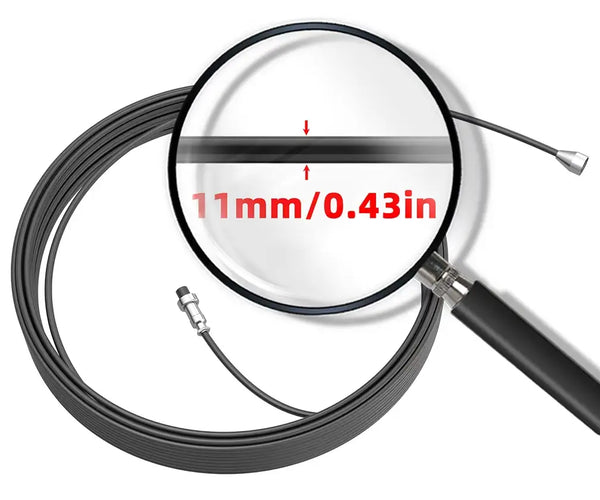
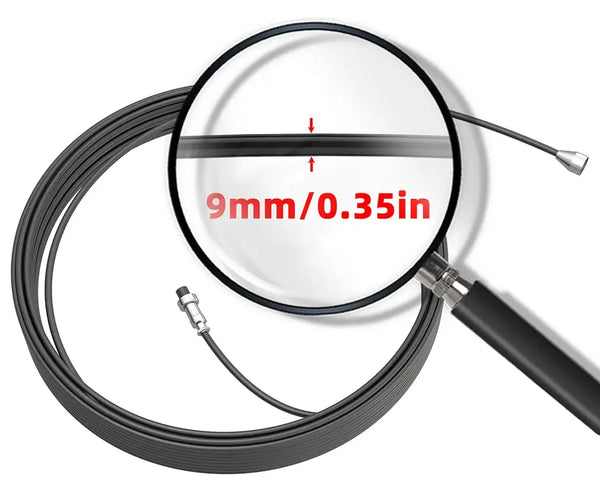
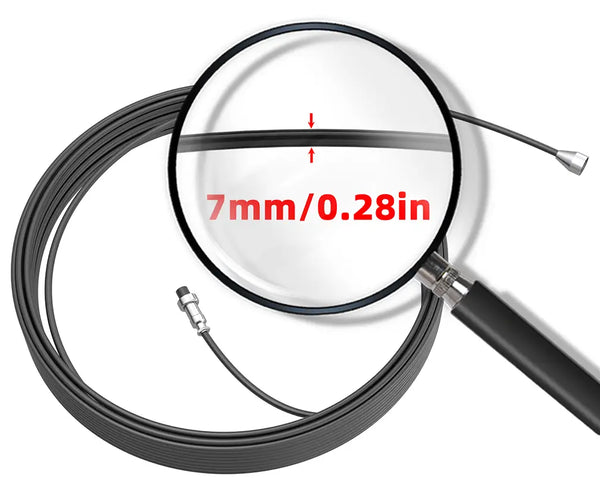
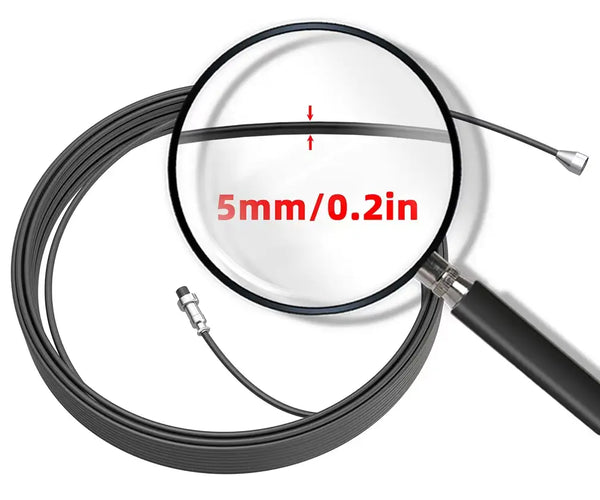
(2)Cable Diameter: 5 mm, 7 mm, or 9 mm?
Cable diameter affects how a sewer camera moves through a pipe. A more flexible cable can navigate tight bends more easily, while a stiffer cable generally provides better pushing strength over longer distances.
| Cable diameter | Best suited to | Main consideration |
|---|---|---|
| 5 mm | Smaller drains and routes with tight bends | Flexible, but has more limited pushing strength |
| 7 mm | Many residential drains and general plumbing inspections | Balances flexibility and pushability |
| 9 mm | Longer, relatively straight runs and larger pipes | Stronger pushing capability, but less suited to tight bends |
For example, if you mainly inspect kitchen and bathroom drains with several bends, a flexible 5 mm cable may be a sensible choice. If you regularly inspect residential sewer lines, a 7 mm system can provide a useful balance. For long, relatively straight underground runs, a 9 mm cable may offer better control.
Cable length matters too, but a 100-foot cable does not guarantee 100 feet of usable reach in every pipe. Multiple bends, rough internal surfaces, and changes in direction can significantly reduce the distance a camera can travel.
Our guide to the differences between 5 mm, 7 mm, and 9 mm sewer cameras explains these trade-offs in greater detail.
(3)Image Quality, Lighting, and Recording
Inside a sewer line, good visibility is essential. Look for a camera with suitable resolution, adjustable lighting, and a viewing angle that allows you to examine the pipe walls.
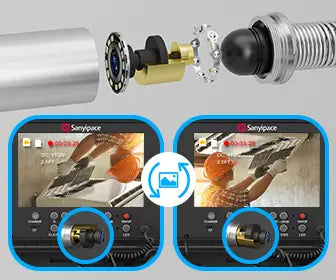
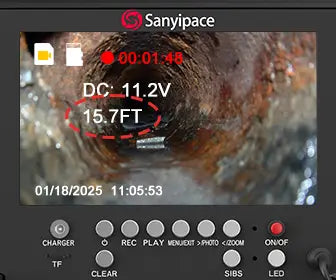
Features such as self-leveling can make footage easier to interpret by keeping the image upright as the camera moves. A distance counter can help you estimate how far the camera has traveled when you encounter a blockage or damaged section.
Recording is another practical consideration. If you need to document findings for customers or compare footage after an inspection, check whether the system supports saving videos and photos.
These functions are especially useful for professional plumbers who need more than a live view of the pipe.
2. Which Sewer Camera Is Best for Your Inspection Work?

The best choice depends on the jobs you handle most often. A homeowner checking an occasional drain problem has different requirements from a plumbing contractor inspecting long sewer lines every day.
(1)For Residential Drain Inspections
For smaller household drains, prioritize a camera head and cable that can handle the pipe's bends without becoming difficult to maneuver.
A compact system may be sufficient for checking localized blockages or examining short drain sections. You may not need the longest available cable or a specialized rotating camera if your inspections are relatively straightforward.
(2)For Professional Plumbing and Sewer Inspections
For regular field work, consider the combination of cable strength, camera visibility, recording, and distance measurement.
A self-leveling camera helps keep the image upright, while a distance counter makes it easier to record where a problem appears along the pipe. If you frequently inspect different pipe layouts, the ability to select a suitable cable length and configuration is also important.
(3)For Long-Distance Inspections and Underground Locating
When inspecting longer sewer lines, pushing strength becomes more important. A stiffer cable can help transfer force to the camera head, although the pipe's bends and internal condition still determine how far it can travel.
If you need to identify the underground position of a blockage or damaged section, look for a camera with a compatible locating transmitter.
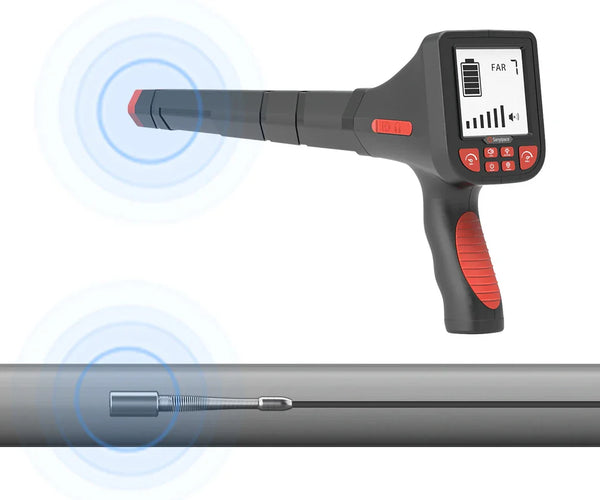
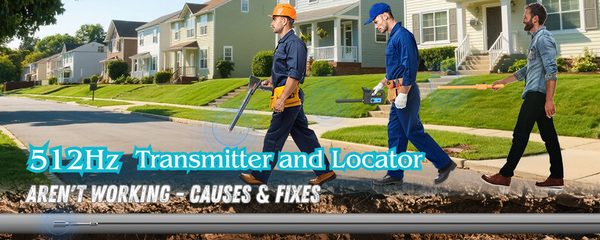
A 512 Hz transmitter sends a signal that a compatible receiver can detect from above ground. This helps you narrow down the camera head's position before planning further investigation or excavation.
The camera's distance counter and the locator serve different purposes: one tracks how far the cable has traveled, while the other helps locate the transmitting head underground.
3. Best SANYIPACE Sewer Cameras to Consider During Halloween Sales
Once you know which specifications matter for your work, comparing individual models becomes much easier.
During the SANYIPACE Halloween Sale, four featured models have advertised savings of up to $350. Rather than choosing solely by discount, compare their configurations with your inspection requirements.
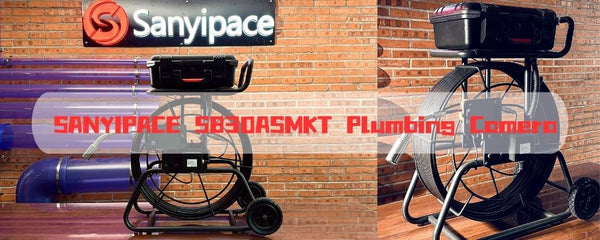
(1)SANYIPACE S830ASMKT Sewer Camera — Save $350
The S830 is worth considering for longer sewer inspections where cable strength, lighting, and distance measurement matter.
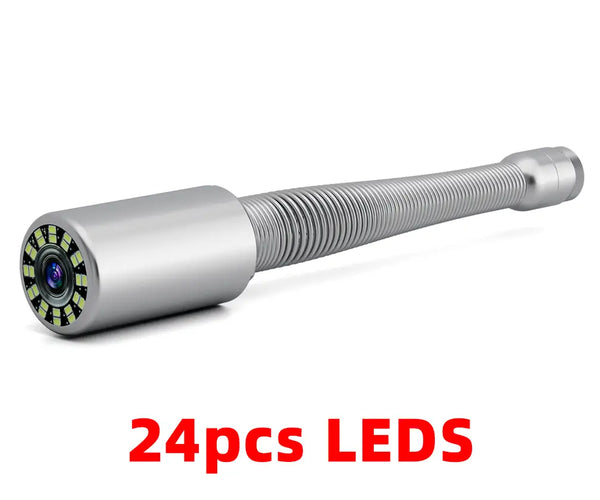
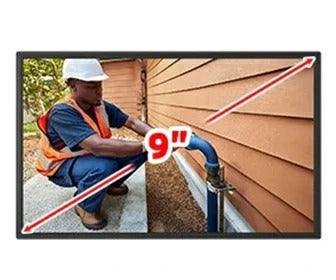
The SANYIPACE S830ASMKT sewer camera features a 31 mm camera head, a 9 mm push cable, 24 adjustable LED lights, self-leveling, and a distance counter. Its 9-inch monitor supports 1080P inspection footage, and the built-in 512 Hz transmitter can be paired with a compatible locator.
These specifications make it a candidate for inspecting relatively straight, longer residential or commercial sewer lines. The rigid cable provides additional pushing strength, while the lighting and distance counter help operators examine and document pipe conditions.
One important consideration is the pipe layout. The 9 mm cable is less suitable for tight bends, so a more flexible configuration may be preferable when the route includes restrictive elbows.
Halloween offer: Save $350 on the designated S830ASMKT configuration.
(2)SANYIPACE S810ASMKT360 Sewer Camera — Save $300
If you want to examine more of a pipe's interior without repeatedly repositioning a fixed-view camera, consider the SANYIPACE S810ASMKT360 rotating sewer camera.
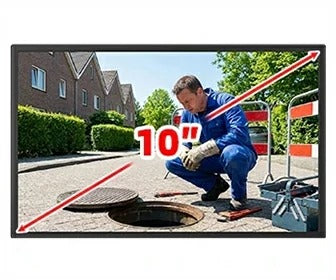
This configuration features a dual-lens camera with 360-degree horizontal rotation, a 10-inch IPS screen, a 7 mm push cable, a distance counter, and a built-in 512 Hz transmitter.
The rotating view can be useful when inspecting pipe walls and checking areas that may not be visible from a single fixed viewing direction. The distance counter and optional compatible locator can also help when documenting the position of a suspected problem.
This type of system may suit professional contractors who want more control over the inspection view. Before purchasing, confirm the exact camera configuration and included accessories.
Halloween offer: Save $300 on the designated S810ASMKT360 configuration.
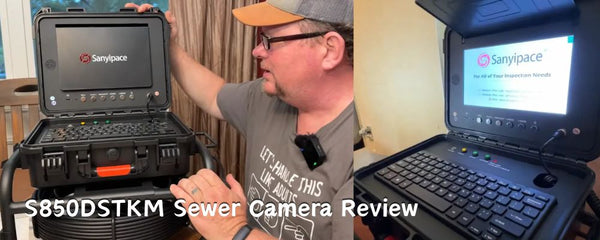
(3)SANYIPACE S850DSTKM plumbing Camera — Save $240
For buyers looking for a general-purpose inspection system, the SANYIPACE S850DSTKM sewer camera is another model to compare.
The featured S850 configuration uses a 7 mm push cable and includes self-leveling, a distance counter, and a built-in 512 Hz transmitter. It also supports recording and provides a practical combination of cable stiffness and maneuverability for many residential sewer inspections.
Compared with a 9 mm cable, the 7 mm configuration may be easier to manage on routes with more bends while still providing useful pushing strength for longer inspections.
Check the available cable lengths and locator options before ordering, particularly if your work involves both short residential branches and longer underground lines.
Halloween offer: Save $240 on the designated S850DSTKM configuration.
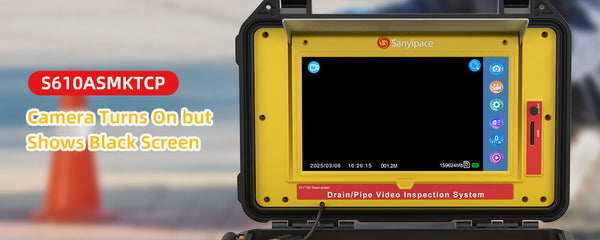
(4)SANYIPACE S610SMKTCP Touch Screen Drain Camera — Save $220
The SANYIPACE S610ASMKTCP touch screen sewer camera is worth considering if you prefer a touchscreen interface for operating and reviewing inspection footage.
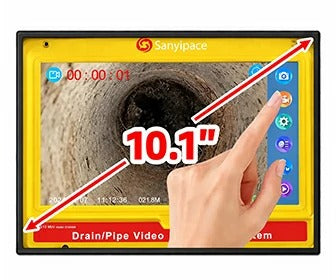
The listed configuration features a 10.1-inch 1080P IPS touchscreen, a self-leveling camera, a 7 mm cable, and a distance counter. It also supports video and audio recording, allowing operators to document inspection findings for later review.
The larger display can be useful when examining footage in the field, while the distance counter helps track the camera's progress through the pipe.
As with the other models, verify the specifications and options for the exact configuration included in the promotion.
Halloween offer: Save $220 on the designated S610 configuration.
4. Should You Buy a Sewer Camera with a Locator?
A locator is worth considering when you need to find the position of a problem underground rather than simply see it on the monitor.
Imagine that your camera reveals a suspected obstruction beneath a driveway. The footage may show what is happening inside the pipe, but you still need to establish where the camera head is located before deciding where to investigate further.
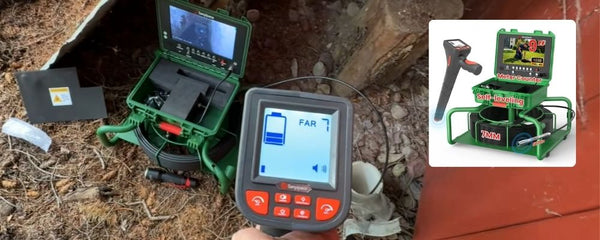
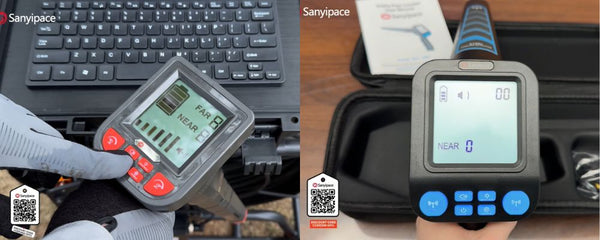
A camera equipped with a 512 Hz transmitter can work with a compatible receiver to help identify that position. The SANYIPACE S68R 512 Hz sewer camera locator, for example, offers adjustable signal sensitivity and far/near detection modes.
A camera and locator kit may be worth considering if you regularly inspect underground sewer lines and need to locate suspected problems. If you mainly inspect accessible indoor drains, a locator may be less important.
During the Halloween promotion, selected configurations also qualify for additional discounts:
-
$100 OFF: Selected models, including the S5981, S8951, S840DSRTMS68, S880, S860DSTKMS68, and S68 locator.
-
$200 OFF: Selected configurations, including the S810ASMKT-360, S830DTKMC50, S870DSTKM-11C, and U99360.
These offers apply to designated products and configurations. Check the applicable product listing to confirm whether a locator is included, optional, or sold separately.
5. How to Get More Value from Your Sewer Camera Purchase
A larger discount does not necessarily translate into a better purchase. The goal is to find a system that meets your inspection requirements without paying for features you do not need.
Before placing an order, consider these three points.
(1)Compare the Final Price and Package Contents
Check the final selling price of the exact model and configuration you want. Cable length, camera head, locator options, and included accessories can differ between variants, even within the same model family.
Review the package list carefully to see whether the system includes the components you need. This is particularly important when comparing a standalone inspection camera with a camera-and-locator kit.
(2)Choose Accessories Based on Your Work
Additional accessories can be useful, but their value depends on how you use the equipment. Consider whether you need guide wheels, replacement components, or a compatible locator before adding items to your order.
Selected SANYIPACE accessories are also included in the Halloween promotion at 5% OFF. If you already know which accessories are compatible with your system, this can be a convenient time to purchase them.
You can browse the SANYIPACE sewer camera accessories and check the specifications before ordering.

(3)Think About Your Future Inspection Requirements
If you currently inspect short residential drains but expect to take on longer sewer lines, consider whether your equipment will still suit those jobs.
You do not necessarily need the most advanced camera available. However, choosing the appropriate cable diameter, sufficient reach, and useful recording or locating functions from the beginning can help avoid buying a second system too soon.
Final Thoughts: Find the Right Sewer Camera This Halloween
Choosing a sewer camera starts with the pipes you inspect and the problems you need to identify. Camera head size, cable flexibility, inspection distance, lighting, and locating functions all influence whether a system is suitable for your work.
The SANYIPACE Halloween Sale offers an opportunity to compare selected inspection systems and accessories while considering your budget. The featured S830, S810, S850, and S610 configurations offer advertised savings of $350, $300, $240, and $220, respectively.
The sale runs from October 21 through November 1, 2026, with additional discounts on selected models and 5% OFF eligible accessories.

Rather than choosing based on the biggest discount alone, compare the available configurations with your inspection requirements and select the equipment that makes the most sense for your next job.
Explore SANYIPACE sewer cameras to compare available systems and find the right option for your inspections.


Lascia un commento