





Stop Overthinking Sewer Cameras: 3 Questions to Pick the Right One
Still unsure which sewer camera to buy after comparing so many options? You've reviewed all the specs—screen size, resolution, cable length, self-leveling, positioning—but can't make up your mind.
We've distilled three key questions to help you decide quickly! Choose the right sewer camera based on your specific job requirements.
Question 1: How Far Do You Truly Need to Inspect?

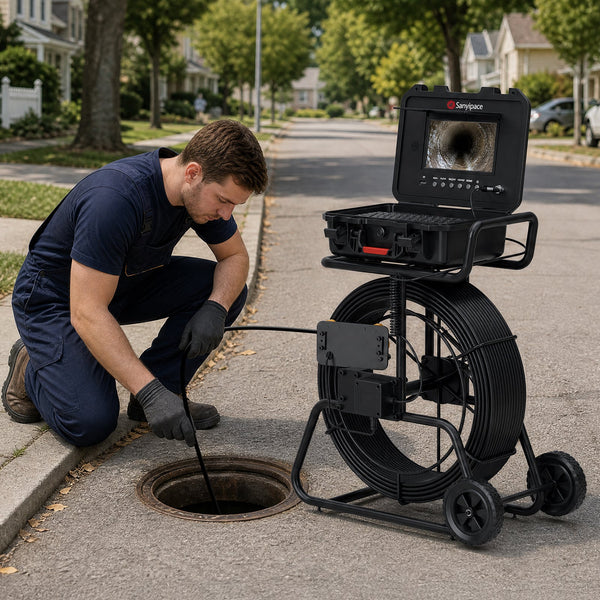
Cable length is where money is wasted fastest—either you buy too short and end up short, or you buy too long and end up with something heavier and harder to manage than you anticipated.
How to estimate typical distances from cleanouts to street mains
-
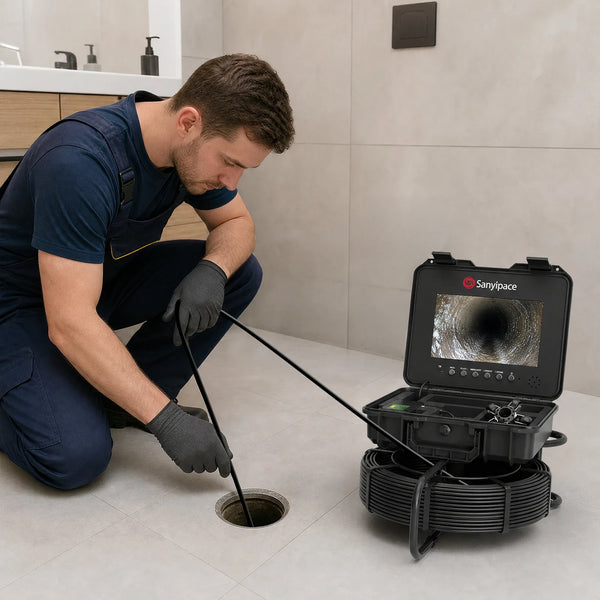
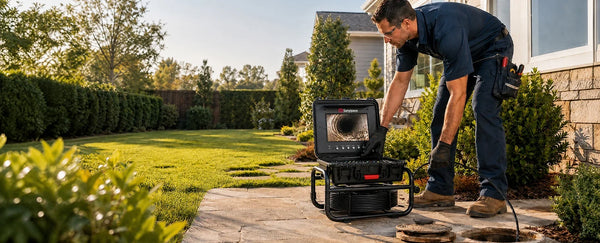
Indoor/Short Distance: 20 meters (approx. 65 feet) is usually sufficient for most indoor pipes to the first outdoor cleanout.
-
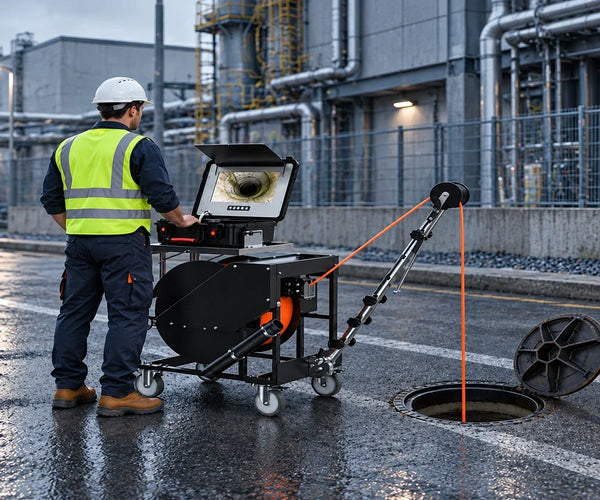
Main Line/Long Distance: If you need to inspect from the house cleanout all the way to the municipal main line connection, 30-50 meters (100-165 feet) is usually required.
-
Longer isn't always better: Heavier, harder to push, and more prone to tangling—cables have weight and friction.
-
Issues with excessive length: A 50-meter reel is significantly heavier than a 20-meter one, making it cumbersome to move. More critically, pushing excessively long cable through pipes multiplies friction. If you only need to inspect 10 meters but purchase a 50-meter unit, the extra reel weight and increased pushing resistance will make the operation extremely strenuous.
Select based on your most common inspection distance + 10% margin. At Sanyipace, we offer 20M/30M/50M options for most models. Avoid blindly opting for longer lengths—sufficient length ensures smooth operation. For those still uncertain about length, refer to this buying guide: How to Choose the Length of a Sewer Camera Cable?
Question 2: How Many Times Will You Use it within a Year?

Answering this question sets your “upper limit,” helping you avoid wasting money.
A. 1 Time or Less
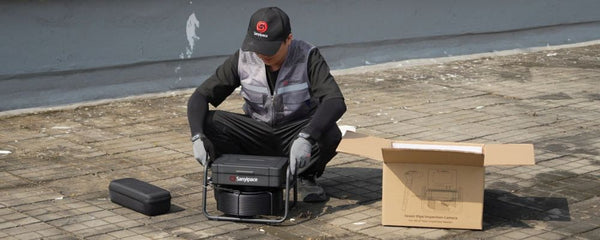
If you expect to use the camera only once (or just occasionally), prioritize: quick setup, compact and lightweight, outdoor-readable screen, evidence recording (optional but helpful), and a convenient “check + record” setup for homeowners.
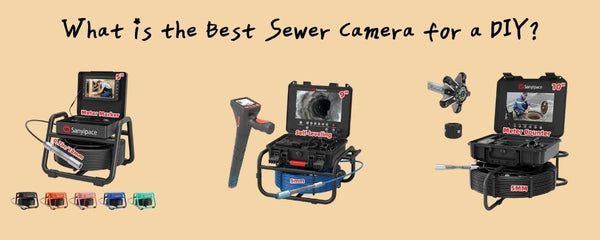
For this scenario, consider the Sanyipace S5517DC sewer camera. It's affordably priced, compact, and lightweight, and features a high-definition camera—making it an excellent choice for first-time DIYers.
B. 2-5 Times Per Year
This is the ideal choice for many homeowners: older homes, recurring clogs, pre-purchase inspections, or first-time DIYers wanting to confirm issues before calling a plumber. At this frequency, prioritize these elements:
-
Outdoor-readable screen
-
Reliable recording and organization
-
Distance reference (water meter counter)
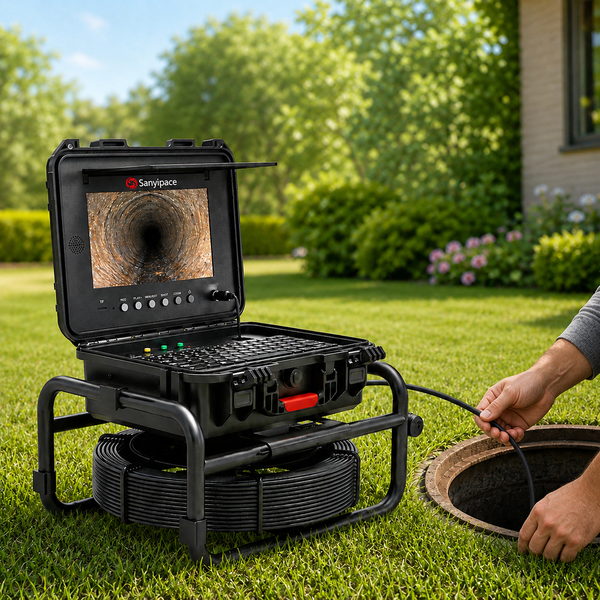
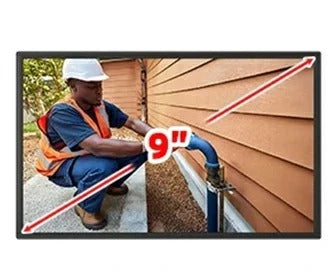
The Sanyipace S8951DM plumbing camera has proven invaluable for most DIY enthusiasts. Its 9-inch IPS screen with anti-glare technology delivers clear visuals even in direct sunlight, allowing outdoor work without squinting.
C. More than 5 Times Per Year (Landlords, Property Managers, Heavy DIY)
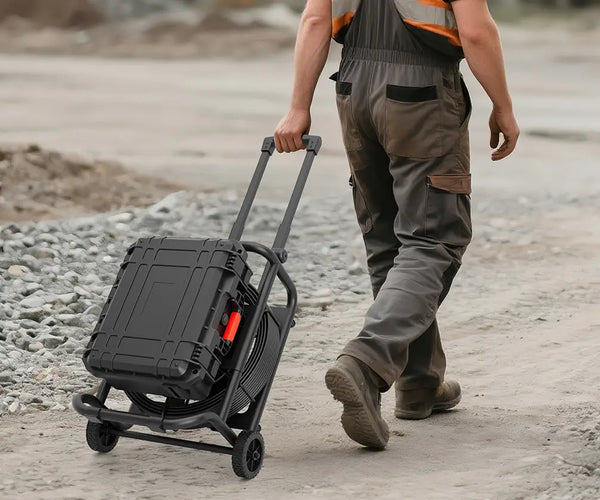
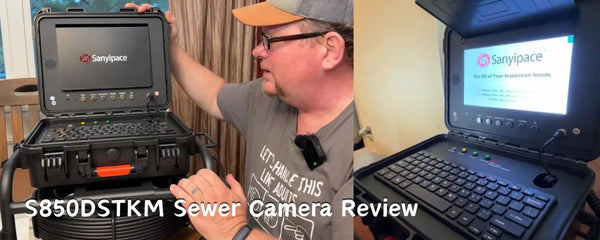
If you use the camera frequently, “time friction” becomes a real cost: lugging it around, moving it between properties, managing cables, and rechecking due to missed evidence. That's when a mobile unit (wheels + handle) or more “workflow” features become worth the investment. Consider the Sanyipace S860DSTKM sewer camera.
The key point: You're not paying for flashier spec sheets—you're paying for less time, fewer rechecks, and fewer misreadings.
Question 3: What Features Do You Need?

If you only need to confirm the presence of grease, roots, or blockages, basic inspection capabilities will suffice.
If you want to provide a plumber with an exact location (or decide where to dig/repair), you'll need tools that support repeatable positioning.
Please note:
-
Meter counter/distance counter (so you can reference how far the camera has traveled).
-
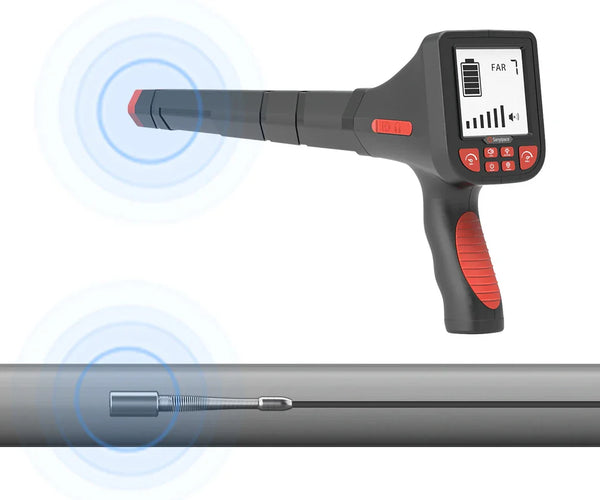
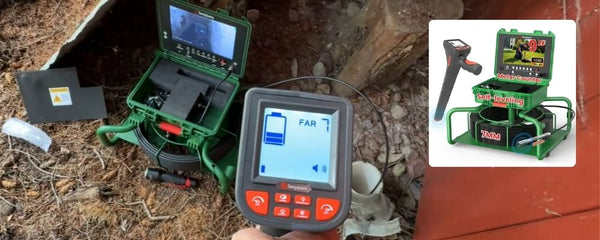
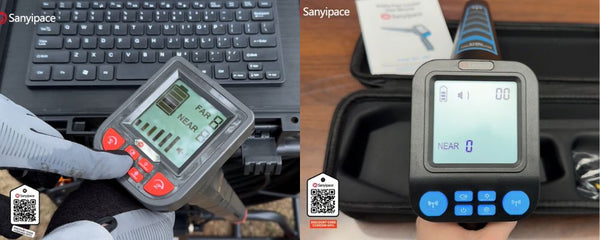
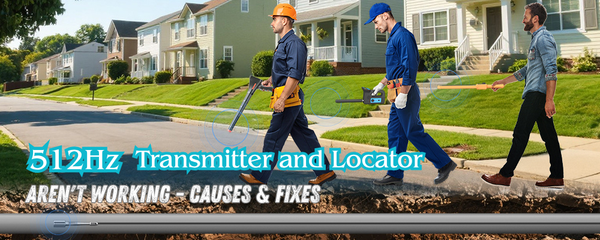
If ground-level precision matters, a 512Hz transmitter/probe + locator turns “Where is it?” into a definite answer, not a guess.
-
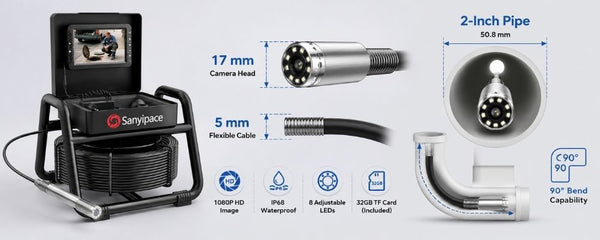
Adjustable lighting gives you the freedom to adapt to different pipe illumination needs.
Finally, even if you don't need professional-grade locating every time, a meter counter is one of the most worthwhile upgrades for homeowners planning multiple camera uses.
Final
If you want to buy the right sewer/pipe camera on your first try, don't start by asking “Which model is best?” Instead, begin with these three questions:
How far do I need to see? → How often will I use it in a year? → What features do I actually need?
Once you answer these questions, the right choice becomes clear—you'll have a clear filter in mind when browsing Sanyipace's full line of sewer cameras.
FAQ
If you're not yet familiar with the functions of sewer cameras, you may want to understand their purposes before making your final decision. We wish you a pleasant shopping experience. Should you have any questions, please feel free to contact our customer service team—we'll be happy to assist you.
1. What is the Purpose of the “locating Function (512hz Sonde/Locator)” on a Sewer Camera?
The locating function typically involves a built-in 512Hz transmitter (sonde) within the probe, which continuously emits a signal during operation. By scanning the ground with a locator, you can pinpoint the strongest signal location and mark the probe's position on the surface. Its purpose is to transform “I see a problem inside the pipe” into “I know exactly where on the surface excavation/repairs are needed.”

This feature is ideal for situations requiring excavation, localized repairs, or precisely guiding technicians to problem areas. If you only need to confirm blockages or root intrusion and will ultimately hire professionals without needing to pinpoint excavation locations yourself, this function is not essential.
2. What is the Purpose of the “Distance/Meter Counter (Meter Counter)” on a Sewer Camera?
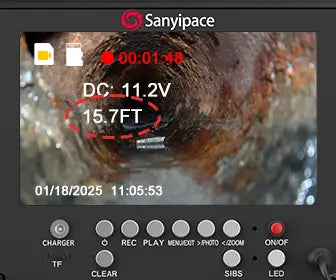
The distance tracking function uses a cable-based counting mechanism (typically a counting wheel or encoder) to record advancement length, displaying distance in feet or meters on the screen. Some models also feature a one-touch reset. Its purpose is to enable you to specify the distance of problem points from the entry point, such as “the blockage is approximately 42ft inside the access port.” This facilitates repair communication, reinspection comparisons, and reduces repeated searches for the exact location.

Ideal for users seeking more reproducible records or needing to coordinate with plumbers. If you're only checking for obvious blockages without requiring precise location data, the importance of the meter counter diminishes.
3. What is the Purpose of a Sewer Camera's “Self-Leveling” Feature?
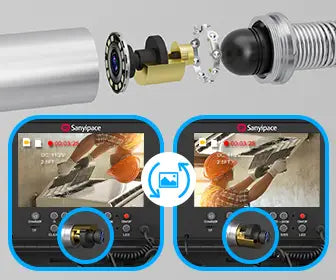
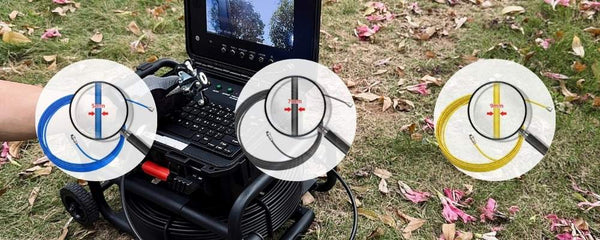
Self-leveling probes automatically adjust the image orientation to keep the video “upward facing at all times.” Even when you rotate the push rod, the image remains as upright as possible. Its purpose is to make image interpretation easier and reduce misjudgments: it provides a more intuitive view of deposits, deformations, misalignments, and collapses, making it especially suitable for beginners or those needing quick assessments.
If you're only checking for obvious blockages or tree roots, a slightly tilted image is still understandable—self-leveling is more of an experience upgrade. However, if you need to identify minor misalignments or crack edges, self-leveling saves time and offers greater reliability.
4. What is the Purpose of the “adjustable LED” Feature on Sewer Cameras?
Adjustable lighting allows you to modify brightness based on pipe reflections, water films, and distance. Since damp pipe walls often reflect light, excessive brightness causes whiteout and detail loss, while insufficient light obscures distant areas.
Its purpose is to enhance readability and reduce repeated advances/retractions: Reduce brightness to avoid glare when inspecting close-up joints/cracks, and increase brightness for enhanced illumination when locating distant blockages.

Ideal for those frequently inspecting wet pipes, standing water, or highly reflective environments. If your inspections are cleaner and focus on major issues, adjustable lighting is less critical but generally more useful.
5. What Is the Purpose of “1080p (Full HD)” on a Sewer Camera? Is It Sufficient?
A 1080P HD camera easily detects: blockages, grease buildup, root intrusion, obvious collapses, or severe misalignments. It balances clarity and stability (friendly file sizes for recording, playback, and export), ideal for documenting evidence or sharing footage with plumbers/landlords/property managers.
If you need to inspect finer details like early-stage cracks, subtle misalignment edges, or minute corrosion patterns, higher resolution may be preferable. However, “invisibility” often stems not from insufficient resolution, but from factors like shaky footage, inadequate lighting, or lens contamination—these elements typically impact readability far more significantly.
Related reading:


Jätä kommentti