





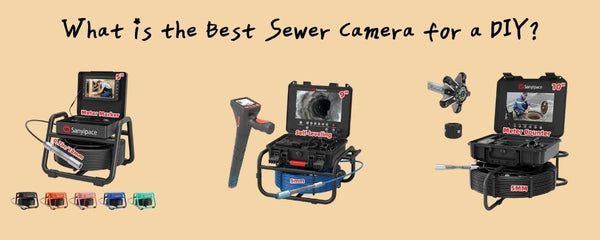
What’s the Difference Between 5mm, 7mm, and 9mm Sewer Cameras?
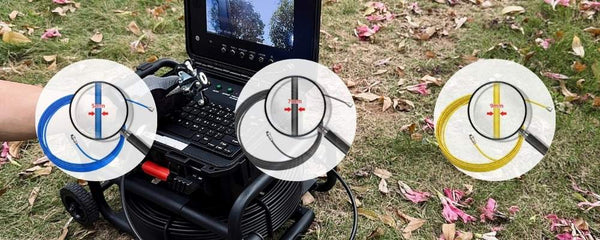
When choosing a sewer camera, cable diameter is also a difficult point to decide on. One of the main differences among the common 5mm, 7mm, and 9mm sewer cameras is:
-
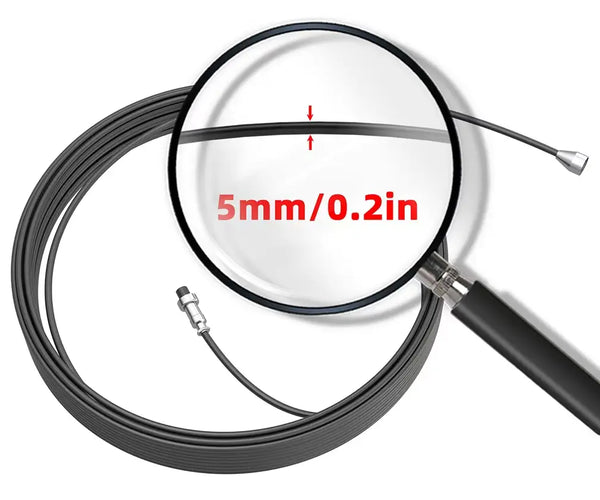
5mm Sewer Camera: Features a flexible cable structure, offering the highest maneuverability around bends. Ideal for shallow, everyday household pipe inspections, but with limited reach.
-
7mm Sewer Camera: Slightly stiffer coil that strikes a balance between flexibility and inspection range. It is the best all-around choice for both professional and residential use.
-
9mm Sewer Camera: Features the stiffest coil, providing the longest inspection distance. Suitable for deep or long-distance pipe detection.
In this article, we will detail the differences between these three options to help you choose the most suitable sewer camera for your DIY inspections or professional work.
5mm Sewer Camera

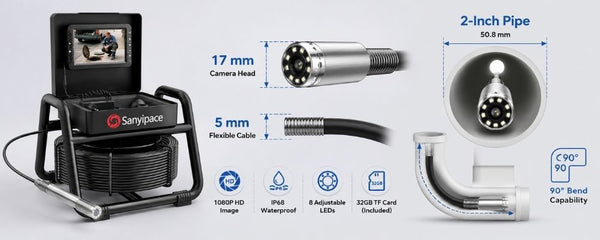
The 5mm diameter sewer camera cable is of a flexible type, offering the best flexibility and maneuverability. This type of cable can easily navigate through narrow pipe bends, such as P-traps under sinks, T-joints in kitchen drain lines, and other complex pipe paths.
Despite its small diameter, the 5mm cable is equipped with a high-definition camera that can clearly capture blockages caused by hair, soap scum, or small foreign objects.
Its advantages include:
-
Flexible maneuvering: The soft cable material allows it to turn freely within pipes, making it especially suitable for short-distance pipes in household kitchens and bathrooms.
-
Lightweight and portable: The overall device is compact and easy to operate, allowing ordinary users to get started quickly.
-
Limited length: Due to the flexible cable structure, the inspection distance is relatively short, making it more suitable for localized troubleshooting.
Suitable for: Homeowners, property maintenance personnel. Mainly used for shallow-scenario applications such as pre-clearing inspections and foreign object detection in everyday plumbing.
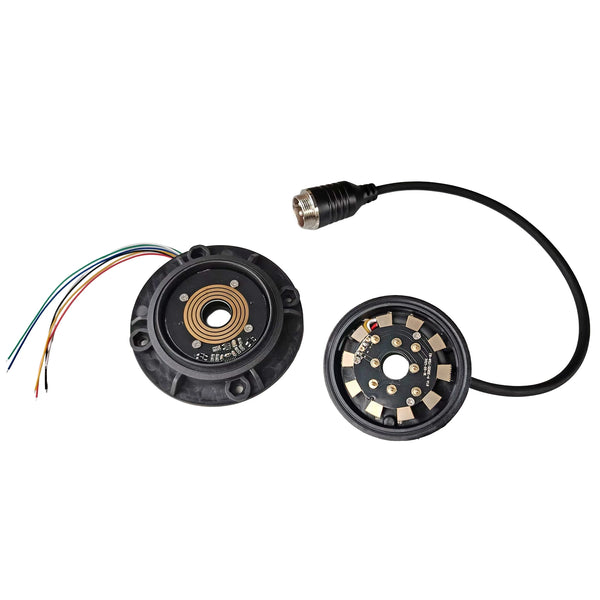
👉 Learn more: 5mm Sewer camera Coil
7mm Sewer Camera

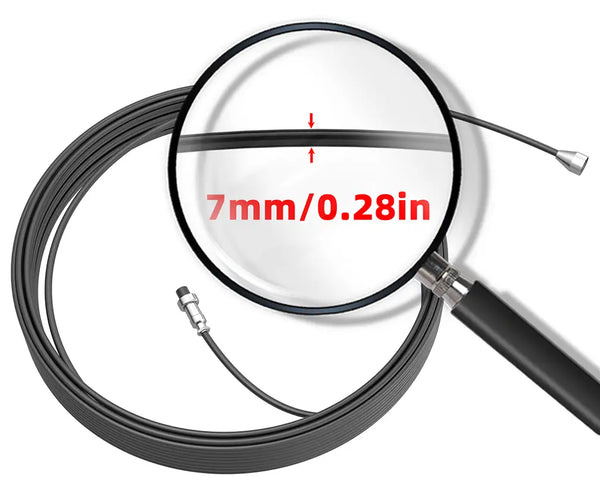
The 7mm diameter device features a coil design in its construction, making it slightly stiffer than the 5mm, while still retaining a degree of flexibility. For a professional plumbing contractor, the 7mm system represents the highest equipment utilization rate. It can cover most job scenarios ranging from 2-inch branch lines to 6-inch main pipelines.
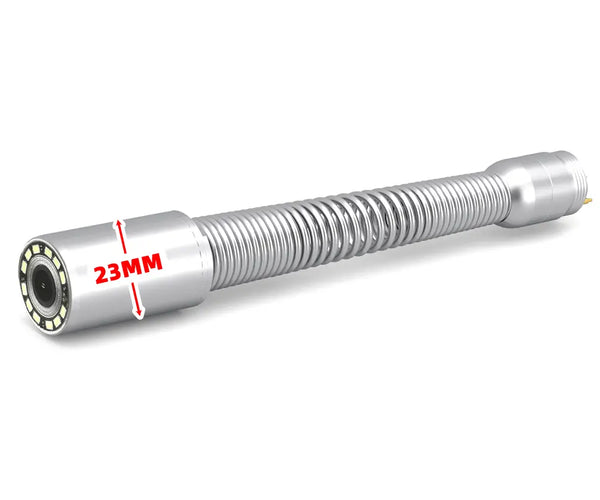
Compared to the 5mm flexible cable, the 7mm cable has sufficient rigidity to support a 23mm professional camera weighing approximately 200-300 grams, and can extend the inspection depth to 130 to 200 feet while maintaining image stability.
This "semi-rigid" characteristic of the 7mm specification allows it to pass through standard 4-inch PVC 90-degree elbows without excessive difficulty, while also preventing loss of control in long pipe sections due to excessive cable softness.
The 7mm cable is typically used as the carrier for mid-to-high-end inspection systems, integrating several key technologies:
-
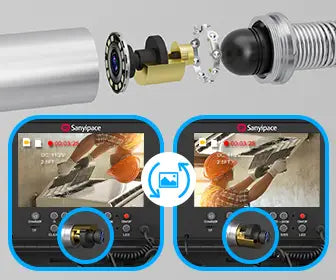
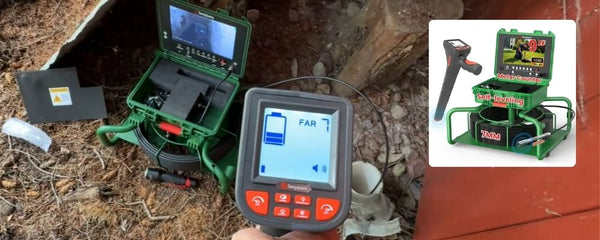
Self-Leveling Technology (Gravity Self-Leveling): The cable's thrust is sufficient to drive a self-leveling camera head equipped with a counterweight structure, ensuring the image on the monitor remains consistently horizontal. This allows the operator to accurately determine the clock position within the pipe (such as identifying whether a crack is located at the 12 o'clock or 6 o'clock position).
-
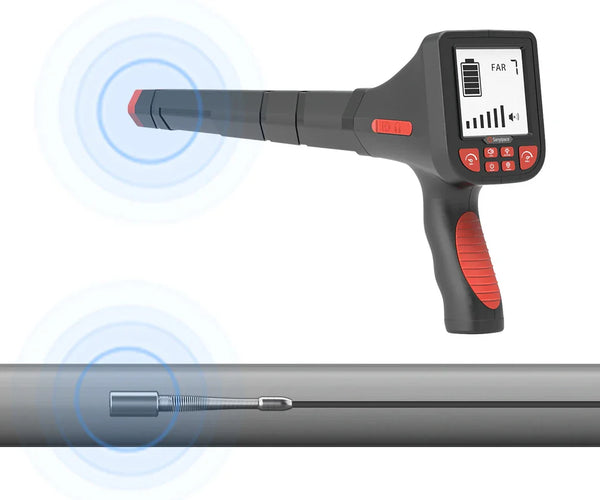
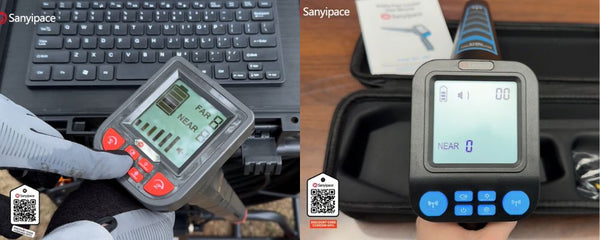
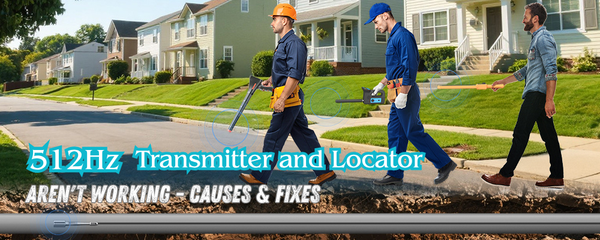
512Hz Sonde: The head of the 7mm camera is almost universally equipped with a signal transmitter. Used in conjunction with a pipe locator, the operator can precisely pinpoint the location and depth of a blockage beneath the lawn or floor, thereby avoiding blind excavation.
-
Meter Counter: The stable cable diameter contributes to higher accuracy with mechanical or digital meter counters, with errors typically controlled within the centimeter range.
👉 Learn more: 7mm Sewer camera Coil
9mm Sewer Camera

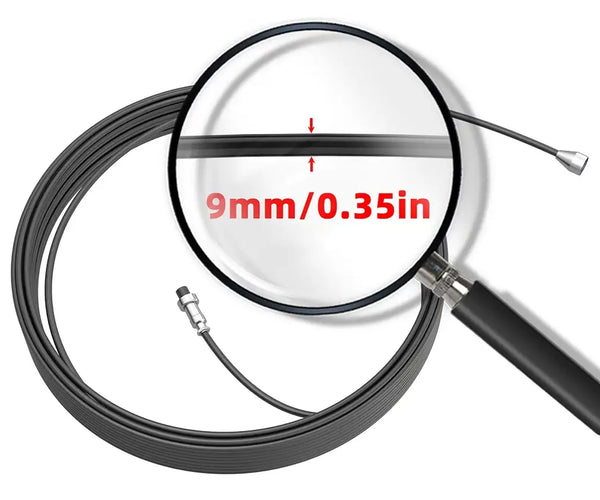
The 9mm diameter sewer camera features a stiffer coil structure. While flexibility is relatively reduced, this trade-off brings stronger pushing capability and longer inspection distance.
-
Stiffer coil: Effectively resists bending and springback during pushing, making it suitable for long-distance pipes with straight sections or gentle bends.
-
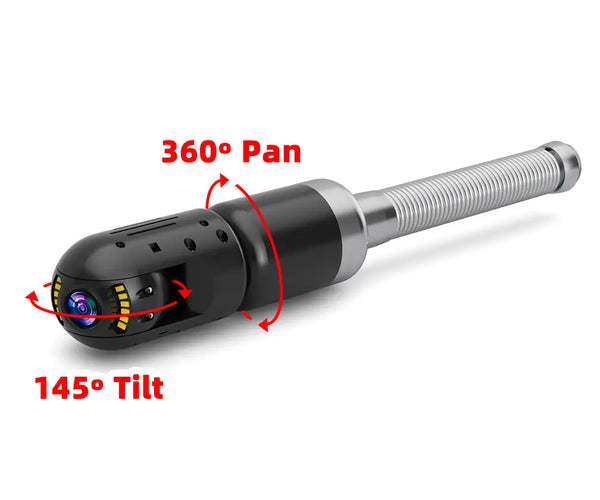
Pan-and-Tilt camera: This type of camera features motor-driven 360-degree rotation and 180-degree tilting functionality.
-
Longer inspection distance: Capable of completing deep inspection tasks in industrial, municipal, and large residential complex scenarios.
-
More stable construction: The overall device is more durable, suitable for frequent use or complex working conditions.
Suitable for: Professional pipe inspection companies, large property engineering departments, municipal maintenance personnel, and others facing inspection needs for long-distance, deeply buried pipelines.
👉 Learn more: 9mm Sewer camera Coil
What's the Difference Between 5mm, 7mm, and 9mm Sewer Cameras?

5mm Sewer Camera adopts a "flexible cable" design. Its greatest advantage lies in its extremely high maneuverability around bends, allowing it to easily navigate through narrow P-traps or multiple bends. However, due to its lower rigidity, its pushing distance is relatively limited, making it typically suitable for detailed inspections of interior household pipes.
7mm Sewer Camera falls into the "medium-rigid cable" category. Its coil offers moderate rigidity. Although it is slightly less flexible than the 5mm flexible cable, it provides stronger support and enables longer inspection distances, making it the best balanced choice for professional plumbers and high-end household inspection needs.
9mm Sewer Camera adopts a "high-rigidity cable" design. The coil is extremely stiff, capable of resisting friction and gravitational sag during long-distance pushing. It is specifically designed for inspecting large-diameter, long-distance municipal or industrial pipelines.
The table below provides a detailed comparison of the key physical parameters of these three cable types:
|
Technical Parameter |
5mm Cable System |
7mm Cable System |
9mm Cable System |
|
Cable Type |
Flexible / High Flexibility |
Medium-Rigid / Semi-Rigid |
Rigid / High Rigidity |
|
Typical Pipe Diameter Range |
1" - 3" (25-75mm) |
2" - 6" (50-150mm) |
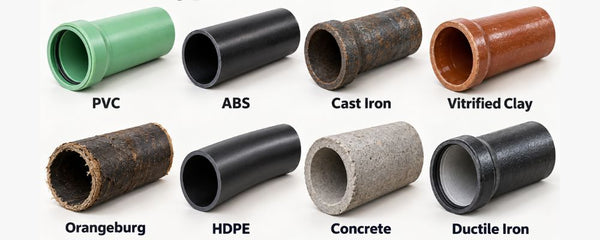
4" - 12"+ (100-300mm+) |
|
Maximum Inspection Distance |
65 - 130 ft (20-40m) |
130 - 200 ft (40-60m) |
200 - 500+ ft (60-150m+) |
|
Bend Negotiation Capability |
Excellent (can navigate P-traps/U-bends) |
Good (suitable for standard 90° elbows) |
Lower (suitable for straight pipes and large-radius bends) |
|
Push Stability |
Prone to helical buckling in wide pipes |
Stable: the benchmark specification for commercial inspections |
Extremely strong; suitable for long-distance heavy-duty applications |
|
Compatible Camera Head Size |
12mm - 17mm Compact Head |
23mm Standard Head |
23mm - 50mm Heavy-Duty Head |
Conclusion
In summary, the differences between 5mm, 7mm, and 9mm cables go far beyond a simple matter of "thickness." Rather, they represent differentiated solutions designed for various pipe mechanics and environments.
-
5mm Flexible Cable: Excels in flexibility, trading some pushing power for exceptional maneuverability in tight spaces. It serves as an agile guardian for residential plumbing systems.
-
7mm Medium-Rigid Cable: Achieves a perfect balance between flexibility and strength through precision engineering. It is the "universal currency" in the pipe inspection industry, offering the widest range of applicability.
-
9mm Rigid Cable: Leverages its absolute rigidity as a core advantage, establishing its authority in large-diameter, long-distance inspection scenarios.
When selecting pipe camera equipment, it is recommended to follow the principle of "prioritize pipe diameter, let distance guide." For teams that frequently handle residential jobs, a 7mm main unit paired with a 5mm supplementary module represents the most efficient configuration. For teams focused on infrastructure maintenance, the long-distance pushing capability of a 9mm system is an indispensable core competency.
Only by truly understanding the physical logic behind cable diameter can one navigate the dark, damp, and unpredictable underground world with confidence and ease.
FAQs

1. Can a 5mm Sewer Camera Inspect Kitchen Drain Pipes?
Yes. The 5mm flexible cable is highly maneuverable and can easily navigate through common U-bends and tight spaces in kitchen drain lines, making it suitable for short-distance troubleshooting.
2. Is the 7mm Coil Too Stiff, Making it Difficult to Navigate Bends?
No. The 7mm features a moderately stiff coil structure that offers good pushing force while still being able to pass through most standard pipe elbows. It is the specification with the best overall performance.
3. Is a 9mm Sewer Camera Suitable for Home Use?
If your household pipes are long or involve deep drainage systems, the 9mm can be used. However, it's important to note that its flexibility around bends is relatively limited, so it is recommended primarily for straight pipes or gentle-curve scenarios.
4. Should I Choose a Flexible Cable or a Rigid Coil?
A flexible cable offers better maneuverability and is suitable for short-distance, multi-bend scenarios. A rigid coil provides a stronger pushing force and is better suited for applications requiring long-distance inspections. Choose based on your actual frequency of use and pipe conditions.
5. If the Cable Jacket Gets Damaged, Can I Wrap it with Electrical Tape and Continue Using it?
This is a very dangerous practice. The primary function of the cable jacket is waterproofing. Even a small amount of sewage seeping into the cable can travel through the wire gaps under pressure and reach the camera head, causing irreparable damage to the expensive sensor.
If you discover jacket damage, it should be immediately repaired using heat-shrink tubing, or the entire cable segment should be replaced.
Related reading: How Much Does a Plumbing Camera Cost?


Jätä kommentti