





How Camera Inspections Improve Drain Cleaning Results?
A drain can start flowing again before it is actually clean. A cable machine may punch a path through a blockage, or a jetter may restore flow without revealing a cracked joint, a pipe belly, or buildup farther down the line. A drain camera inspection gives technicians the missing visual information. It shows what is causing the restriction, where the problem is located, and whether the pipe is in suitable condition for the planned cleaning method.
Used at the right stages of a job, a camera helps improve drain cleaning in three ways: it supports a better diagnosis before cleaning, helps define the scope of work, and provides visual confirmation afterward. The result is a more targeted service with less guesswork and a lower chance of leaving the real problem behind.

Why Drain Cleaning Alone Does Not Always Solve the Problem
1. Restored Flow Is Not the Same as a Clean Pipe
Water moving through the line is an important sign, but it does not tell the whole story. A drain snake can open a narrow channel through grease, sludge, roots, or packed debris. Once that channel is open, the fixture may drain normally even though a large amount of material remains on the pipe wall. That remaining buildup can begin collecting new debris almost immediately.
The same problem can occur after an incomplete jetting job. If the nozzle passes the main obstruction but does not remove buildup across the full inside diameter, the line may work for a while without being fully cleaned. A follow-up camera pass makes the difference visible.
2. Similar Symptoms Can Come From Different Problems
Slow drains, gurgling toilets, sewer odors, and recurring backups do not point to one specific cause. Grease buildup, tree roots, mineral scale, a foreign object, an offset joint, or a sagging section of pipe can produce similar symptoms at the fixture. Treating every problem as an ordinary clog can lead to temporary results or unnecessary work.
A camera inspection helps separate a cleaning problem from a structural problem. That distinction matters because no amount of snaking or hydro jetting can permanently correct a collapsed pipe, severe joint separation, or improper slope.
What Does a Drain Camera Inspection Show?

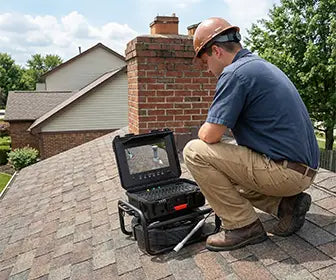
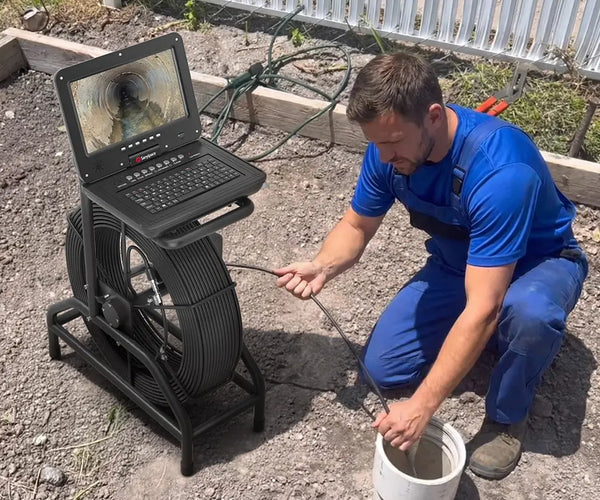
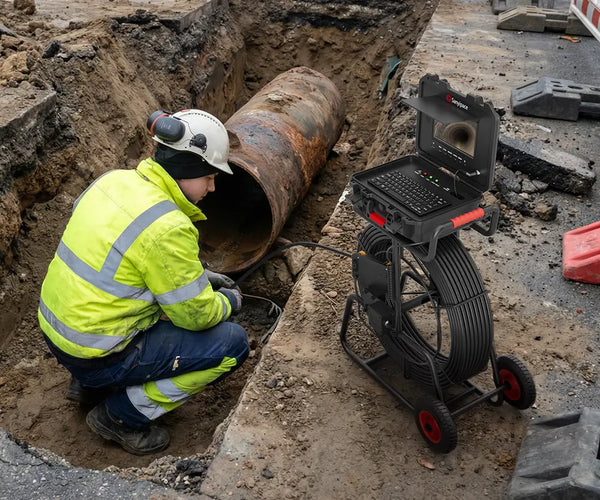
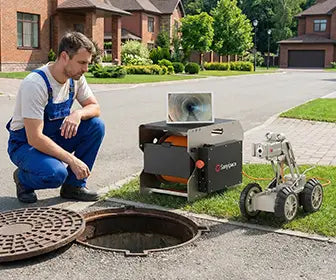
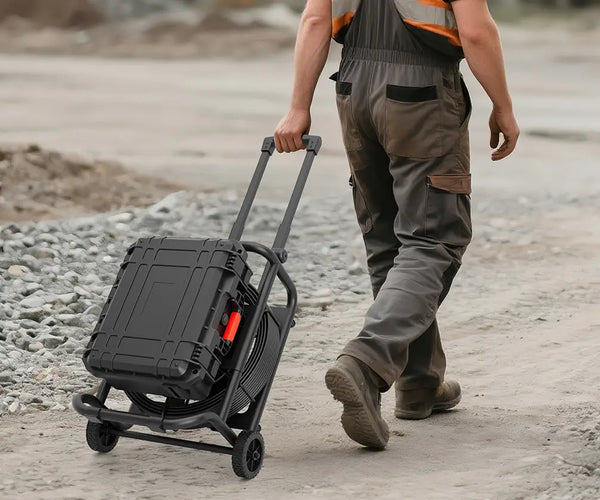
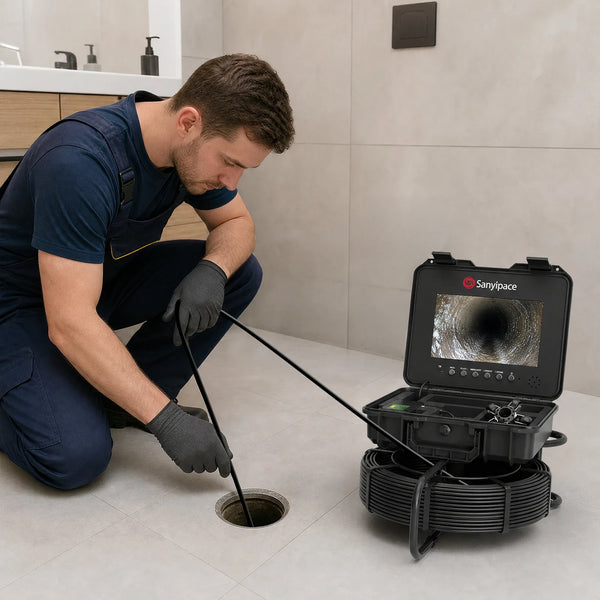
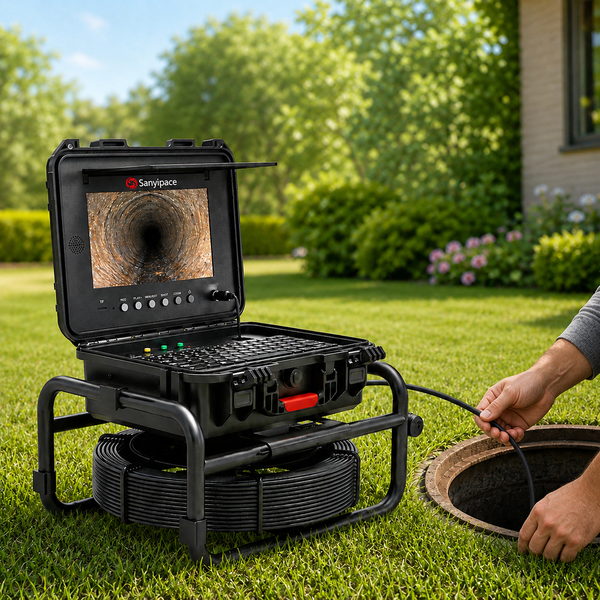
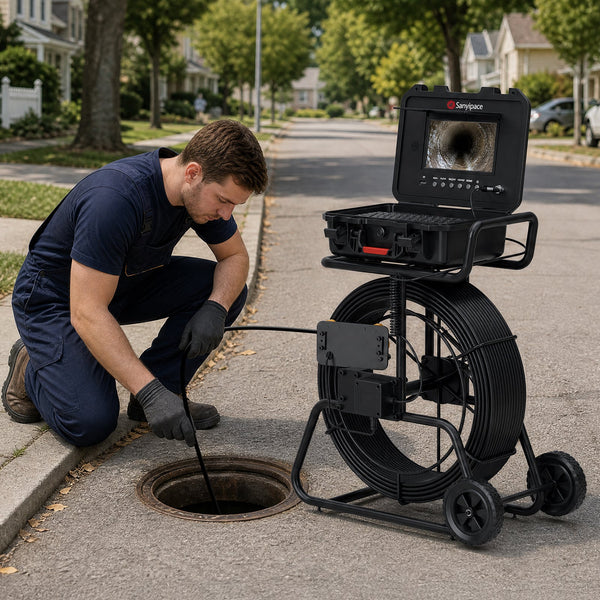
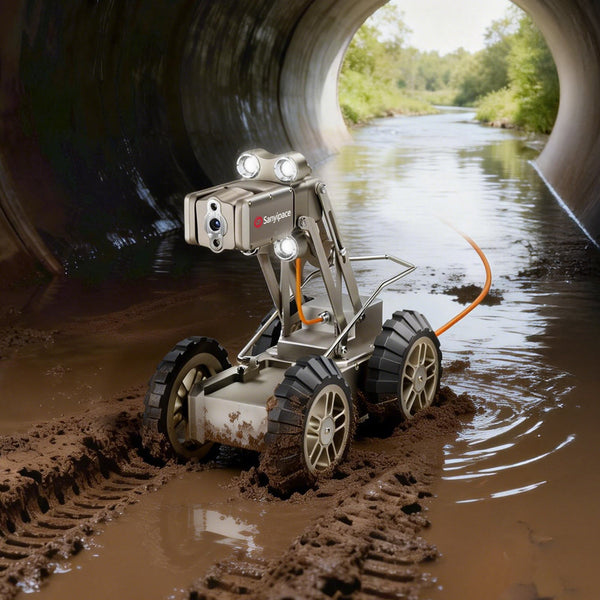
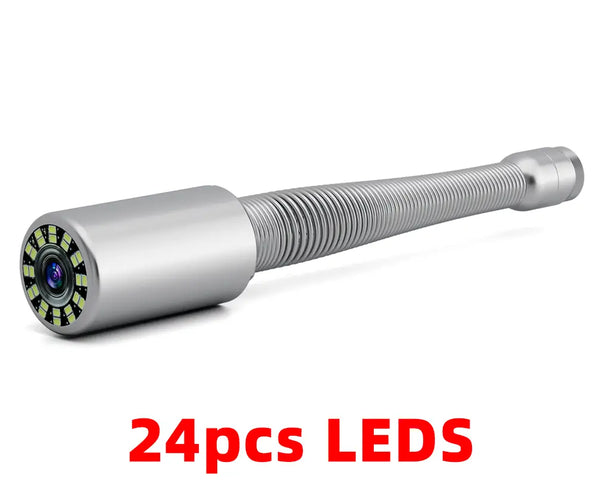
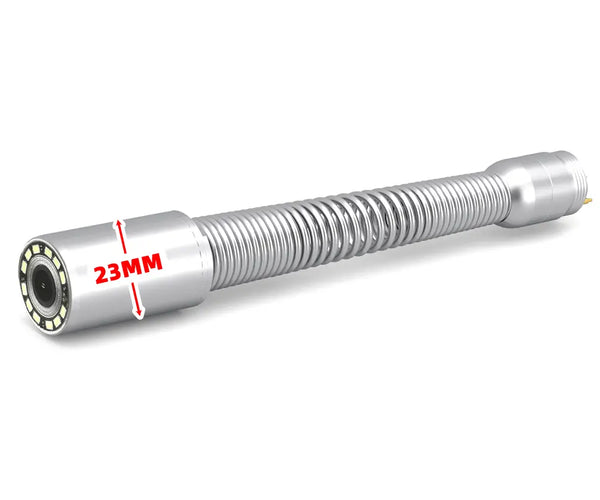
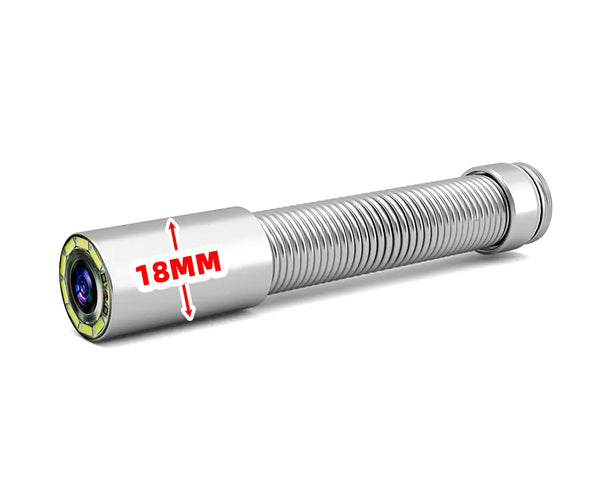
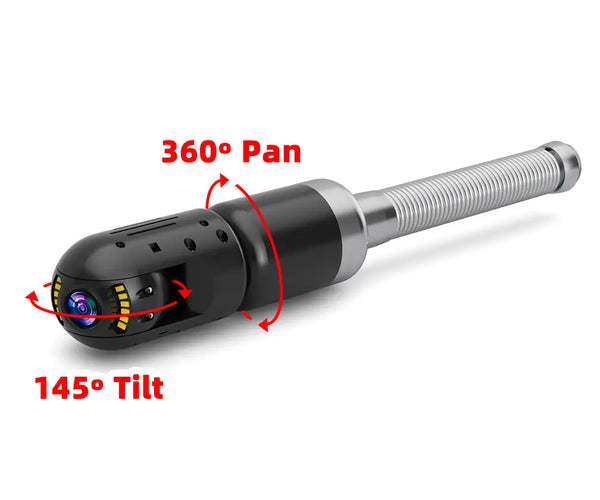
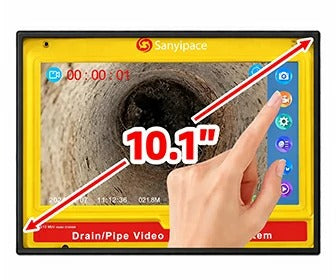
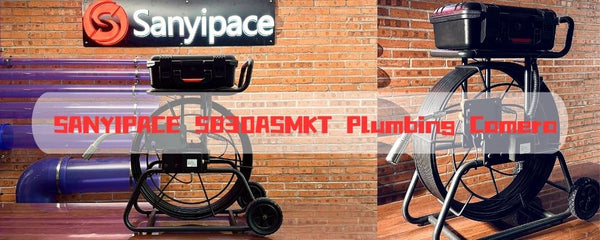
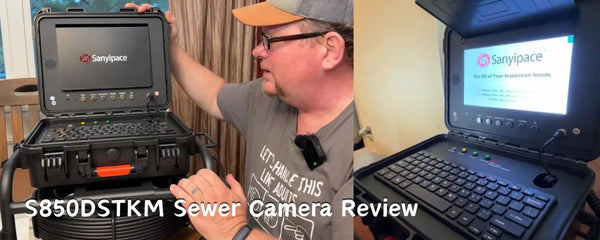
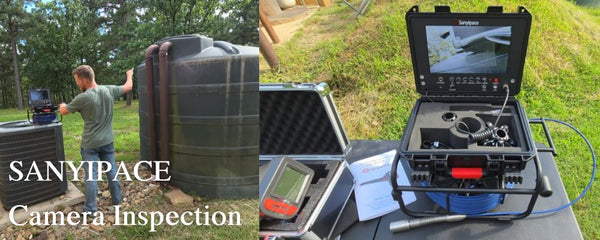
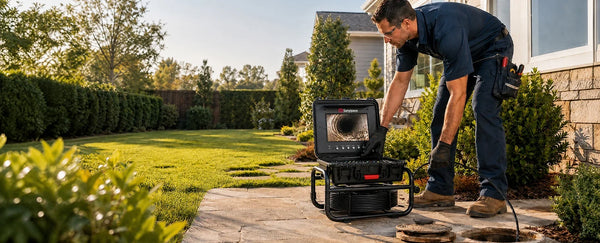
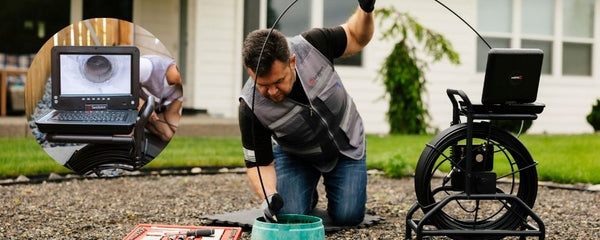
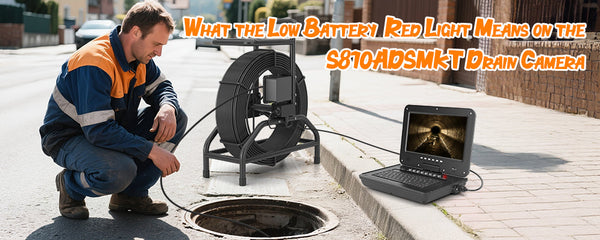
A drain camera system uses a waterproof camera head attached to a flexible push cable. Built-in lights illuminate the pipe, and the camera sends a live image to a monitor above ground. Depending on the system, the operator may also be able to record video, view the cable distance, and activate a sonde that can be located from the surface.
During an inspection, the operator can look for:
- The type, size, and location of a blockage
- Grease, sludge, scale, or other material coating the pipe wall
- Roots entering through cracks or pipe joints
- Foreign objects lodged at a fitting or change in direction
- Cracks, corrosion, separated joints, or collapsed sections
- Standing water that may indicate a belly or slope problem
- A second restriction beyond the blockage that first caused the backup
The camera does not clear the drain by itself. Its value comes from turning hidden conditions into information that can guide the next step.
How Camera Inspections Improve Drain Cleaning Results

1. They Identify the Cause Before the Method Is Chosen
Different obstructions respond to different tools. Cabling may be effective for a localized soft clog or a retrievable object. Hydro jetting is often better suited to grease and soft buildup spread across the pipe wall. Roots or hardened scale may call for specialized cutting or descaling equipment. If the camera shows a broken or collapsed pipe, the correct next step may be repair rather than more aggressive cleaning.
|
Camera finding |
What it may indicate |
Possible next step |
|
Grease or soft buildup |
Material coating a long section of pipe |
Hydro jetting or another full-wall cleaning method |
|
Hair or localized debris |
A concentrated blockage near a fixture or fitting |
Cabling, snaking, or localized removal |
|
Tree roots |
An opening at a joint, crack, or damaged section |
Root cutting, cleaning, and evaluation of the entry point |
|
Mineral scale |
Reduced inside diameter and a rough pipe surface |
Mechanical descaling or another suitable cleaning method |
|
Foreign object |
A solid item caught in the line |
Retrieval or removal with the appropriate attachment |
|
Collapse or major separation |
A structural failure that cleaning cannot correct |
Repair, relining evaluation, or replacement |
The table is a starting point, not a substitute for professional judgment. Pipe material, age, condition, diameter, access, and the extent of the blockage all affect the safest and most effective approach.
2. They Pinpoint Where the Work Is Needed
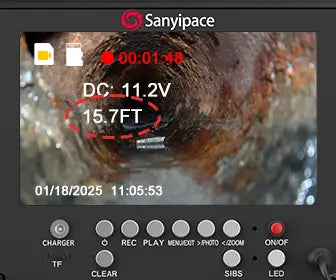
Finding a blockage is useful. Knowing that it is 63 feet from the cleanout is much more useful. A distance counter helps the operator document how far the camera has traveled, making it easier to return to the same location with cleaning equipment and compare the area during the final inspection.
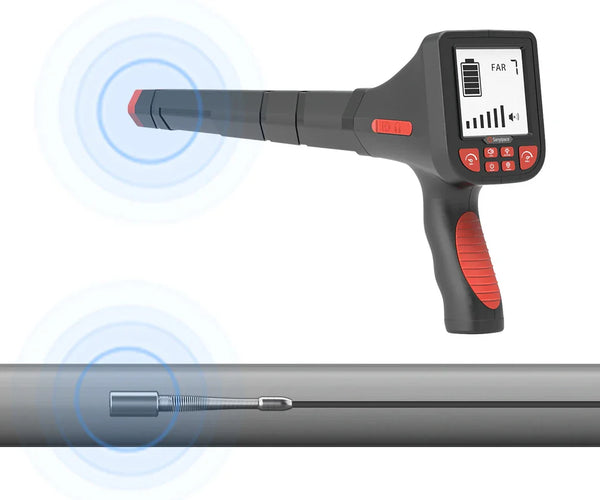
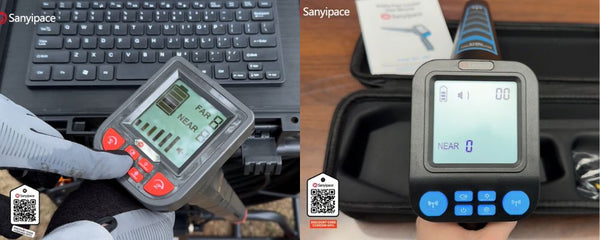
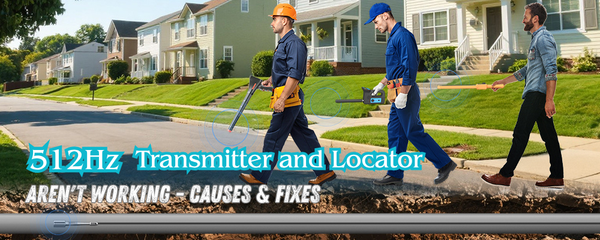
When the camera head includes a 512 Hz sonde, a compatible locator can help identify its position from the surface. This is especially valuable when a damaged or obstructed section must be marked for a targeted repair. The sewer camera locator does not provide GPS coordinates; it helps the operator trace the sonde signal and estimate its location and depth under site conditions.

3. They Help Protect Aging or Damaged Pipes
Older drain systems can contain cast iron corrosion, brittle clay, offset joints, earlier repairs, or sections weakened by soil movement. Applying aggressive cutting action or high water pressure without checking the pipe can turn a cleaning job into a repair.
A pre-cleaning inspection can reveal visible cracks, heavy corrosion, missing sections, and joint separation. The technician can then adjust the tool, pressure, cleaning direction, and number of passes, or stop and recommend a repair assessment when cleaning would create unnecessary risk.

4. They Reveal Problems Beyond the First Blockage
The first obstruction is not always the only one. A root mass may stop a cable before the operator reaches a second root entry point. Grease near a kitchen branch may hide scale farther down the main line. Once the first blockage is removed, a camera can continue through the pipe and check the remaining run.
This broader view is especially important for recurring drain problems. It may reveal that the blockage keeps returning because debris collects at an offset joint, roots continue entering through a crack, or standing water remains in a pipe belly. Cleaning can improve flow, but the camera helps explain what must happen next to manage or correct the underlying condition.
5. They Provide Visual Proof That the Job Is Complete
A successful flow test shows that water can move through the line. Post-cleaning footage provides stronger evidence. The operator can compare the pipe before and after service, confirm that the obstruction is gone, and check whether significant residue remains on the walls.

Recorded footage also improves communication. Homeowners can see why a service was recommended. Property managers can document work across multiple units. Contractors can keep a condition record for future maintenance or share the exact problem location with a repair crew.
The Drain Camera-Assisted Drain Cleaning Workflow

1. Inspect and assess before cleaning. Ask which fixtures are affected, identify a suitable access point, and inspect as much of the line as visibility allows. Note the pipe material, the blockage type, its distance from the access point, and any visible structural concerns.
2. Choose the method based on the actual condition. Match the tool to the obstruction and the pipe. Define the section that requires work instead of treating the entire system as if every foot has the same problem.
3. Clean in controlled passes. Advance the cleaning equipment with the known problem location in mind. When practical, alternate cleaning passes with camera checks so progress can be evaluated without repeatedly working an area that is already clear.
4. Flush and reinspect the line. Remove loose debris, then run the camera through the cleaned section. Verify that the blockage has been removed, the pipe walls are adequately cleared for the job's scope, and water is not being held at an unexpected low point.
5. Document any remaining concerns. Record the location of cracks, roots, offsets, corrosion, or bellies that cleaning cannot correct. Explain whether the line needs repair, scheduled maintenance, or monitoring.
A severe blockage may change the order. If the camera cannot pass, or if dirty standing water completely blocks the view, the technician may need to open a path first. The line can then be inspected and cleaned more thoroughly, followed by a final camera pass.
Common Jobs Where a Camera Makes a Clear Difference

1. Recurring Grease Buildup in a Kitchen Line
A kitchen drain may begin flowing after a cable opens the center of a grease blockage. On camera, however, the pipe may still show a thick layer coating the lower walls and reducing the available diameter. That finding supports a more thorough cleaning method and gives the operator a visual endpoint: not just moving water, but a pipe wall that has been cleaned to the agreed scope.
2. Tree Roots in a Main Sewer Line
Root cutting can restore flow, but it does not explain where the roots entered or whether damaged pipe remains. Camera footage can show the joint or crack, document the distance from the cleanout, and reveal whether additional root masses are present farther down the line. After cutting and flushing, another inspection confirms how much material was removed and whether repair options should be considered.
3. Scale Inside an Older Cast Iron Pipe
Cast iron can develop a rough interior with heavy deposits that catch paper and waste. A cable may pass through without restoring the full usable diameter. A camera helps show where scale is concentrated and whether the pipe appears strong enough for a selected descaling method. A post-cleaning pass then shows whether the rough buildup has been reduced or whether deteriorated sections need a closer evaluation.
When a Drain Camera Inspection Adds the Most Value

A sewer camera inspection is particularly useful when:
- The same drain has clogged more than once
- Several fixtures are slow or backing up at the same time
- Snaking restored flow only temporarily
- The blockage location or material is unclear
- The property has older cast iron, clay, or Orangeburg sewer pipe
- Mature trees are located near the sewer line
- Hydro jetting or aggressive mechanical cleaning is being considered
- A blockage or damaged section must be located from the surface
- The customer or property manager needs before-and-after documentation
Not every simple clog requires a camera. A one-time stoppage close to an accessible fixture may be resolved without one. The value increases when symptoms are recurring, the line is difficult to access, the cause is uncertain, or the cost and risk of choosing the wrong method are higher.
What Camera Inspections Cannot Do?
A camera is a powerful diagnostic tool, but the footage must be interpreted in context. Thick sludge, dirty standing water, and a fully blocked line can obscure the lens or prevent the head from advancing. The camera also may not confirm a small leak that is not visible during the inspection, and it cannot pass through a collapsed section to show what lies beyond it.
Image quality matters as well. A head that is too large for the pipe, poor lighting, a dirty lens, fast push speed, or a cable that cannot negotiate the fittings can limit the inspection. The camera shows what is within view; trained interpretation is still needed to distinguish normal joints and surface deposits from conditions that require action.
Camera Features That Support Better Cleaning Decisions
1. Camera Head and Push Cable
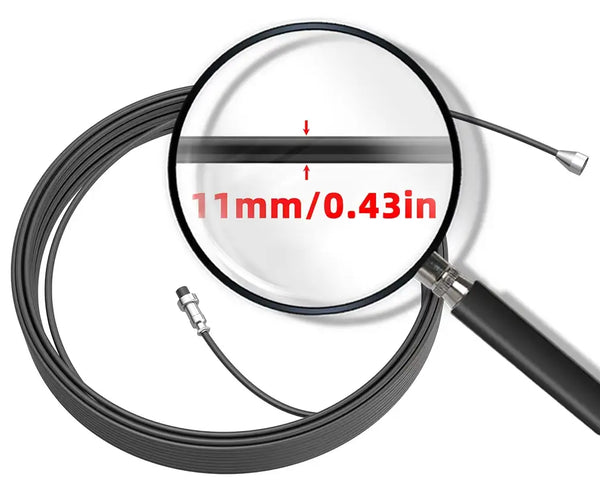
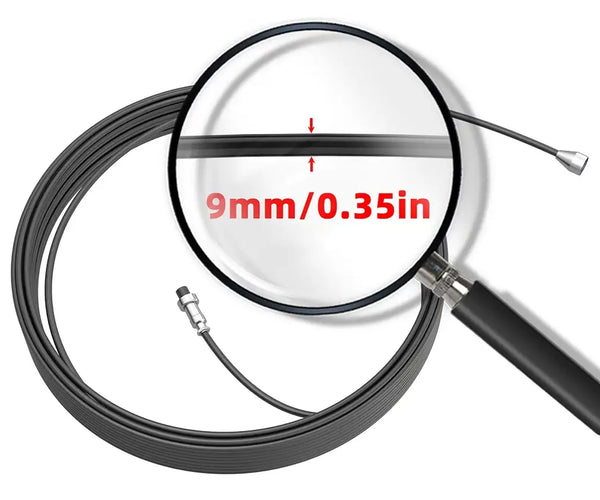
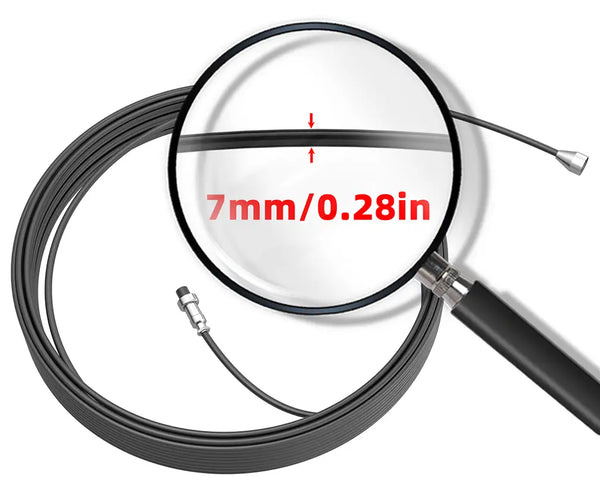
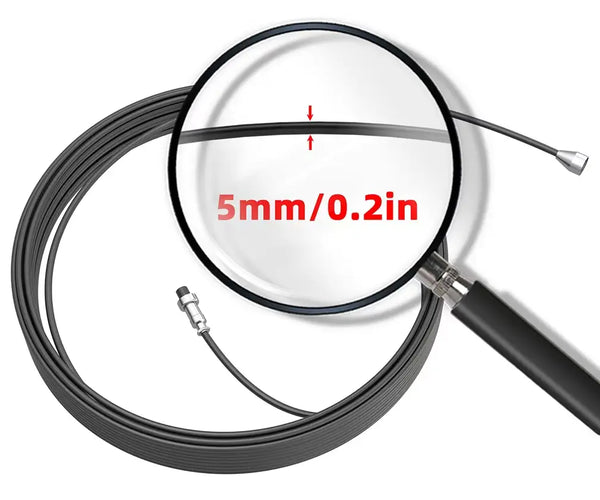
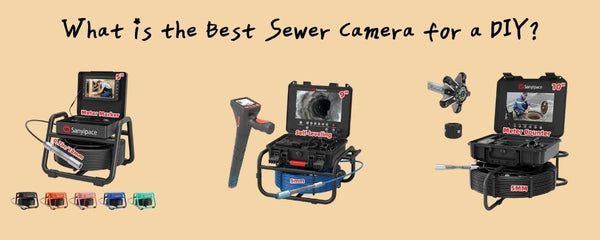
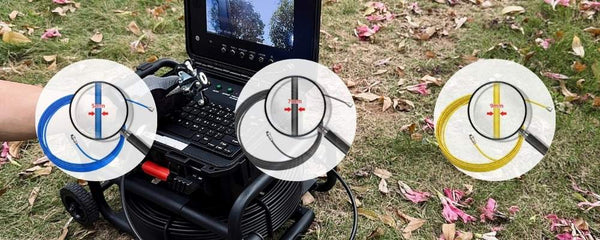
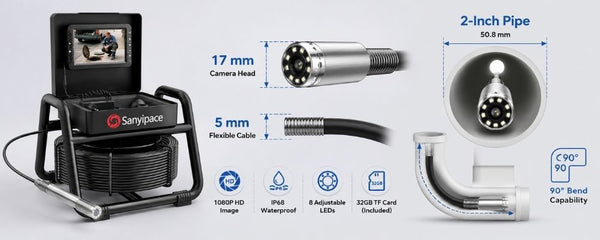
The camera head must fit the pipe while leaving enough clearance to pass bends and debris. Cable length should cover the expected run, and cable stiffness should be appropriate for the pipe size and number of turns. A setup that is too large or too flexible for the job may never reach the problem.
2. Adjustable Lighting and Clear Imaging

Adjustable LEDs help control glare in wet pipe and improve visibility in larger or darker lines. Clear imaging makes it easier to identify the edges of a blockage, inspect pipe walls, and compare before-and-after conditions. Resolution helps, but lighting, lens cleanliness, and careful camera movement are just as important.
3. Self-Leveling View
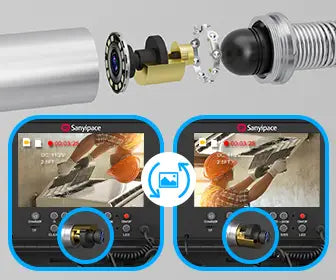
A self-leveling camera keeps the image upright as the head rotates inside the pipe. That makes footage easier to interpret and helps the operator describe whether a feature is at the top, bottom, or side of the line.

4. Distance Counter and 512 Hz Sonde
A distance counter records how far the camera has traveled from the access point. A 512 Hz sonde, used with a compatible locator, helps trace the camera head from above ground. Together, these features turn a visual finding into a location that a cleaning or repair crew can return to.

4. Video Recording
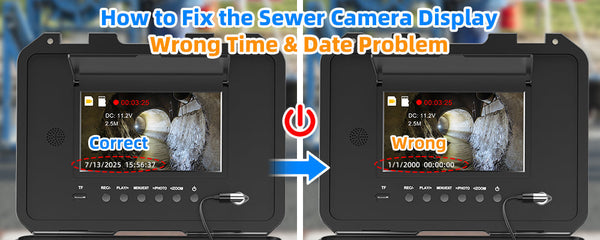
Recording supports before-and-after comparisons, customer explanations, job reports, and future maintenance. Good documentation should identify the access point, direction of travel, distance readings, and the conditions shown in each important clip.
Final Takeaway
Camera inspections improve drain cleaning because they connect the tool to the actual condition inside the pipe. Before cleaning, the camera helps identify the obstruction and check for visible damage. During the job, location and condition information help keep the work focused. Afterward, another inspection shows whether the blockage and wall buildup were removed and whether a structural problem still needs attention.
That does not mean every clog needs a full camera inspection. It means that when the cause is uncertain, the problem keeps returning, or the pipe may be vulnerable, seeing the line can prevent a short-term fix from being mistaken for a complete result. For contractors and maintenance teams, a well-matched sewer camera with clear imaging, distance measurement, recording, and locating capability turns hidden pipe conditions into practical decisions.
Explore SANYIPACE sewer camera systems
Frequently Asked Questions

1. Should a Drain Camera Be Used Before or After Cleaning
Both stages can be useful. A pre-cleaning inspection helps identify the cause and choose a suitable method. A post-cleaning inspection confirms the result and may reveal damage that was hidden by debris. If a complete blockage prevents the camera from passing, an initial opening may be required first.
2. Can a Drain Camera See Through Standing Water
Clear water may allow a limited view, but dark wastewater, suspended debris, grease, and sludge can obscure the lens. As explained in our guide on whether a sewer camera can see through water, the clarity and depth of the water directly affect what the camera can capture. Flushing or partially clearing the line may be necessary before a useful inspection can be completed.
3. Can an Inspection Show Whether Hydro Jetting Is Appropriate
It can show buildup patterns and visible pipe condition, which helps with the decision. The technician should also consider pipe material, age, access, diameter, and structural integrity before selecting pressure and equipment.
4. Does Camera-Assisted Cleaning Prevent Future Clogs
It cannot guarantee that a drain will never clog again. It can reduce avoidable repeat problems by showing residual buildup, root entry points, offsets, bellies, and other conditions that a basic clearing may miss.
5. Is a Camera Inspection Needed for Every Clogged Drain
No. It is most valuable for recurring clogs, main-line problems, older piping, unclear symptoms, and jobs where the cleaning method or pipe condition needs to be confirmed.


Deja un comentario