








How to Choose the Right Sewer Camera || Buying Guide
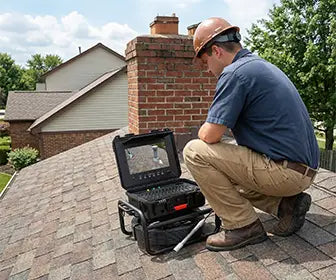
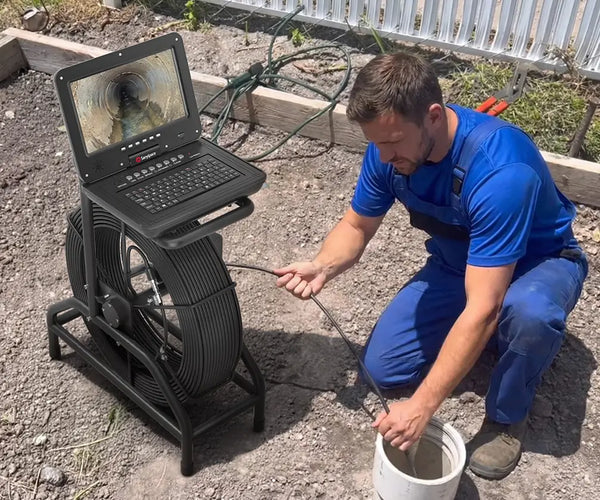
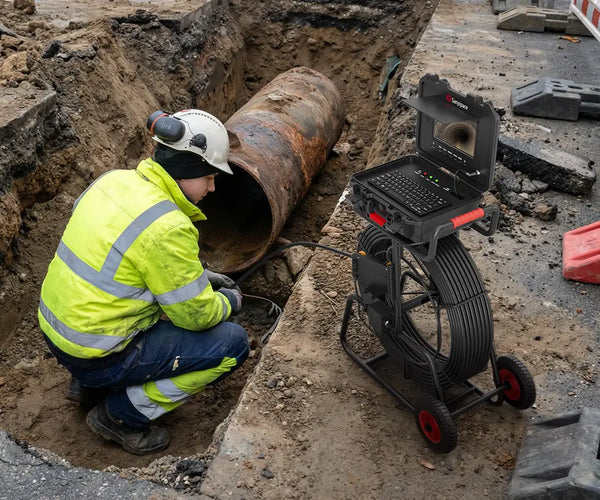
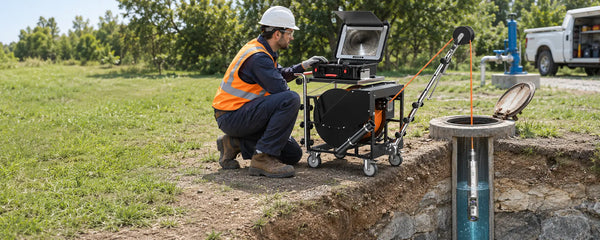
Choosing a sewer camera starts with the pipes you need to inspect—not with the longest cable or the most features. Pipe diameter, access points, bends, inspection distance, and the need to locate problems from the surface all affect which system will work best.
Start by identifying four things: the smallest pipe you need to enter, the distance from the access point to the inspection area, the number and tightness of bends, and whether you need to pinpoint the camera underground after finding a problem. Then compare camera head size, cable diameter, image and recording features, and the exact package contents.
A well-matched system can make inspections easier and more repeatable. A larger or more expensive camera is not automatically the better choice if its head or cable is poorly suited to your pipe conditions.

1. Choose Based on Your Inspection Scenario
Start with the type of pipe you usually inspect. Pipe size, bends, and inspection distance determine the right pipe camera head and cable.
|
Your inspection scenario |
Recommended setup |
|
Narrow pipes or multiple tight bends |
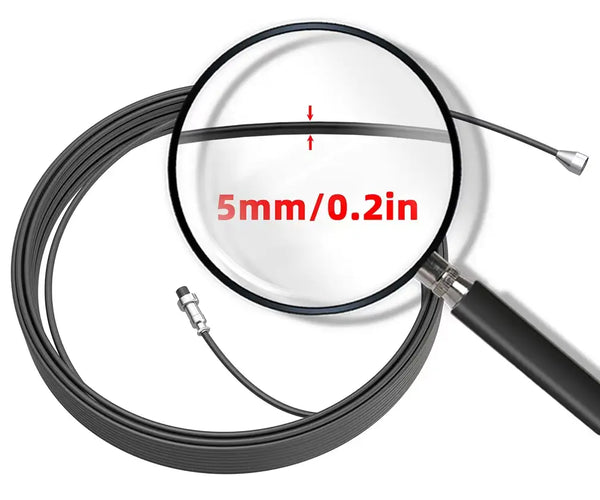
Small camera head + flexible 5 mm cable |
|
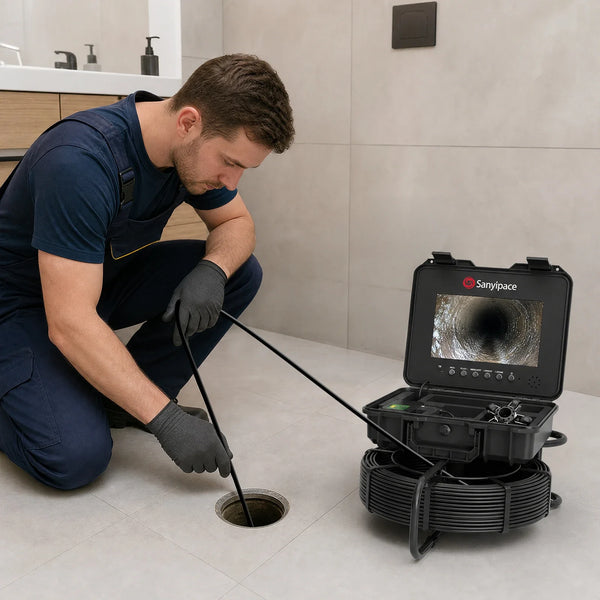
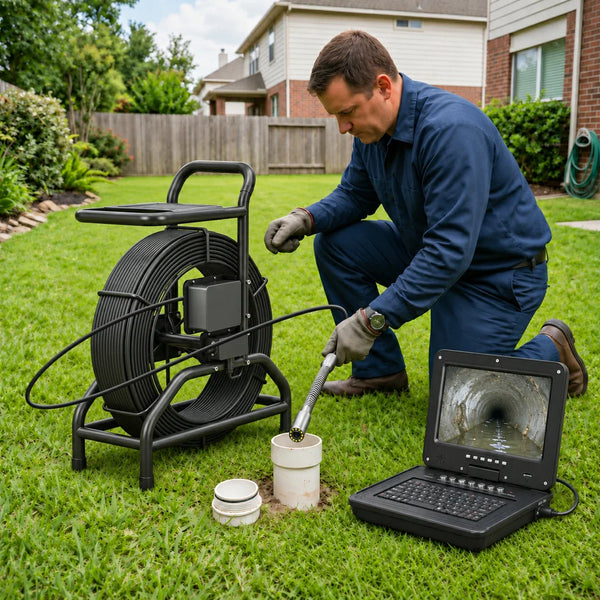
Most residential drains and sewer lines |
17–23 mm camera head + balanced 7 mm cable |
|
Long, relatively straight sewer lines |
Rigid 9 mm cable |
|
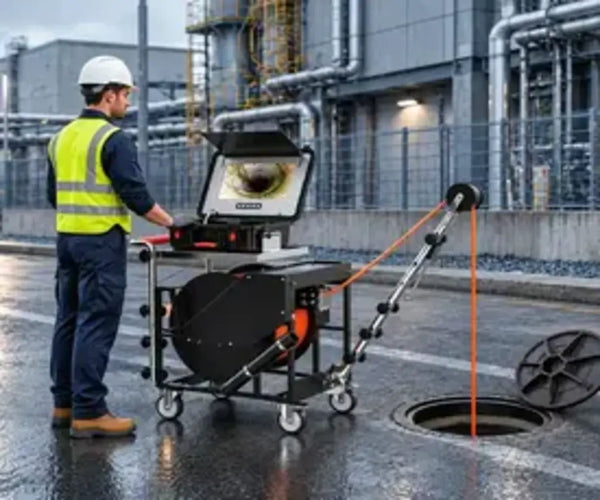
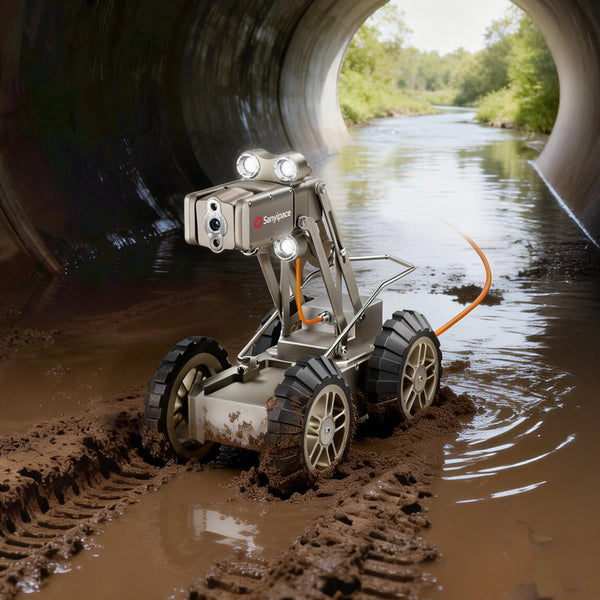
Large commercial or municipal pipes |
Rotating camera system or motorized crawler |
Flexible cables move through bends more easily, while thicker cables provide better pushability over longer distances.
2. Choose the Cable Length
Measure from the nearest cleanout or access point to the area you need to inspect.
|
Inspection area |
Suggested cable length |
|
Indoor drains and short lines |
65–100 ft |
|
Most residential sewer lines |
100–165 ft |
|
Large homes and commercial properties |
165–230 ft |
|
Long commercial or municipal lines |
230 ft or more |
Choose the usable inspection distance—not the total length of the entire plumbing system.

3. Choose the Sewer Camera Features You Need
|
Feature |
Choose it when you need to… |
|
DVR recording |
Save photos and videos from the inspection |
|
Self-leveling |
Keep the image upright as the camera moves |
|
Meter counter |
See how far the cable has entered the pipe |
|
512 Hz sonde |
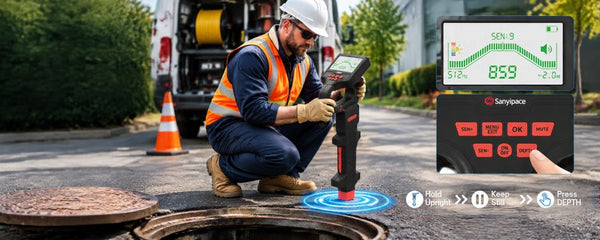
Send a locatable signal from inside the pipe |
|
Handheld locator |
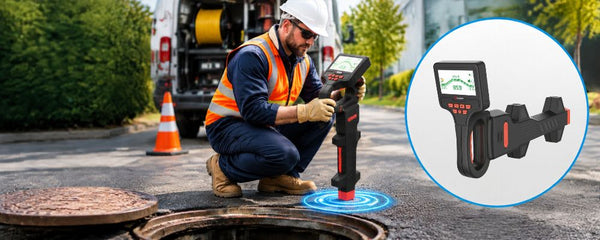
Find the camera position above ground |
|
Audio recording |
Add spoken notes to inspection footage |
|
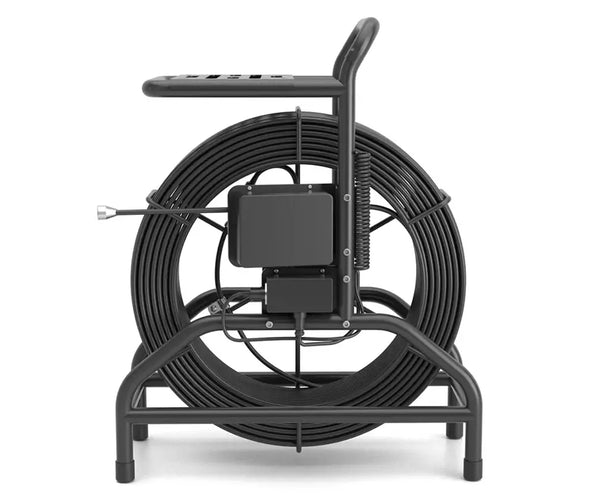
Dual camera heads and cable reels |
Switch between smaller, more flexible setups and larger setups for longer runs; check the features available on each camera head. |
|
360° camera head |
Examine the pipe wall from multiple angles |
| Adjustable LED lighting | Adjust brightness for different pipe conditions and reduce glare from nearby pipe walls. |
| Text annotations | Add job details and observations to supported inspection recordings. |
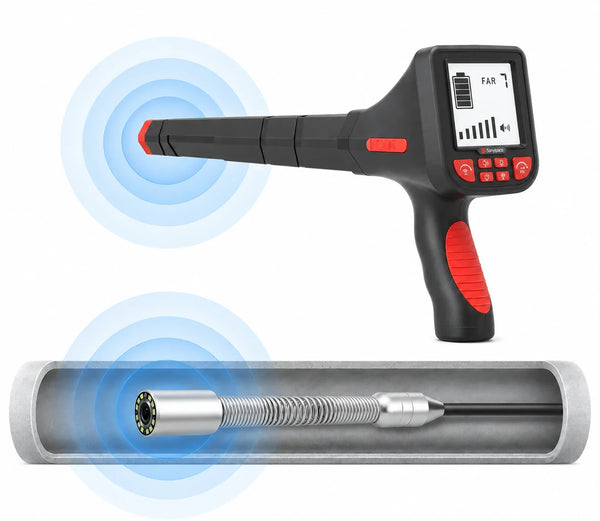
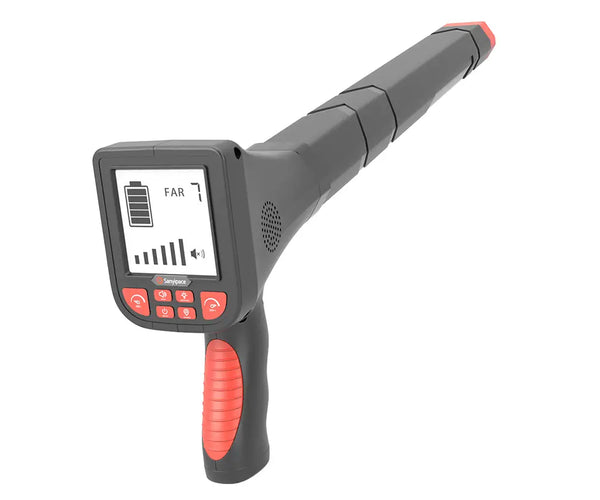
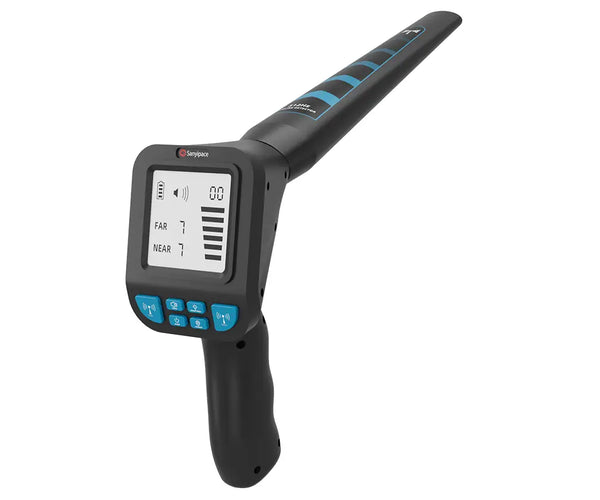
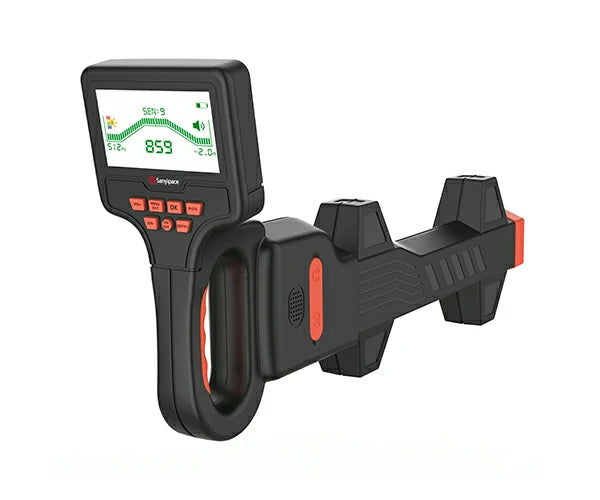
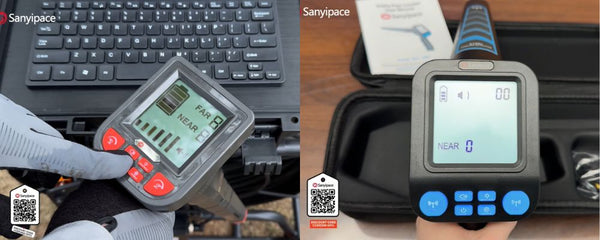
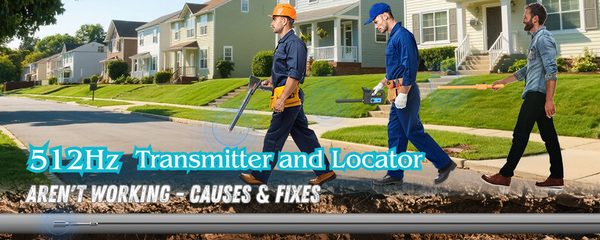
Important note: A 512 Hz sonde sends the signal. A handheld locator receives it above ground. Check the selected package before ordering—the locator may be included, optional, or sold separately.

4. Check Pipe Diameter and Bend Compatibility
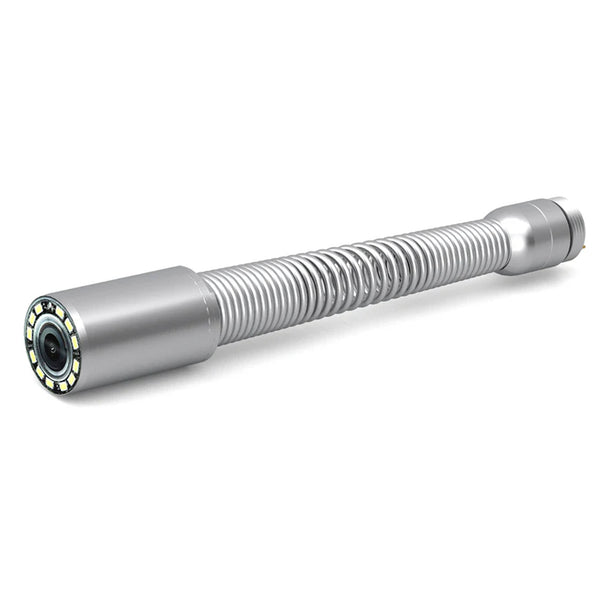
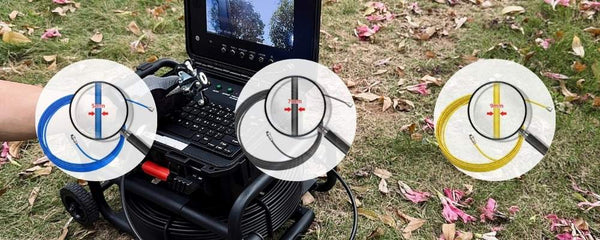
A camera that moves easily through a straight pipe may struggle at a tight elbow or in a line with several changes in direction. Before choosing a system, check the smallest pipe section, the camera head diameter, the overall head length, the spring connection, and the cable construction.
Camera head diameter
|
Camera head diameter |
Selection considerations |
|
17 mm |
A compact option to consider when access space is limited, or smaller drains are part of the workload. Confirm the complete head and spring assembly will clear the pipe and fittings. |
|
23 mm |
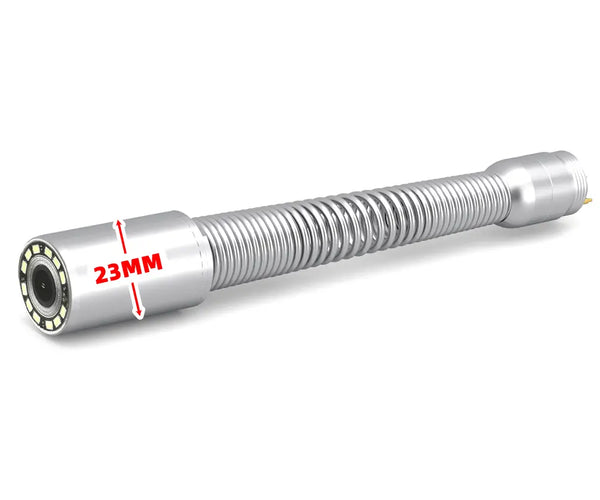
A versatile size for many residential sewer inspection applications, provided the pipe bore and fittings offer sufficient clearance. |
|
31 mm |
A larger assembly generally better suited to wider pipes. Check the pipe diameter, access opening, and bend geometry before selecting it. |
Cable diameter and stiffness
|
Cable diameter |
Typical characteristics |
|
5 mm |
More flexible and often easier to guide through smaller pipes and routes with multiple bends; it generally offers less pushing support over long distances. |
|
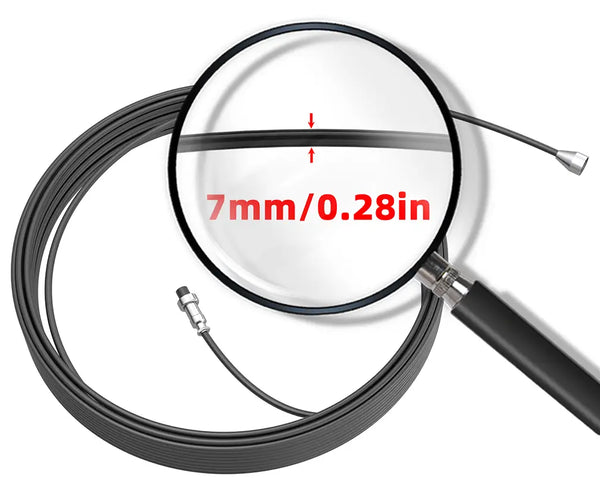
7 mm |
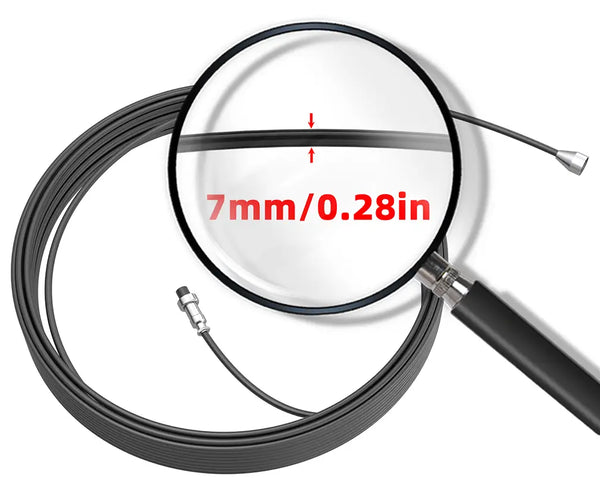
A middle-ground option that balances flexibility and pushing support for many general plumbing applications. |
|
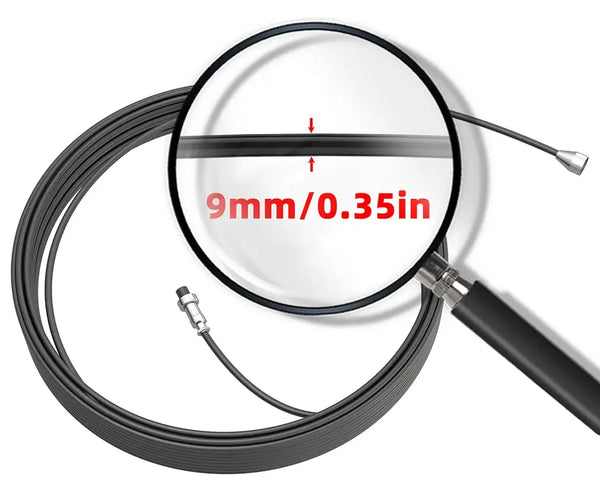
9 mm |
A stiffer option that can provide more pushing support on longer, relatively straight runs; it may be less suitable for small pipes or tight, repeated bends. |
Camera head diameter alone does not determine whether a system can pass through a bend. The complete assembly—including head length, spring flexibility, cable stiffness, bend radius, pipe diameter, fittings, and pipe condition—affects performance. A setup that passes through a 90-degree bend in a large, smooth pipe may not pass through a tighter fitting in a smaller or rougher line.
Before buying, compare the dimensions of the complete camera head and spring assembly with the narrowest pipe section and access point you expect to encounter. If a job includes several tight bends, prioritize the complete system’s flexibility rather than choosing by cable diameter alone.
5. Compare Image Quality and Screen Usability
A useful sewer camera image depends on more than a resolution figure. The camera sensor, lighting, lens condition, screen quality, and recording format all affect how clearly you can identify defects and explain them to someone else.
|
What to compare |
What to look for |
|
Live image and recorded resolution |
Check the actual live display and saved video specifications separately. Do not assume a display’s resolution is the same as the camera output or recording resolution. |
|
Monitor size and readability |
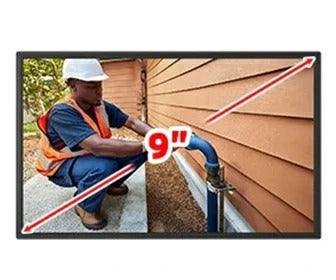
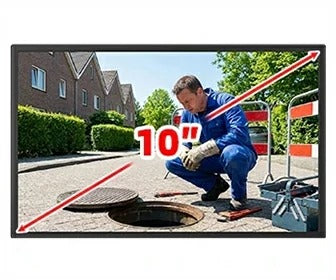
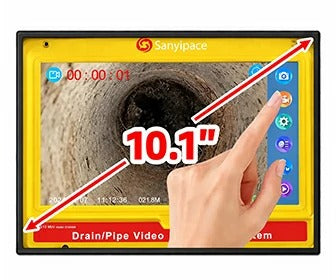
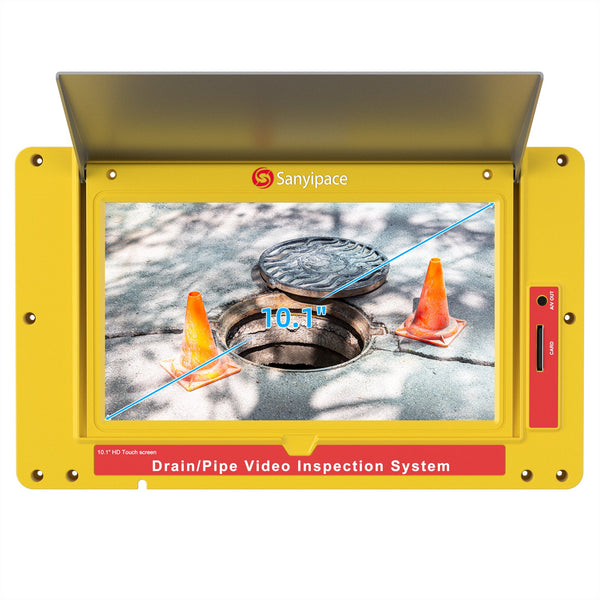
A 5-inch monitor favors portability. A larger display, such as a 9- or 10-inch screen, can make it easier to review details or show footage to a customer on site. |
|
LED lighting control |
Adjustable brightness helps adapt to different pipe diameters and surfaces. Too much light at close range can create glare or reflections. |
|
Self-leveling image |
Useful when you need a consistent upright view while the camera travels through the pipe. |
|
Screen adjustment and camera rotation |
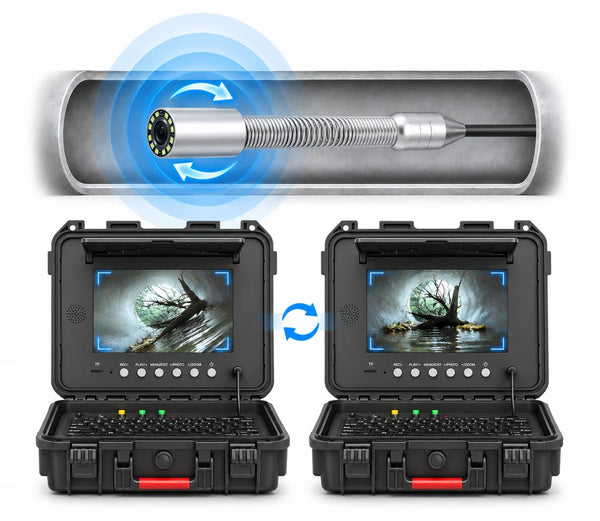
A rotatable monitor changes the screen viewing position. A rotating camera head changes the view direction inside the pipe; these are different functions. |
When comparing two systems, review sample footage recorded in conditions similar to your own work. Look for usable detail on pipe walls, joints, standing water, and deposits—not just a high-resolution label.
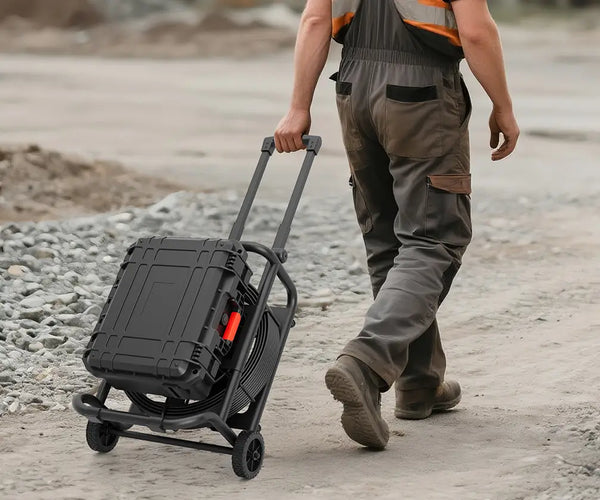
6. Consider Equipment Weight and Portability
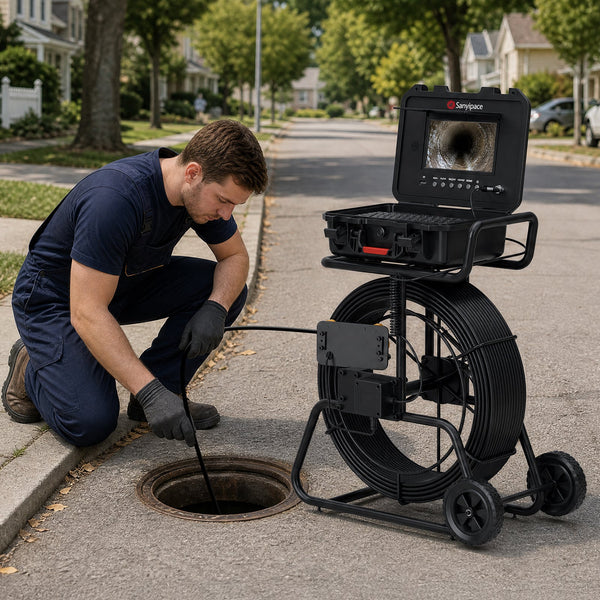
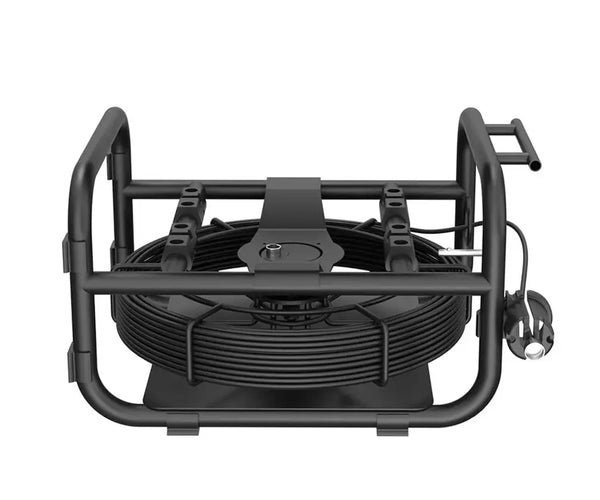
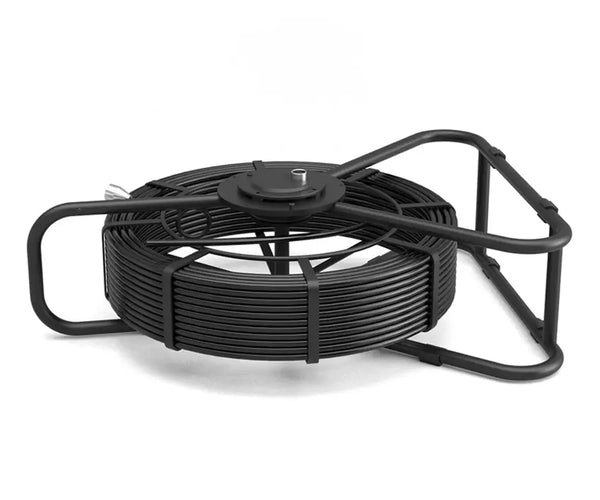
The camera system needs to work not only inside the pipe but also between the vehicle and the job site. A longer cable and larger reel can be useful for demanding inspections, but they also add bulk and weight.
|
Design detail |
Why it matters |
|
Total system weight |
Compare the complete setup, including monitor, battery, reel, cable, and accessories—not just the control unit. |
|
Carry handles |
Useful for compact systems that are frequently lifted in and out of a vehicle. |
|
Wheels or pull handle |
Can make a larger reel easier to move across suitable surfaces, especially between nearby work areas. |
|
Reel size and cable storage |
Affects storage space, loading, setup time, and how easily the cable can be deployed and retrieved. |
|
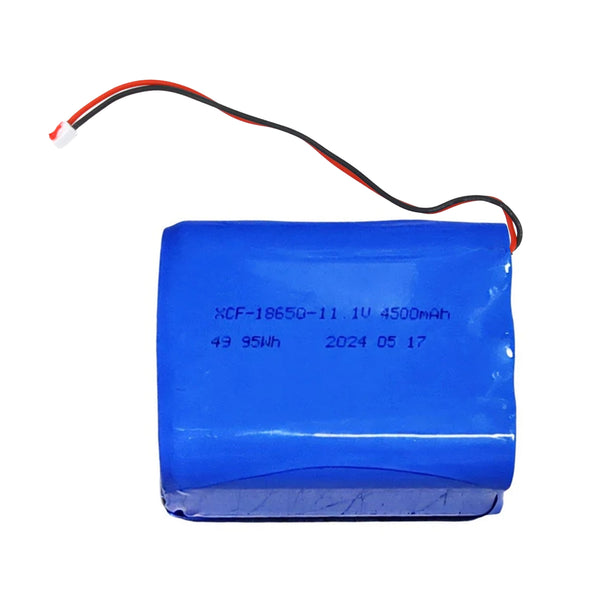
Battery and charging access |
Check the stated operating time for the specific model and whether charging arrangements fit your working day. |
For frequent short service calls, a compact system may be easier to handle. For longer inspections, a larger reel or wheeled design may be worth the extra size. Match the transport design to the surfaces, stairs, vehicle space, and distances you encounter at work.
7. Check the Complete Package and Long-Term Cost
Compare the complete configuration—not just the base product name or headline price. Two systems with similar camera specifications may include different cable lengths, camera heads, locating equipment, and accessories.
|
What to verify |
Why it matters |
|
Camera head and cable configuration |
Confirm the selected head diameter, cable diameter, and cable length match the work you intend to do. |
|
Sonde and handheld locator |
Check whether the camera head contains a 512 Hz sonde and whether a compatible handheld locator is included in the selected package. |
|
Included accessories |
Review the package list for guides, skids, chargers, memory cards, protective parts, and additional camera heads. |
|
Replacement-part compatibility |
Confirm that compatible camera heads, cables, batteries, and monitors are available for the model. |
|
Warranty and technical support |
Read the coverage, exclusions, and support process for the exact product and store from which you are buying. |
|
Stock and delivery |
Check the shipping origin, destination availability, and estimated delivery time before placing the order. |
Before comparing prices, make sure you are comparing equivalent configurations. An optional locator, a longer cable, or an additional camera head can change the total cost substantially. Choose the features and accessories you will actually use rather than paying for a package that does not match your inspection work.
8. Find the Right SANYIPACE Sewer Camera for Your Work
Different inspection jobs call for different sewer camera configurations. A compact camera is easier to maneuver through smaller drains, while a stiffer cable provides more pushing support for longer, relatively straight pipelines. For more demanding inspections, features such as self-leveling, 512 Hz locating, dual camera heads, and 360° rotation can make a noticeable difference.
SANYIPACE offers sewer inspection cameras for homeowners, plumbers, contractors, and professional inspection teams. Explore the models below to find the right combination of camera head size, cable flexibility, inspection range, and functionality for your work.
(1. S5517DC – Compact Sewer Camera for Home and DIY Inspections
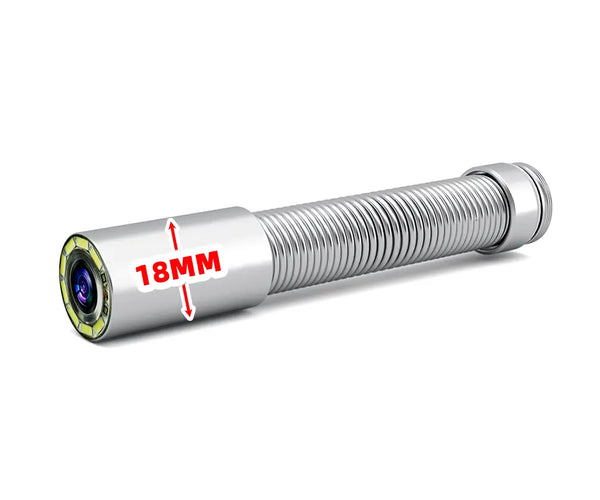
The S5517DC is a practical choice for homeowners and users who need a straightforward camera for routine drain inspections. Its compact 5-inch monitor and 18 mm camera head make it suitable for smaller access points and everyday inspection tasks.

S5517DC Sewer Camera
Compact Sewer Camera for Home & DIY Inspections
A practical inspection system for everyday drain checks, combining a compact camera head, clear display, and easy-to-carry design.
Key Features
- 18 mm IP68 camera head
- 5-inch 1080P display
- 8 LEDs with 3-level brightness
- 20 m / 30 m cable options
- Built-in meter marker
- Audio-enabled video recording
- 3–5 hours battery runtime
Ideal For
Homeowners, DIY users, and plumbers handling residential drain inspections, especially where compact equipment and easy maneuverability are important.
(2. S5981DSRTKMS58 – Flexible Sewer Camera for Multiple Bends
When your inspection routes involve smaller pipes and several bends, cable flexibility becomes especially important. The S5981DSRTKMS58 features a 5 mm flexible cable designed to navigate more complex residential drain layouts.
Its 18 mm-class compact camera configuration, self-leveling function, and built-in 512 Hz transmitter make it a versatile option for plumbers who need both maneuverability and professional inspection features.

S5981DSRTKMS58 Drain Camera
Flexible Sewer Camera for Small Pipes & Multiple Bends
Designed for residential drain inspections where cable flexibility and maneuverability matter. Its self-leveling camera and locating features provide additional support for everyday professional inspections.
Key Features
- Flexible 5 mm cable
- 9-inch AHD 1080P display
- 8 adjustable LED lights
- Self-leveling camera
- Built-in 512 Hz sonde
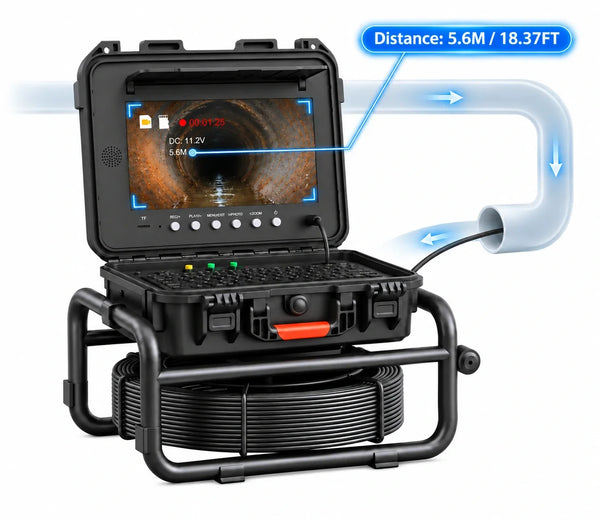
- Real-time distance counter
- Up to 7-hour battery runtime
- 30 m / 50 m cable options
Ideal For
Plumbers, drain service technicians, and maintenance professionals inspecting residential pipes with multiple bends or routes where a more flexible cable is preferred.
(3. S850DSTKM – Versatile Sewer Camera for Everyday Professional Work
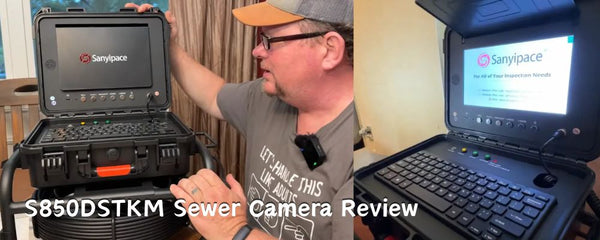
For plumbers who handle a variety of residential sewer inspections, the S850DSTKM offers a practical balance of flexibility, pushing strength, and inspection features.
Its 23 mm self-leveling camera head and 7 mm fiberglass cable are suited to many common residential inspection applications. The 10-inch display also provides a convenient viewing experience when reviewing footage or discussing findings with customers.

S850DSTKM Sewer Camera
Versatile Sewer Camera for Residential & Professional Work
A versatile inspection system for everyday residential sewer work, combining a self-leveling camera, balanced cable stiffness, and professional recording features.
Key Features
- 23 mm IP68 self-leveling camera head
- 7 mm push cable
- 10-inch IPS FHD 1080P display
- 12 adjustable LED lights
- Built-in 512 Hz sonde
- Real-time distance counter
- Photo, video & audio recording
- 30 m / 50 m cable options
Ideal For
Professional plumbers, contractors, home inspectors, and property maintenance teams handling regular residential sewer and drain inspections.
(4. S880DSTKM – 7 mm Hard-Cable Camera for Longer Push Inspections
If you prefer a firmer cable for inspections that require more pushing support, the S880DSTKM is worth considering. Its 7 mm hard cable provides greater stiffness than a thinner flexible cable, making it suitable for longer, relatively straight inspection routes.
The 23 mm self-leveling camera head, 9-inch display, and built-in locating transmitter provide a combination of features for regular professional use.

S880DSTKM Drain Camera
Hard-Cable Sewer Camera for Longer Push Inspections
Built for professional inspections where a firmer cable and additional pushing support are important. The system combines a 7 mm hard cable with clear imaging and practical inspection documentation features.
Key Features
- 7 mm hard fiberglass cable
- 9-inch AHD 1080P display
- 12 adjustable LED lights
- 5-level brightness adjustment
- Self-leveling camera
- Built-in 512 Hz sonde
- Distance counter & 5× digital zoom
- Audio/video recording with 32GB TF card
- 30 m / 50 m cable options
Ideal For
Plumbers and professional contractors who need additional cable stiffness for longer, relatively straight inspections and want to record detailed inspection footage.
(5. S870DSTKM – Heavy-Duty Sewer Camera for Long-Distance Inspections
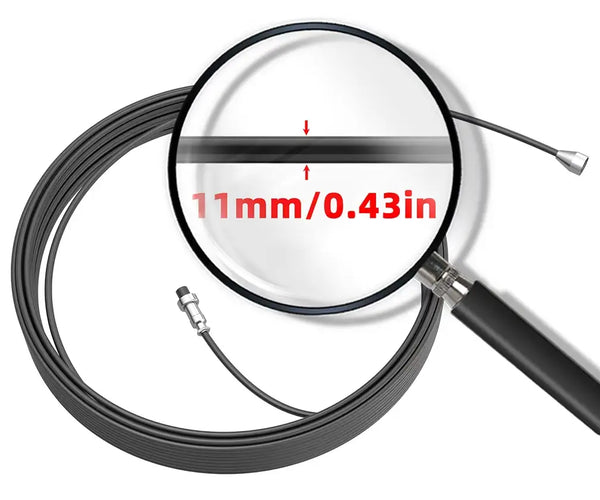
For longer inspection distances and demanding professional applications, the S870DSTKM offers a more substantial cable configuration. Available with 9 mm or 11 mm rigid cables, it provides different levels of pushing support depending on the inspection requirements.
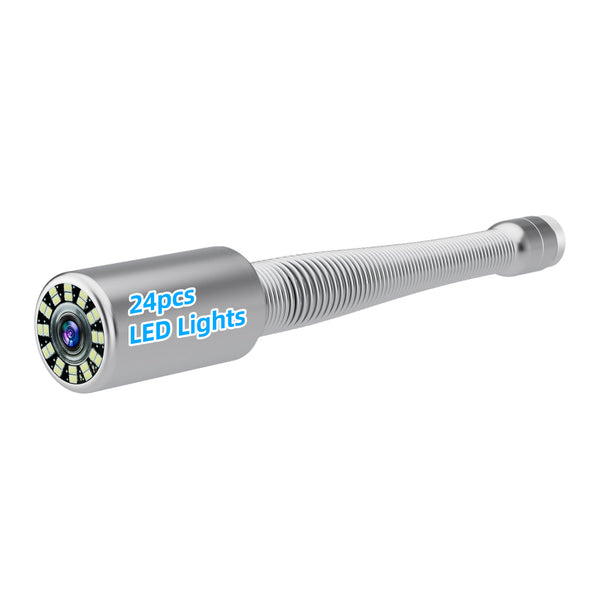
Its 31 mm self-leveling camera head and 24 adjustable LEDs are designed for larger pipe applications where strong illumination and a stable inspection image are important.
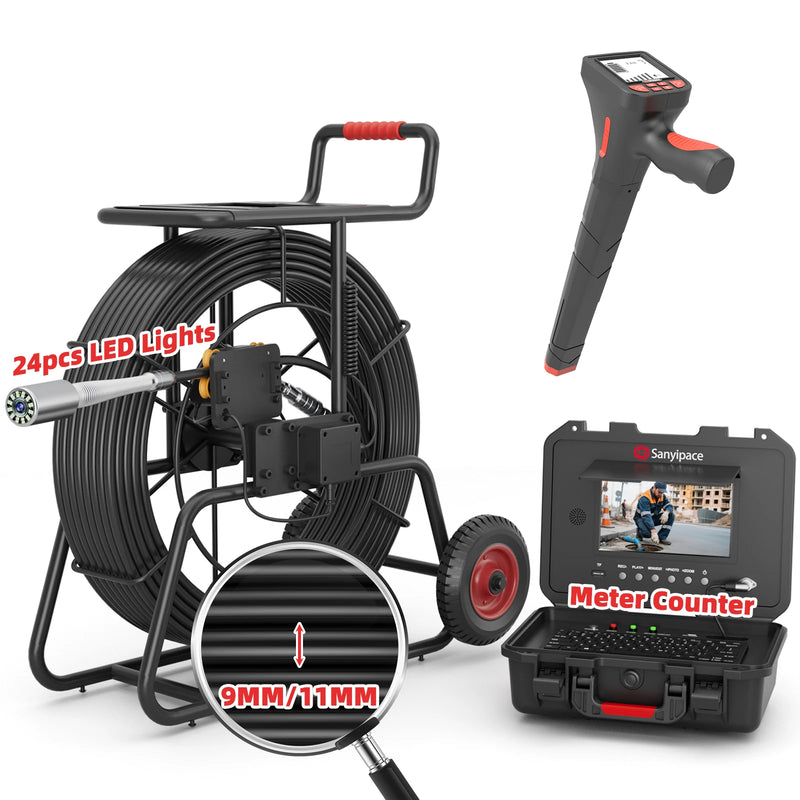
S870DSTKM Sewer Camera
Heavy-Duty Sewer Camera for Long-Distance Inspections
Designed for demanding professional inspections, the S870DSTKM combines a larger camera head, high-output LED lighting, and 9 mm or 11 mm cable options for different long-range applications.
Key Features
- 31 mm self-leveling camera head
- 9 mm / 11 mm rigid cable options
- 9-inch 1080P HD display
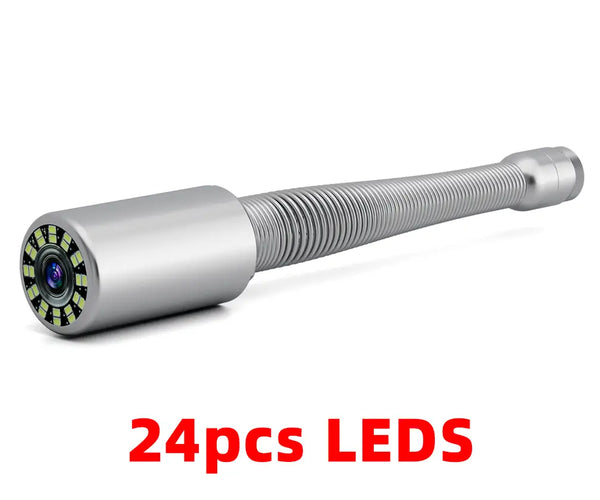
- 24 adjustable LED lights
- 5-level brightness adjustment
- Built-in 512 Hz sonde
- Real-time meter counter
- Audio/video recording
- 50 m–200 m cable options
Ideal For
Professional plumbers, drain cleaning specialists, and contractors inspecting larger pipelines and longer, relatively straight sewer runs where additional cable pushing strength is required.
(6. S820TSMKTR – Dual-Camera Sewer System for Different Pipe Sizes
If your work involves switching between different pipe diameters, carrying two separate inspection systems may not be practical. The S820TSMKTR combines two camera heads and two cable reels in one system, allowing you to select the configuration that better matches the pipe conditions.
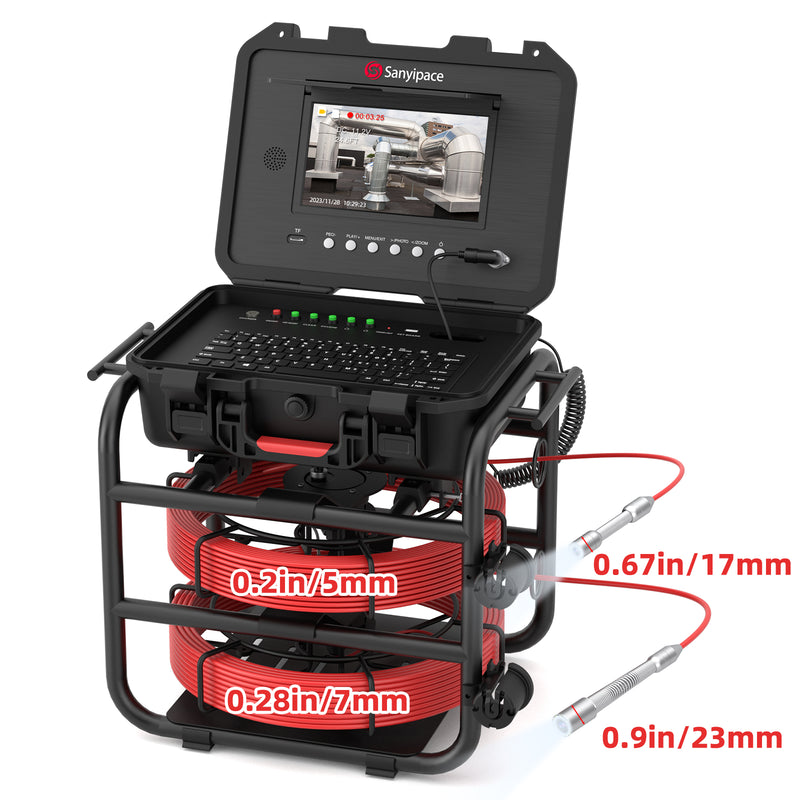
S820TSMKTR Sewer Camera
Dual-Camera Sewer System for Different Pipe Sizes
One inspection system with two camera heads and two independent cable reels. Switch between a smaller flexible setup and a larger, stiffer configuration to handle different pipe conditions.
Key Features
- 17 mm camera head + 5 mm cable
- 23 mm camera head + 7 mm cable
- 9-inch HD display
- 8 LEDs on the 17 mm camera
- 12 LEDs on the 23 mm camera
- 23 mm camera with self-leveling
- 23 mm camera with built-in 512 Hz sonde
- Real-time distance counter
- 40 m + 70 m dual-coil setup
Ideal For
Plumbing contractors and inspection teams working with different pipe sizes who want to switch between flexible and stiffer cable configurations without carrying two separate machines.
(7. S810ASMKT360 – 360° Rotating Camera for Detailed Pipe-Wall Inspections
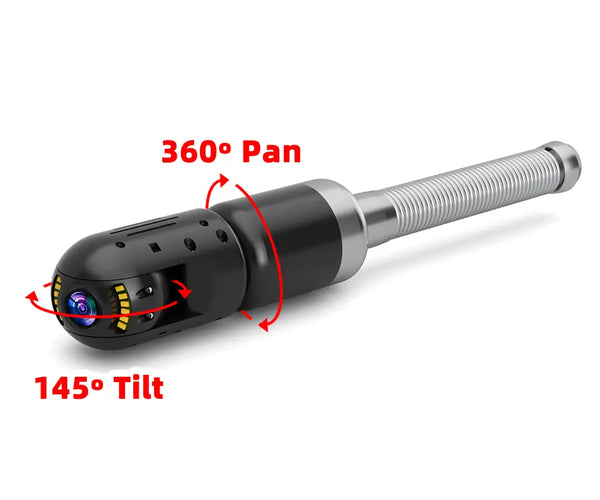
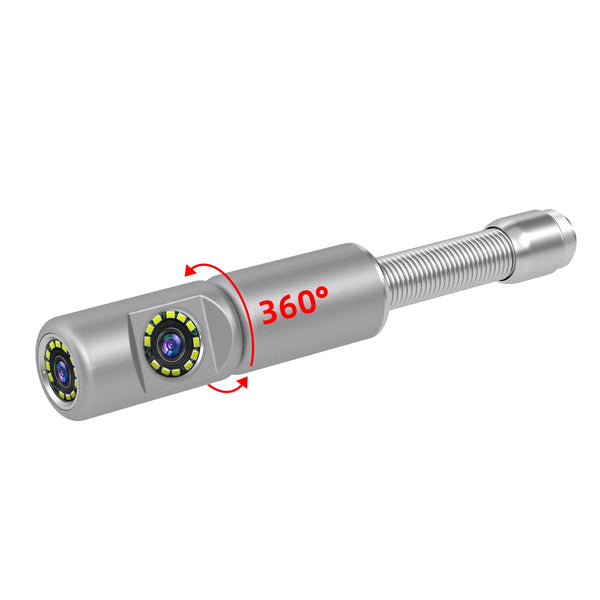
A forward-facing camera can show what lies directly ahead, but some inspection jobs require a closer look at pipe walls, joints, and side connections. The S810ASMKT360 addresses this need with a dual-lens camera system that supports 360° horizontal rotation.
Its rotating camera head allows operators to change the viewing direction without relying solely on the movement of the cable.

S810ASMKT360 Plumbing Camera
360° Rotating Sewer Camera for Detailed Pipe-Wall Inspections
Designed for inspections that require more than a forward-facing view. Its dual-lens camera rotates horizontally to help operators examine pipe walls, joints, and other areas from different directions.
Key Features
- 31 mm dual-lens camera head
- 360° horizontal camera rotation
- 7 mm rigid cable
- 10-inch rotatable IPS display
- 1080P imaging with 5× digital zoom
- Front and side camera views
- Built-in 512 Hz sonde
- Real-time meter counter
- Audio/video recording with 32GB TF card
- 50 m / 70 m / 100 m cable options
Ideal For
Professional sewer inspectors and plumbing contractors who need detailed visual coverage of pipe walls, joints, cracks, and side connections during inspection work.
(8. U99360 – Robotic Crawler for Large Commercial and Municipal Pipelines
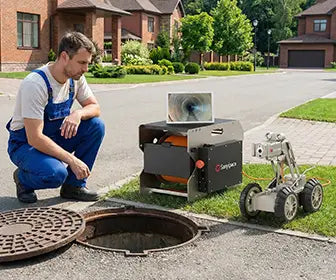
For large pipelines where a conventional push camera is not the most practical solution, a motorized crawler system offers a different approach. The U99360 is designed for larger commercial, industrial, and municipal pipeline inspections.
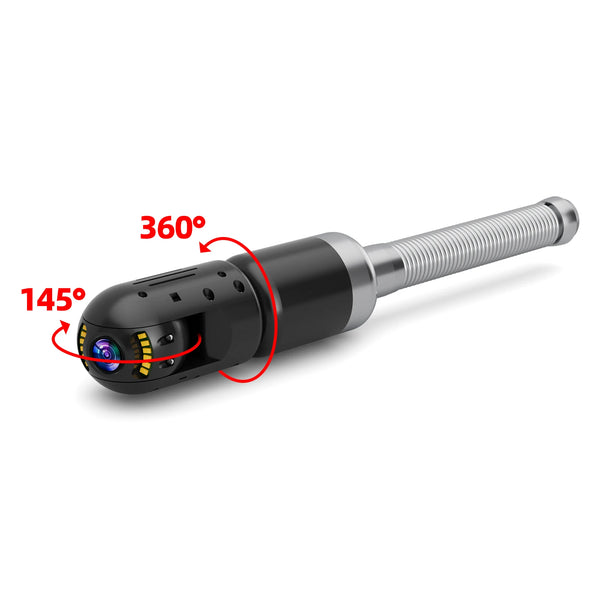
Controlled through a tablet, the four-wheel crawler moves through the pipe while its rotating camera provides a wider view of the interior.

U99360 Sewer Crawler Camera
Robotic Sewer Crawler for Large Pipeline Inspections
A motorized crawler inspection system designed for large pipelines. Its four-wheel drive, rotating camera, and tablet control provide a practical solution for inspecting larger sewer networks and industrial pipelines.
Key Features
- Motorized four-wheel crawler
- Dual-motor drive system
- 360° horizontal camera rotation
- 190° camera lens flip
- 2 MP HD camera imaging
- Wi-Fi tablet control
- IP68 waterproof metal body
- Adjustable front lighting
- 60 m / 120 m cable options
- 150 mm / 220 mm wheel options
Ideal For
Municipal contractors, industrial maintenance teams, and professional pipeline inspection operators working with large-diameter sewer networks and accessible commercial pipelines.
Which SANYIPACE Sewer Camera Should You Choose?
The right model depends on your pipe conditions and the type of inspections you perform most often:
-
For basic home drain checks: S5517DC
-
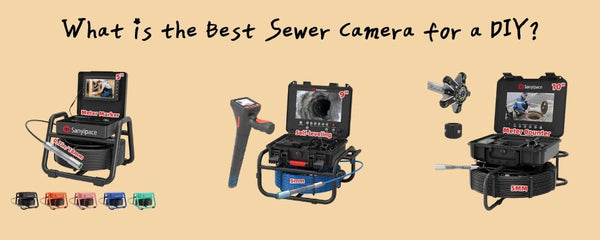
For smaller pipes and multiple bends: S5981DSRTKMS58
-
For general residential sewer inspections: S850DSTKM
-
For a firmer 7 mm cable setup: S880DSTKM
-
For longer, demanding inspection runs: S870DSTKM
-
For different pipe sizes: S820TSMKTR
-
For detailed 360° pipe-wall inspections: S810ASMKT360
-
For large commercial and municipal pipelines: U99360
Before choosing, compare the camera head dimensions, cable diameter, available cable length, and included accessories. The most suitable sewer camera is the one that matches your actual inspection conditions—not simply the model with the longest cable or the most features.
9. Compare SANYIPACE Sewer Camera Systems
Use this table to narrow down the models by their primary application. Exact features and package contents can vary by cable length and configuration, so always verify the selected product option before checkout.
|
Model |
Best suited for |
Camera/cable configuration |
Key consideration |
|
S5517DC |
Basic household drain checks |
Compact camera system; configuration varies |
Portable option for straightforward inspections; verify whether advanced locating features are required. |
|
S5981DSRTKMS58 |
Small pipes and multiple bends |
5 mm flexible cable; confirm head size on SKU |
Prioritizes maneuverability; confirm locator package contents. |
|
S8951DSRTM68R |
Flexible residential inspection work |
5 mm cable; 100/165 ft options shown on current guide |
Self-leveling and distance measurement; locator package is optional/configuration-dependent. |
|
S850DSTKM |
General residential sewer inspections |
23 mm head; 7 mm cable; 100/165 ft options shown on current guide |
Balanced cable characteristics; sonde and locator package should be checked separately. |
|
S880DSTKM |
Residential and professional inspections needing a firmer 7 mm cable |
23 mm head; 7 mm cable; 100/165 ft |
9-inch 1080P AHD display, 12 adjustable LEDs, self-leveling, 512 Hz sonde, distance counter |
|
S860DSTKM |
Mobile professional inspections |
5 mm or 7 mm options, depending on configuration |
Wheeled/pull-handle design supports transport; verify the selected reel and locating package. |
|
S830ASMKT |
Longer, relatively straight runs |
31 mm head; 9 mm cable |
Greater cable stiffness; check clearance and bend conditions. |
|
S870DSTKM |
Long-range professional and demanding sewer inspections |
31 mm head; 9 mm or 11 mm cable; 165–656 ft options |
24 adjustable LEDs, self-leveling, 512 Hz sonde, distance counter; locator optional |
|
S820TSMKTR |
Different pipe sizes |
17 mm + 23 mm heads; 5 mm + 7 mm cables |
Dual-system versatility; check which features are available on each camera. |
|
S810ASMKT360 |
Detailed multi-angle pipe-wall inspection |
360-degree rotating camera head |
Designed for changing the viewing direction; distinguish camera rotation from monitor rotation. |
|
U99360 |
Large commercial and municipal pipelines |
Motorized crawler; 197/393 ft options shown on current guide |
Requires suitable pipe diameter, access, and crawler configuration. |
Important: S880DSTKM is offered with 30 m (100 ft) and 50 m (165 ft) cable options. S870DSTKM offers 9 mm and 11 mm cable configurations, with available lengths varying by cable diameter and variant (up to 200 m / 656 ft). The 512 Hz sonde is built into the camera system, while you select the handheld locator separately. Always confirm the exact SKU, variant, camera head, cable, locator, and included accessories on the live product page before checkout.
Before You Place Your Order
Once you have narrowed down your options, take a moment to review the selected product configuration. Some SANYIPACE sewer camera models are available with different cable diameters, cable lengths, or accessory packages, so the model name alone may not tell you everything included in your order.
Before checkout, make sure to:
-
Confirm the cable configuration: Check the selected cable diameter and length, rather than relying only on the model's general specifications.
-
Review the package contents: Verify whether the handheld locator, camera guides, memory card, and other accessories are included or sold separately.
-
Check product compatibility: Make sure the selected camera head and cable configuration suit the pipe sizes and inspection routes you work with.
-
Review delivery and warranty details: Check product availability, estimated shipping time, and warranty coverage for your order.
Taking a moment to verify these details can help you choose a configuration that is ready for the inspection work you actually perform.
Need Help Choosing?
Tell us about your typical inspection work, and our team will help you choose a suitable sewer camera system before you order.
- Minimum and maximum pipe diameter
- Approximate inspection distance
- Number and type of bends
- Pipe material and condition
- Whether locating is required
- Occasional or professional use
11. Frequently Asked Questions

1. What size sewer camera do I need?
Choose a camera head that can pass through the smallest pipe section and access opening you need to inspect. Also consider the complete head length, spring connection, fittings, and bends. A 17 mm head may suit more restricted access, a 23 mm head is a versatile option for many residential sewer applications, and a 31 mm head is better suited to larger pipes with adequate clearance. Always confirm the full assembly dimensions and the manufacturer’s pipe-size guidance.
2. Is a 5 mm, 7 mm, or 9 mm cable better?
It depends on the route. A 5 mm cable is more flexible for smaller pipes and routes with bends. A 7 mm cable balances flexibility and pushing support for general plumbing work. A 9 mm cable is stiffer and can provide more pushing support over longer, relatively straight runs, but may be harder to guide through tight bends.
3. How much cable length do I need?
Measure from the nearest suitable access point to the farthest area you need to inspect, then allow extra length for bends and indirect routes. Around 100–165 ft is a useful starting range for many residential jobs. Larger properties and longer commercial lines may need more. Cable length alone does not determine usable inspection distance; cable stiffness and pipe conditions matter too.
4. Do I need a self-leveling sewer camera?
Self-leveling keeps the image upright as the camera moves through the pipe. It can make footage easier to interpret and share with customers, especially during longer inspections. It is a useful feature for regular professional work, but whether it is essential depends on how you use and document the footage.
5. What is the difference between a 512 Hz sonde and a locator?
The sonde is the transmitter, usually housed in the camera head. It sends a 512 Hz signal. The handheld locator is the receiver used above ground to detect that signal and help identify the camera position. A camera with a built-in sonde does not automatically include a handheld locator.
6. Can a sewer camera pass through a 90-degree bend?
It depends on the pipe diameter, bend radius, fitting design, camera-head dimensions, spring flexibility, and cable stiffness. A compact head with a flexible cable may be easier to guide through tight bends, but no setup can be guaranteed to pass every 90-degree fitting, especially in small, rough, or obstructed pipes.
7. Can a 23 mm sewer camera fit through a 2-inch pipe?
A 2-inch nominal pipe size does not guarantee that every 23 mm camera assembly will pass. The actual internal diameter, fitting geometry, camera-head length, spring connection, and bend radius all matter. Check the camera’s complete outside dimensions and the manufacturer’s minimum pipe-size guidance before using it in a 2-inch line.
8. Does a sewer camera need a 512 Hz locator to find a blockage?
No. The camera can show the blockage or damaged area on the monitor without a locator. A 512 Hz sonde and compatible handheld locator are useful when you also need to identify the camera’s underground position from above ground, for example, before digging or opening a wall.
9. Which sewer camera is suitable for homeowners?
For occasional, straightforward household checks, a compact system such as the S5517DC may be sufficient. If you need to inspect smaller pipes with multiple bends, or want distance measurement and underground locating, consider a system with the appropriate camera head, cable, and locating package.
10. Which sewer camera is suitable for professional plumbers?
For regular residential work, prioritize a camera head and cable suited to your pipe conditions, along with recording, distance measurement, and self-leveling if these features support your workflow. A 512 Hz sonde and compatible locator are useful when you need to mark underground camera position. Specialized work may call for dual-camera systems, rotating heads, longer-reach push cameras, or crawlers.
Related reading: 7 Best Sewer Cameras for Black Friday 2026: SANYIPACE Top Picks & Deals


